
One keyword, two buyers: splitting the tradesman from the weekend user
Blended ACoS 39% → 21%
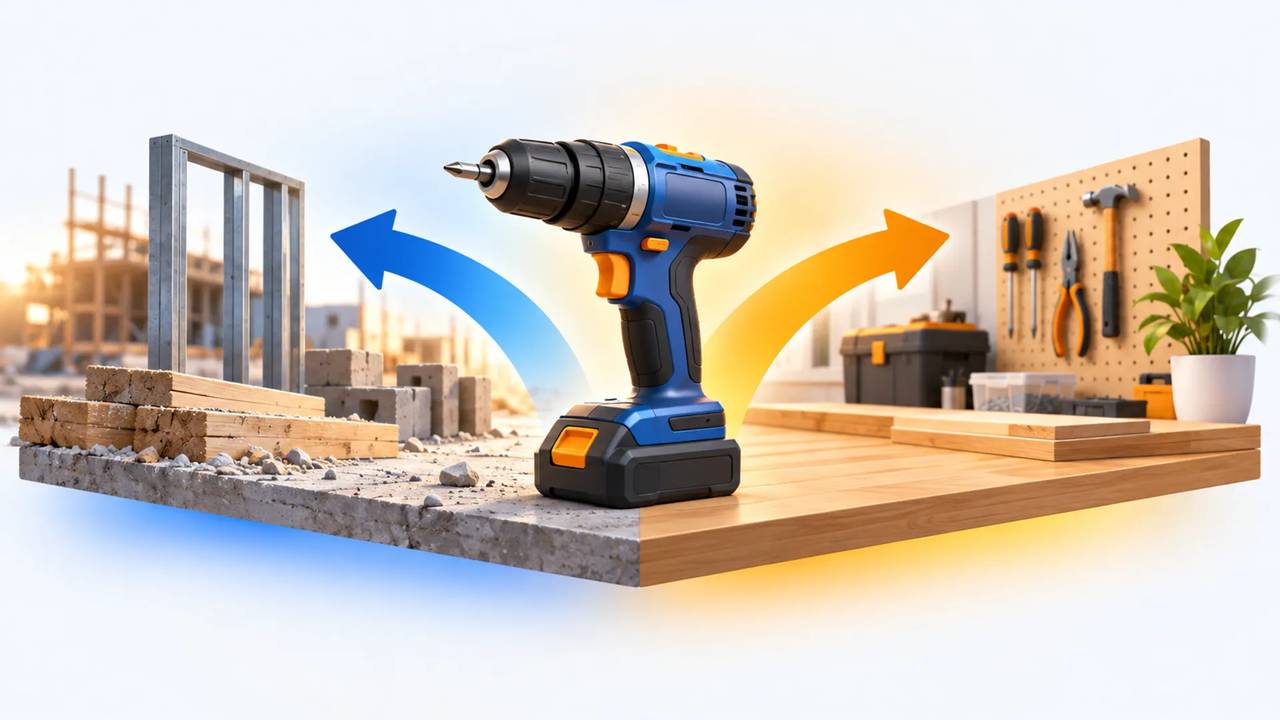
The same search term brought a contractor buying his fourth one this year and a homeowner buying his first ever. A single listing tried to satisfy both and convinced neither.
At a glance
- Category
- Tools & Home Improvement
- Marketplaces
- US, CA
- Revenue at start
- $412k / month
- Catalog
- 34 ASINs across three tool families
- Problem
- One message for two incompatible buyers
- Engagement
- PPC + creative & content
- Timeframe
- 10 months
Results
The challenge
A search for a cordless impact driver is run by two people with almost nothing in common. One of them replaces a tool every eight months, already owns the battery, reads a duty cycle figure and does not care what the case looks like. The other is buying the first one of his life, wants to know whether it will strip the screws in his deck, and is quietly worried he is buying too much tool.
The brand's listings were written for the first buyer and its advertising was bought against terms dominated by the second. Both halves underperformed: professionals bounced off copy that explained what an impact driver does, homeowners bounced off copy that quoted specifications without a single sentence about what they could build with it. The team read the resulting 39% ACoS as a bidding problem and had spent a year adjusting bids on it.
Our approach
We stopped treating the audience as one and let each half see a different argument.
- Intent signals mapped from the search term report — kit versus bare tool, brand-plus-model versus job description, warranty and duty-cycle language versus “for home use”.
- Two campaign structures, not two bid levels — separate budgets, separate match types and separate negatives, so one audience's cheap clicks stop subsidising the other's expensive ones.
- Two creative stacks on the same ASINs — image frames 2 to 4 rewritten twice, with the professional version leading on duty cycle and the homeowner version on the first three jobs the tool does.
- Price tiers made legible — the kit and the bare tool separated in the variation family so each buyer lands on the version that matches how they shop.
How we worked
- 1
Reading the split
Twelve months of search terms classified by intent; 44% of spend turned out to sit on terms where the two audiences collide.
- 2
Rebuilding campaigns
Professional and homeowner structures built in parallel with mirrored negatives, so a term can only serve one of them.
- 3
Rewriting the stack twice
Two creative versions produced per hero ASIN and assigned by which audience the campaign is buying.
- 4
Separating the offers
Bare tools and kits untangled from a single variation blob into two clearly priced paths.
- 5
Holding the line
Monthly search-term review to reassign new terms before they start serving both audiences again.
Inside the ad account
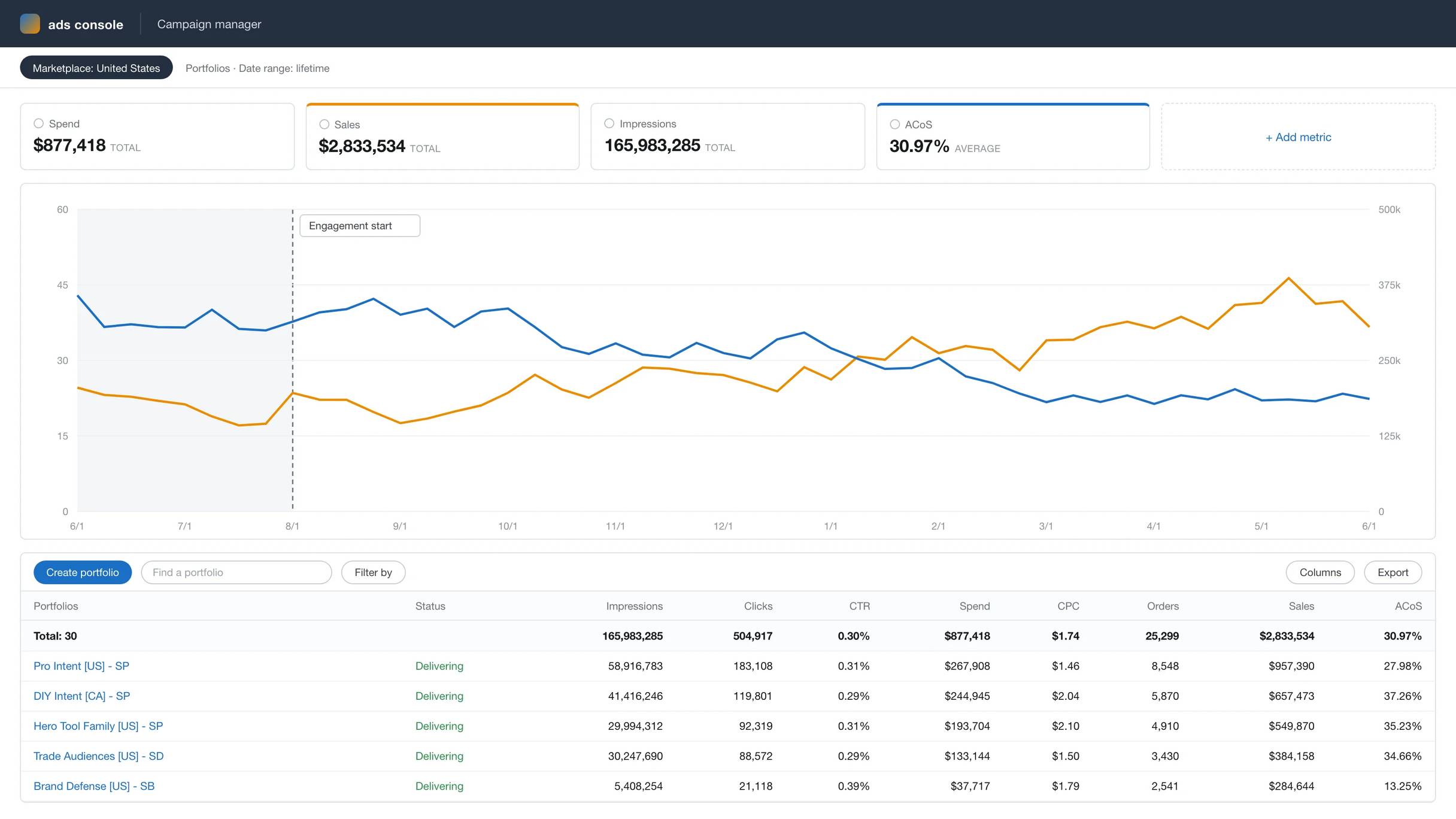
Anonymized account view, rebuilt from the figures reported above: ad sales growing from $185k to $317k a month while ACoS falls from 39% to 21% across the 10-month engagement.
The results
Blended ACoS fell from 39% to 21% and revenue grew 71% on an advertising budget that ended the year slightly below where it started.
The mechanism is not better bidding. It is that every click now lands on an argument written for the person who made it: the contractor sees a duty cycle, the homeowner sees a deck getting built. Average order value rose 12% as a side effect, because professionals who arrive on the right path buy the kit rather than the cheapest single tool.
“We had been arguing about bids for a year. The problem was that our best keyword was two completely different customers wearing the same word.”
Services we delivered
Related case studies


Ready to scale your Amazon brand?
Talk to a senior strategist and leave with a growth plan for your store — no obligation.