
Breaking the sets apart: selling the one piece people came for
Units +142% at a higher margin
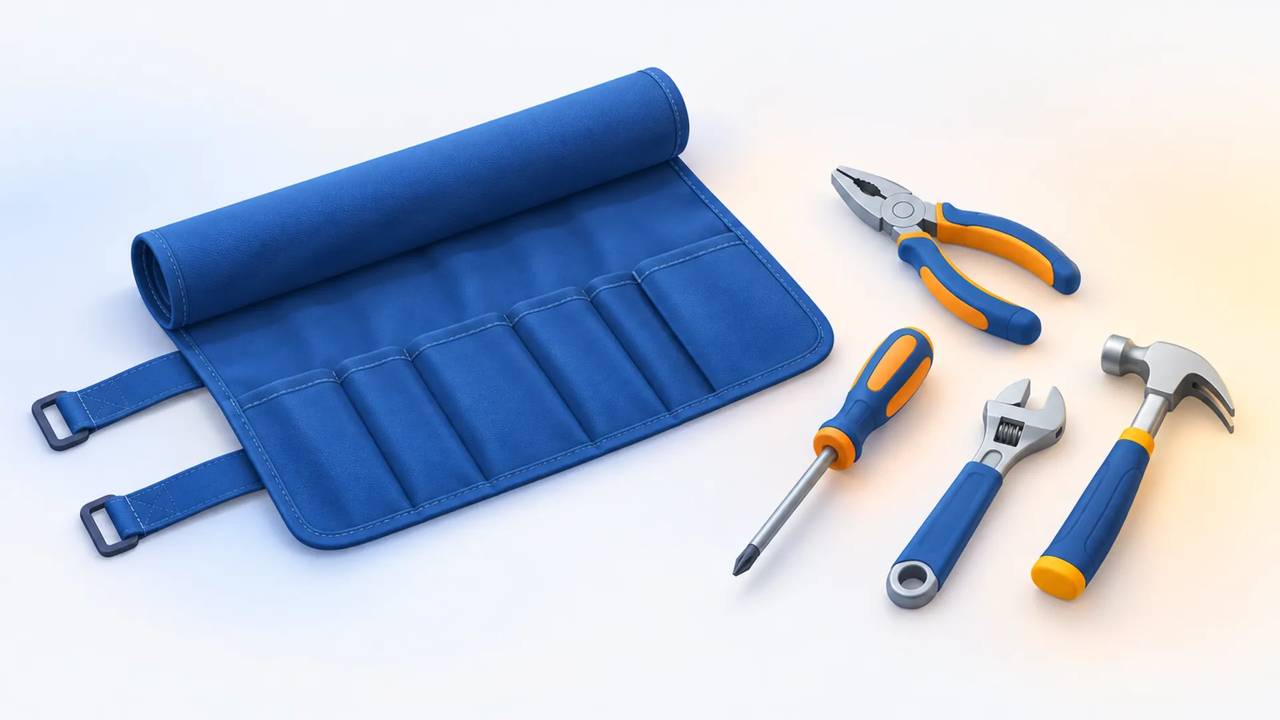
The brand sold hand tools only in sets, because sets look like better value. Shoppers were searching for one specific size, finding nothing, and buying a single competitor tool instead.
At a glance
- Category
- Hand Tools
- Marketplaces
- US
- Revenue at start
- $154k / month
- Catalog
- 9 sets, no individual pieces listed
- Engagement
- Listing SEO + account management
- Timeframe
- 8 months
Results
The challenge
Everything in the catalog was a set, and the reasoning was sound on paper: a set has a higher ticket, it looks like value, and it is one listing to maintain instead of eleven. The search data disagreed. The overwhelming majority of demand in this subcategory is somebody who needs one size of one tool, today, because the one they had has broken or walked off a jobsite.
Those shoppers type the size. The brand had no listing that answered a size, so it ranked for set terms — maybe nine of them — and was invisible across hundreds of specific searches with real volume and almost no competition. Worse, the shopper who did want a set often arrived having failed to find the single piece first, so the set was winning sales that had started as a loss.
Our approach
We inverted the conventional move and took the bundles apart.
- Every piece listed individually, each with its size in the title where the search actually is.
- Sets kept and repositioned as the gift and starter-kit purchase rather than as the whole catalog.
- Parent-child structure linking piece to set, so a shopper who came for one size sees the set as an upgrade instead of as the only option.
- Inventory planning per piece, since demand across sizes turned out to be wildly uneven and the set-only model had been hiding it.
- The three dead sizes dropped from the next production run, which is a decision the brand could not previously have made with any evidence.
Inside the ad account
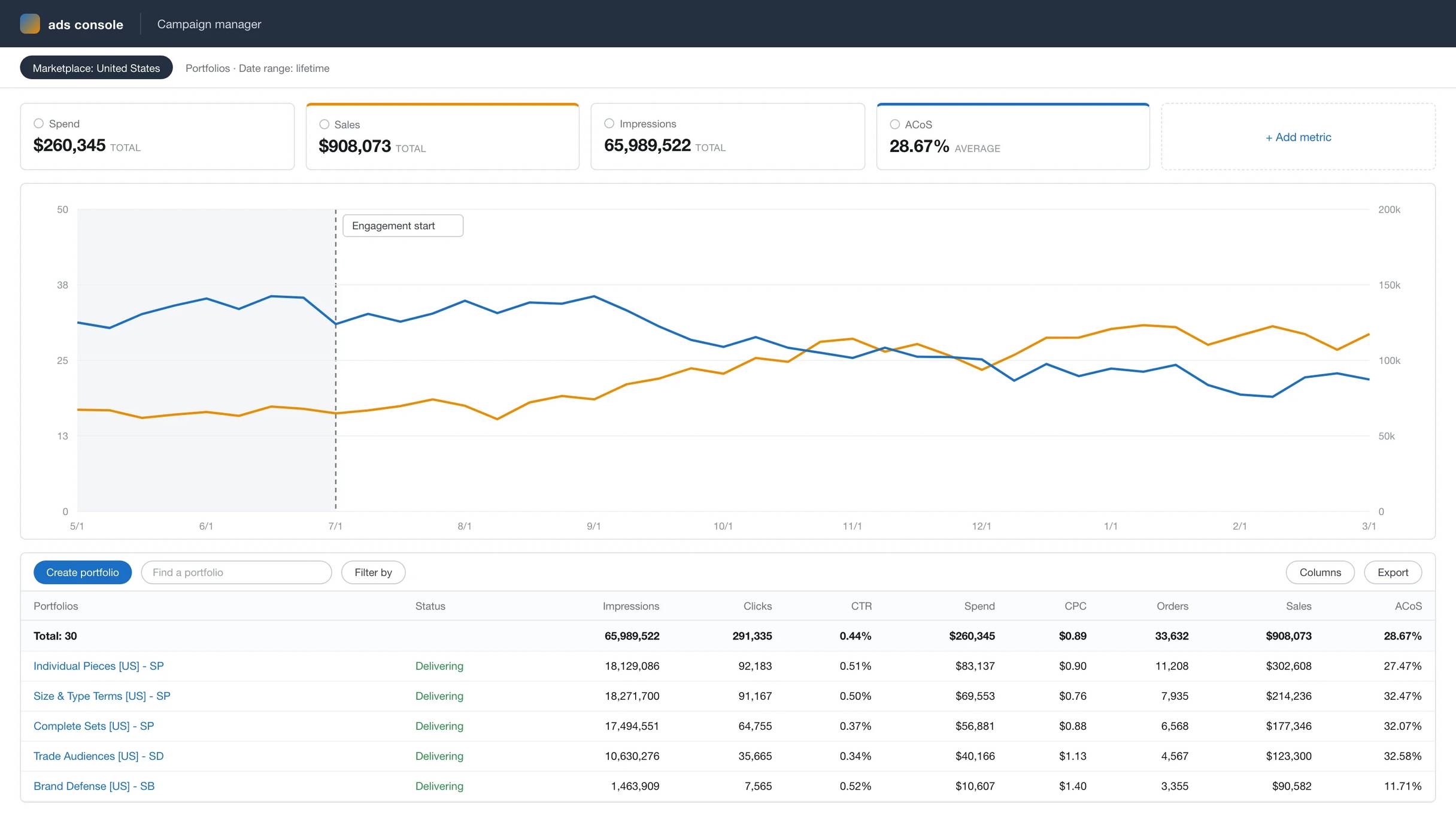
Anonymized account view, rebuilt from the figures reported above: ad sales growing from $69k to $121k a month while ACoS falls from 33% to 22% across the 8-month engagement.
The results
Units more than doubled, revenue rose 74%, and gross margin improved seven points — an individual piece carries a better margin per unit than the set it came from, which nobody in the business had checked.
The keyword footprint explains the volume: 310 ranking terms became 1,740, almost all of them size-specific searches the catalog previously could not answer. The sets did not suffer; they simply stopped being the only door into the brand.
“Bundling was supposed to raise the average order. It was quietly costing us every customer who needed exactly one thing.”
Services we delivered
Related case studies

Ready to scale your Amazon brand?
Talk to a senior strategist and leave with a growth plan for your store — no obligation.