
Losing the emergency on purpose and winning the spare instead
Units +186% with no delivery change
When a breaker trips for good, nobody waits for a delivery — they drive to the store. So the brand stopped competing for that moment and sold the part that gets bought before it is needed.
At a glance
- Category
- Electrical
- Marketplaces
- US
- Revenue at start
- $118k / month
- Context
- Losing urgent demand to local stores
- Engagement
- Listing SEO + PPC
- Timeframe
- 9 months
Results
The challenge
Half the category's search volume happens in a state of mild panic: something has stopped working, the shopper wants it today, and a store eleven minutes away will always beat any delivery promise. The brand had been bidding hard on exactly those searches for three years, paying premium prices for clicks from people who would abandon the checkout the moment they saw a delivery date.
No amount of optimization fixes that, because the losing factor is geography, not the listing. What the team had not looked at was the other half of the demand — the shopper who is not in trouble yet. That buyer is calm, buys several at a time, compares on quality instead of availability, and nobody in the category was talking to him.
Our approach
We conceded the emergency and built the opposite purchase.
- Urgent-intent terms cut hard — the “tonight”, “same day” and fault-symptom searches given minimal budget instead of top-of-page bids.
- The planned purchase made explicit — copy and imagery built around keeping the spares you will eventually need, in the quantities a house actually consumes.
- Multi-packs as the default offer, matching how somebody stocking up buys rather than how somebody replacing one item buys.
- Keyword work on the calm searches — quality, rating and material comparisons, which carry lower competition and far higher conversion than the fault-driven terms.
Inside the ad account
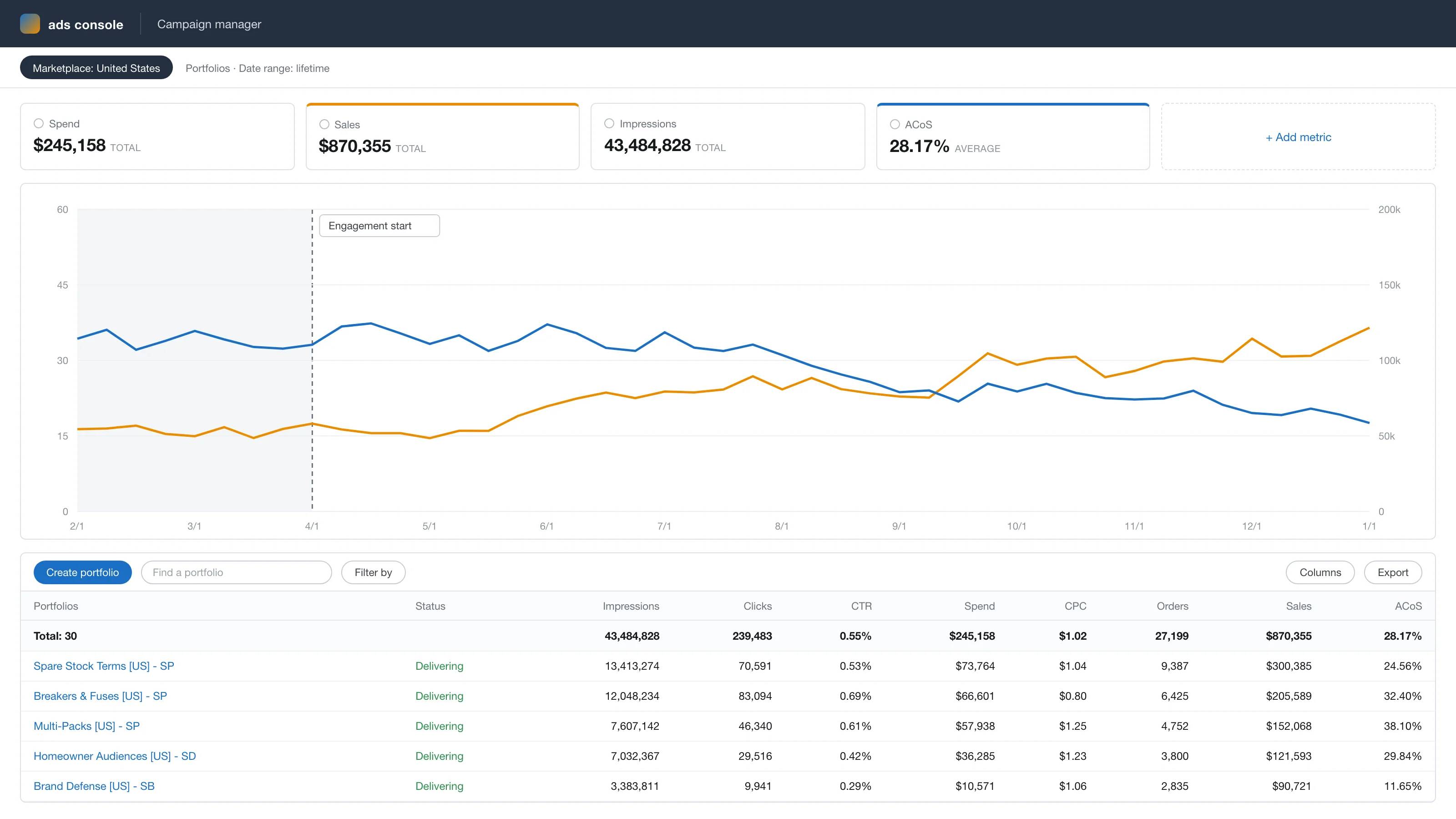
Anonymized account view, rebuilt from the figures reported above: ad sales growing from $53k to $111k a month while ACoS falls from 37% to 20% across the 9-month engagement.
The results
Unit sales nearly tripled and revenue more than doubled, without any change to fulfillment, price or delivery speed.
Units per order went from 1.4 to 3.1 — the mechanism visible in one number: a shopper who is not in a hurry buys the pack, and a pack carries a lower price per unit than the single the brand used to ship. ACoS fell seventeen points because the brand stopped paying top-of-page prices for traffic that a hardware store down the road was always going to win.
“We spent three years trying to beat a shop that's eleven minutes from our customer's house. We should have been selling to the week before.”
Services we delivered
Related case studies


Ready to scale your Amazon brand?
Talk to a senior strategist and leave with a growth plan for your store — no obligation.