
Competing with a free app that is already in the buyer's pocket
Conversion 4.2% → 8.7%
The brand's real competitor was not another laser measure. It was the measuring app every shopper already had, for free, and no listing in the category acknowledged it existed.
At a glance
- Category
- Measuring & Layout Tools
- Marketplaces
- US
- Revenue at start
- $74k / month
- Price point
- $59 against a free alternative
- Engagement
- Creative & content + PPC
- Timeframe
- 7 months
Results
The challenge
Conversion in this subcategory sat at half the rate of comparable tools, and the brand had spent two years assuming it was a price problem. It was not: the shopper's alternative was not the $44 competitor, it was the augmented-reality measuring app already installed on the phone they were browsing with.
That comparison never appeared anywhere in the category's marketing, which meant every listing was answering a question nobody was asking. The evidence sat in the brand's own reviews and returns: the positive reviews all said some version of “far more accurate than my phone”, and the returns were concentrated among buyers who had expected a gadget and got a tool they did not need.
Our approach
We named the competitor the category refused to name.
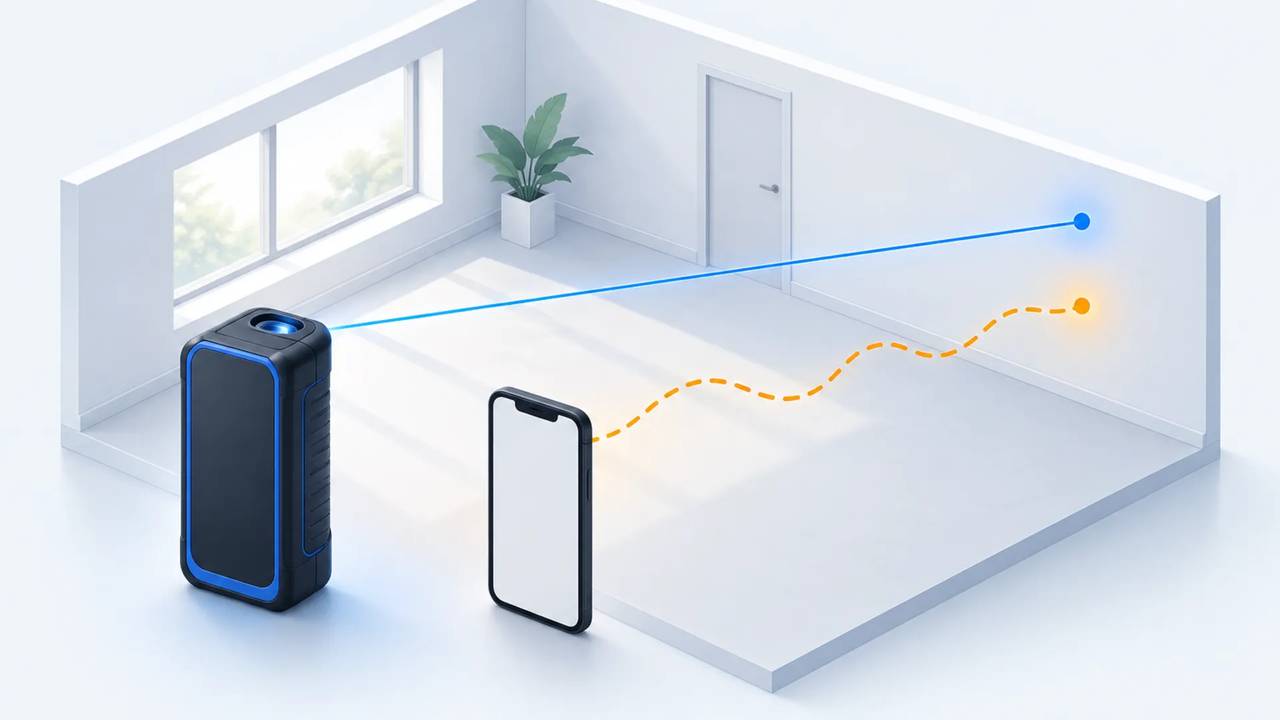
- The comparison put in the image stack — measured against a phone app over a long distance, where the difference stops being theoretical.
- Use cases that a phone genuinely cannot do led the copy: distances beyond a room, continuous measurement, and readings taken alone rather than with a second person holding a tape.
- Search terms that reveal the objection — queries comparing devices to apps, and the accuracy-doubt phrasings, targeted deliberately and cheaply because no competitor was bidding on them.
- Honest qualification for the casual buyer, which sends the wrong customer away before they buy and return.
How we worked
- 1
Finding the real objection
Reviews, returns and pre-purchase questions coded; the phone-app comparison appeared in 38% of them and in none of the brand's own content.
- 2
Building the comparison
A side-by-side demonstration shot at room, hall and exterior distances and placed as image frame two.
- 3
Rewriting for the doubter
Copy restructured around the three jobs a phone cannot do, with the phone named rather than implied.
- 4
Buying the doubt
Objection-shaped search terms broken out into their own campaign at bids no competitor was contesting.
- 5
Filtering the wrong buyer
A plain statement of who does not need this tool added to the stack; the return rate halved within two months.
Inside the ad account
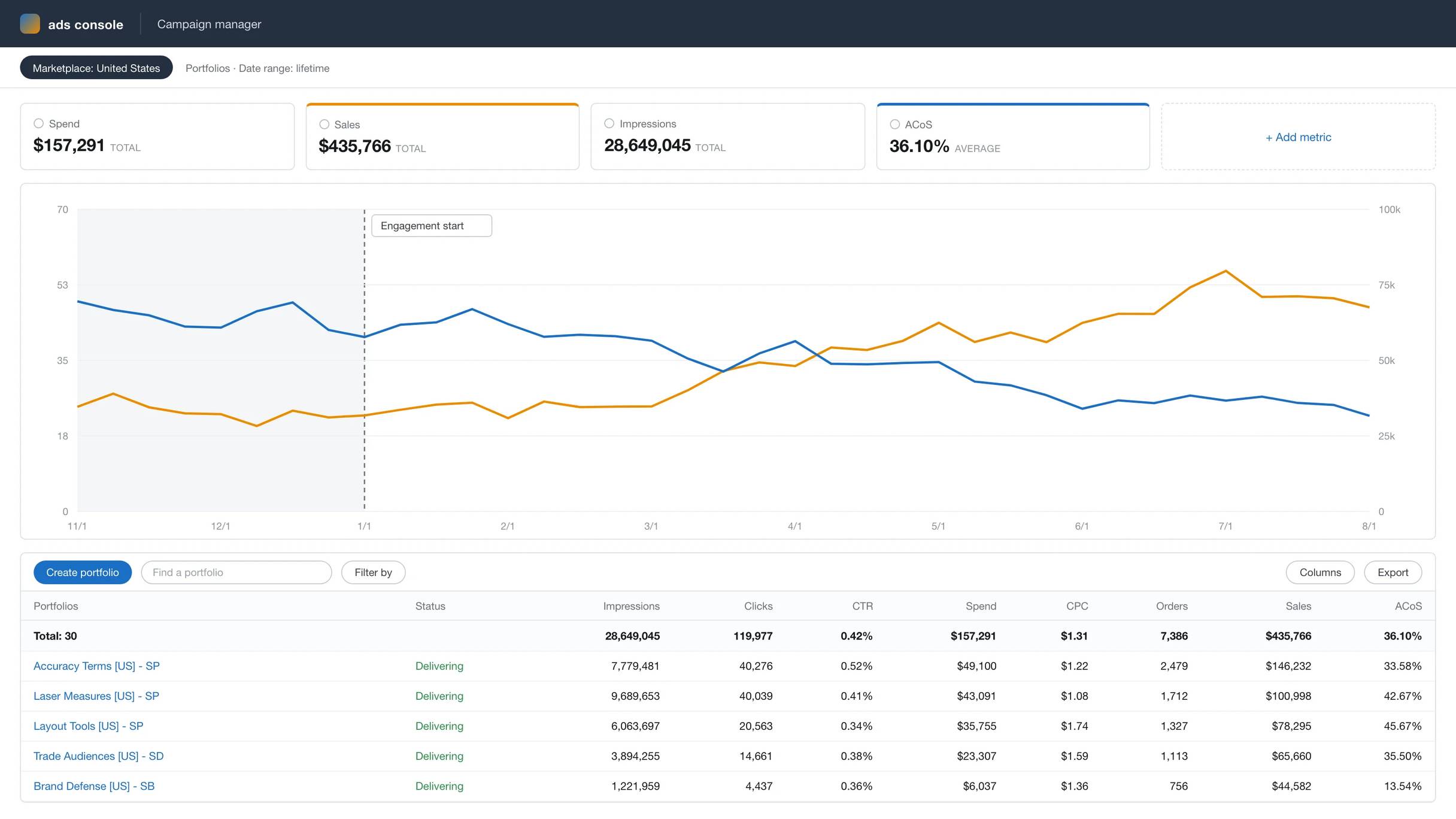
Anonymized account view, rebuilt from the figures reported above: ad sales growing from $33k to $69k a month while ACoS falls from 44% to 23% across the 7-month engagement.
The results
Conversion more than doubled, from 4.2% to 8.7%, and revenue rose 108% on a price that never changed.
ACoS fell twenty-one points, partly from the conversion gain and partly because the objection-shaped searches cost a fraction of the category head terms. The return rate halving was unplanned: telling the casual shopper honestly that a phone is fine for hanging a picture costs a few orders and saves the reviews those orders would have produced.
“Every competitor was fighting each other over the same shoppers. All of them were losing to a free app and none of us would say it out loud.”
Services we delivered
Related case studies


Ready to scale your Amazon brand?
Talk to a senior strategist and leave with a growth plan for your store — no obligation.