
Making the battery platform the product people search for
Bare-tool revenue +319%
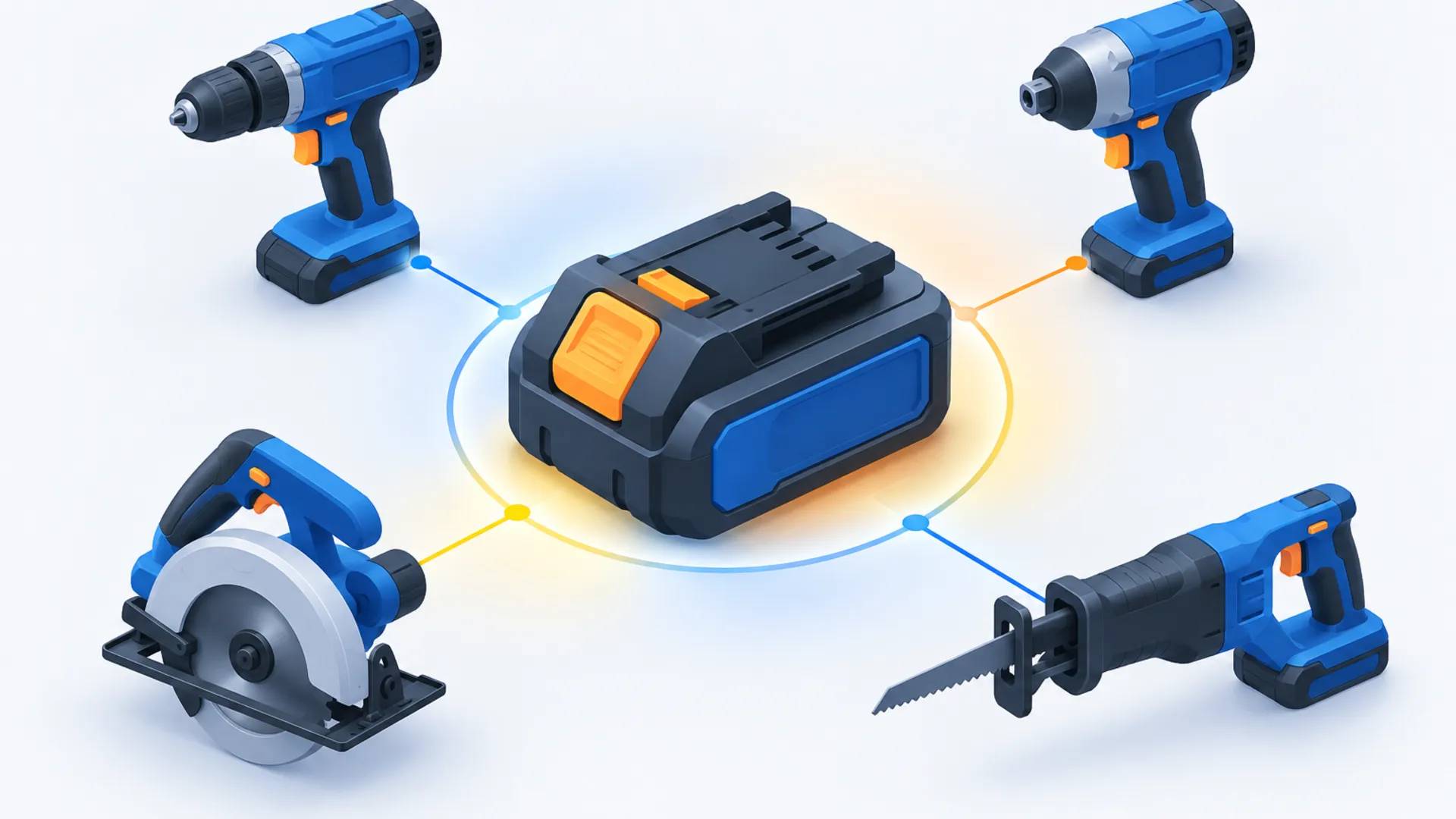
Every cordless tool the brand sold was buried inside a kit with a battery nobody needed twice. Once the platform had a name shoppers could search, the second and third tool sold themselves.
At a glance
- Category
- Power Tools
- Marketplaces
- US, UK
- Revenue at start
- $367k / month
- Catalog
- 14 cordless tools, 11 sold only as kits
- Engagement
- Listing SEO + PPC
- Timeframe
- 11 months
Results
The challenge
The brand's advantage was that fourteen tools ran on one battery, and its Amazon catalog hid that completely. Eleven of the fourteen were sold only as kits, each shipping with a charger and a battery the customer already owned. A shopper who liked the first tool and wanted the second was quoted a price that included forty dollars of hardware sitting in his garage — so he bought nothing, or he started again on a competitor's platform — which is the expensive version, because the next four tools go with it.
There was a second, quieter cost. Shoppers in this category search the platform by name once they are inside an ecosystem, and the brand's platform had no name on Amazon at all. The words appeared in a marketing deck and on the packaging photograph; they were not in a title, a bullet, a backend field or a campaign anywhere in the account.
Our approach
We gave the ecosystem a name, then made every tool a reason to stay in it.
- Platform naming standardized across titles, bullets and backend terms, so the battery system becomes a searchable entity instead of a packaging detail.
- Bare tools listed for all fourteen, priced against the competitor's bare tool rather than against the brand's own kit.
- A visible ecosystem module in A+ showing every tool the battery runs, on every listing in the range.
- Campaigns on platform terms, aimed at the specific and cheap intent of somebody who already owns one of these batteries and is shopping for their next tool.
Inside the ad account
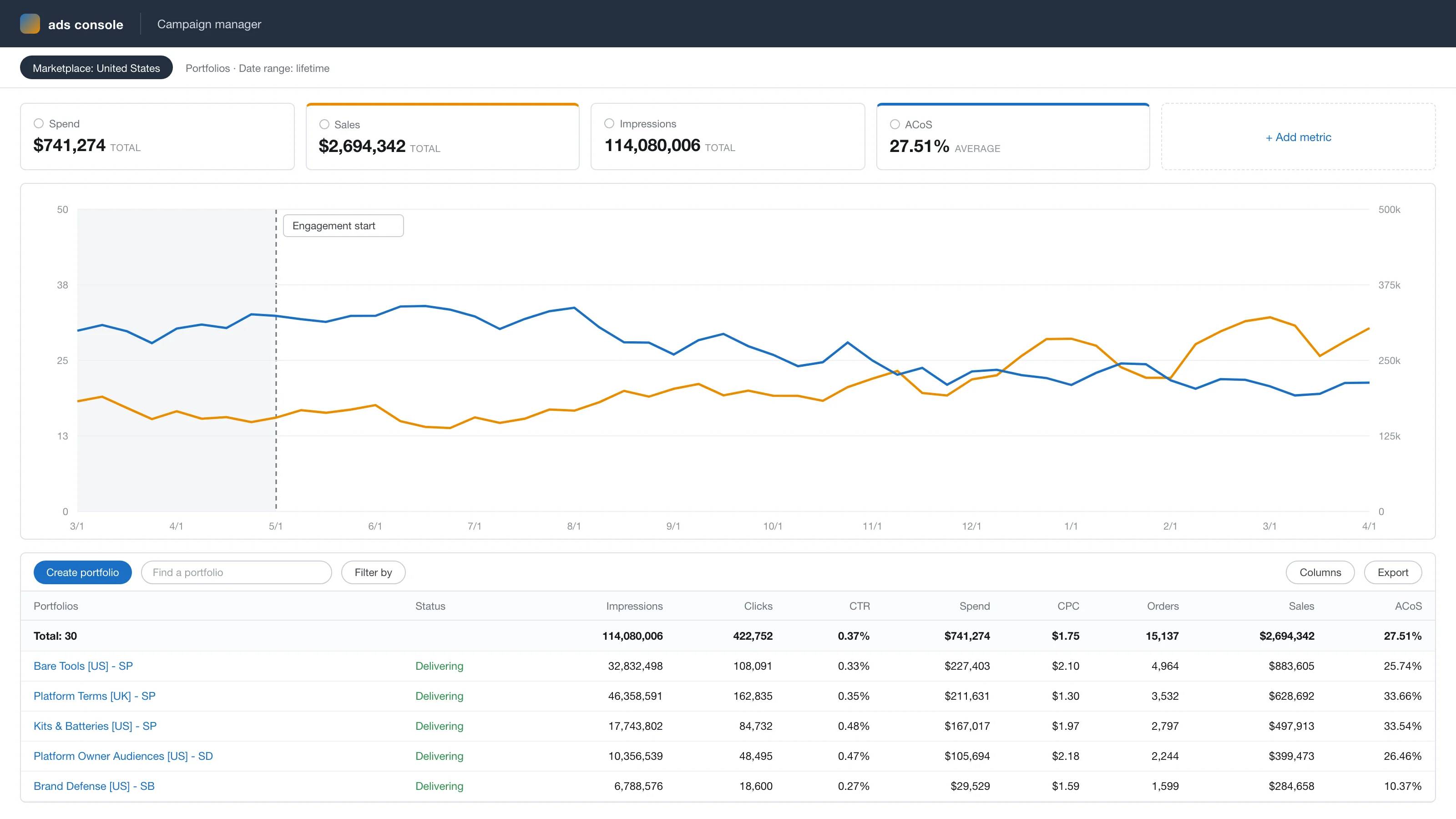
Anonymized account view, rebuilt from the figures reported above: ad sales growing from $165k to $263k a month while ACoS falls from 32% to 21% across the 11-month engagement.
The results
Bare-tool revenue went from a rounding error to $88k a month, and total revenue grew 59% — kit sales grew alongside it rather than being eaten, so the bare tools were new volume and not cannibalisation.
Tools owned per customer in the first nine months went from 1.2 to 2.1, which is the number this exercise exists to move: a customer inside the platform buys the next tool from the brand by default, and the platform term itself now ranks third organically for the searches those customers actually run.
“We had built an ecosystem and then charged people a battery every time they tried to join it further.”
Services we delivered
Related case studies

Ready to scale your Amazon brand?
Talk to a senior strategist and leave with a growth plan for your store — no obligation.