
Naming what the product is actually for
Unbranded search share 22% → 61%
Postpartum recovery products are searched for in blunt, clinical words at three in the morning. The brand's listings were written in euphemisms and ranked for none of them.

At a glance
- Category
- Pregnancy & Maternity
- Marketplaces
- US
- Revenue at start
- $58k / month
- Range
- Postpartum recovery, 7 ASINs
- Engagement
- Listing SEO + creative
- Timeframe
- 7 months
Results
The challenge
Postpartum recovery is the least-discussed part of having a baby and one of the most-searched. People look these products up privately, late, and they type the symptom in exactly the words a midwife used — not in the gentle language brands prefer.
This brand's copy was written to be tasteful: “comfort”, “care”, “the fourth trimester”, “feel like yourself again”. None of those phrases is what anyone types. The listings therefore ranked for almost nothing unbranded, and the brand's growth depended entirely on people who had already heard of it. The team's discomfort with the vocabulary was, in effect, a decision not to be findable.
Our approach
We wrote in the words the search bar receives.
- Symptom and procedure terms indexed — the specific, clinical vocabulary of recovery, sourced from search data rather than from brand guidelines.
- Copy that names the situation directly in the first bullet, then explains what the product does about it.
- Timeline framing — what to use in week one, week three, week six, because the need changes fast and the searches change with it.
- Imagery that is practical rather than aspirational, since this shopper is solving a problem, not buying a mood.
Inside the ad account
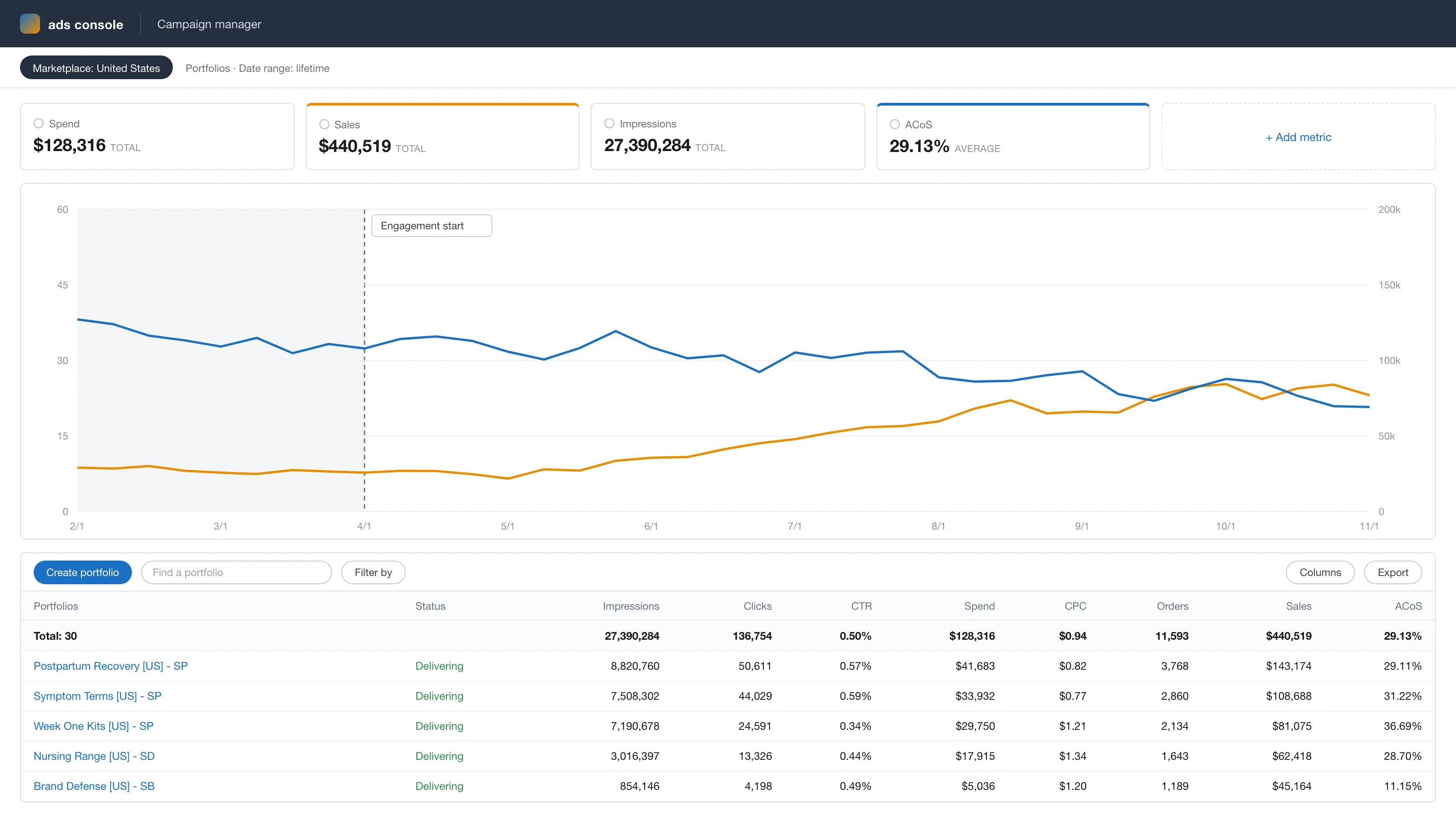
Anonymized account view, rebuilt from the figures reported above: ad sales tripling once the listings used the clinical vocabulary.
The results
Sessions more than doubled — 24k to 54k a month — and revenue rose 221%, from $58k to $186k.
The share of revenue coming from unbranded search went from 22% to 61%, which is the entire point: the brand can now be discovered by someone who has never heard of it, at the moment they need it. Conversion improved 42% as well, because a page that names the problem plainly reads as competent, while a page full of euphemism reads as evasive to a reader who is not in the mood to decode anything.
“We'd spent four years making sure our copy was tasteful. Nobody searching at 4am is looking for tasteful.”
Services we delivered
Related case studies



Ready to scale your Amazon brand?
Talk to a senior strategist and leave with a growth plan for your store — no obligation.