
“Will this fit my bike?” — answering the only question that matters
Fitment returns 21% → 7%
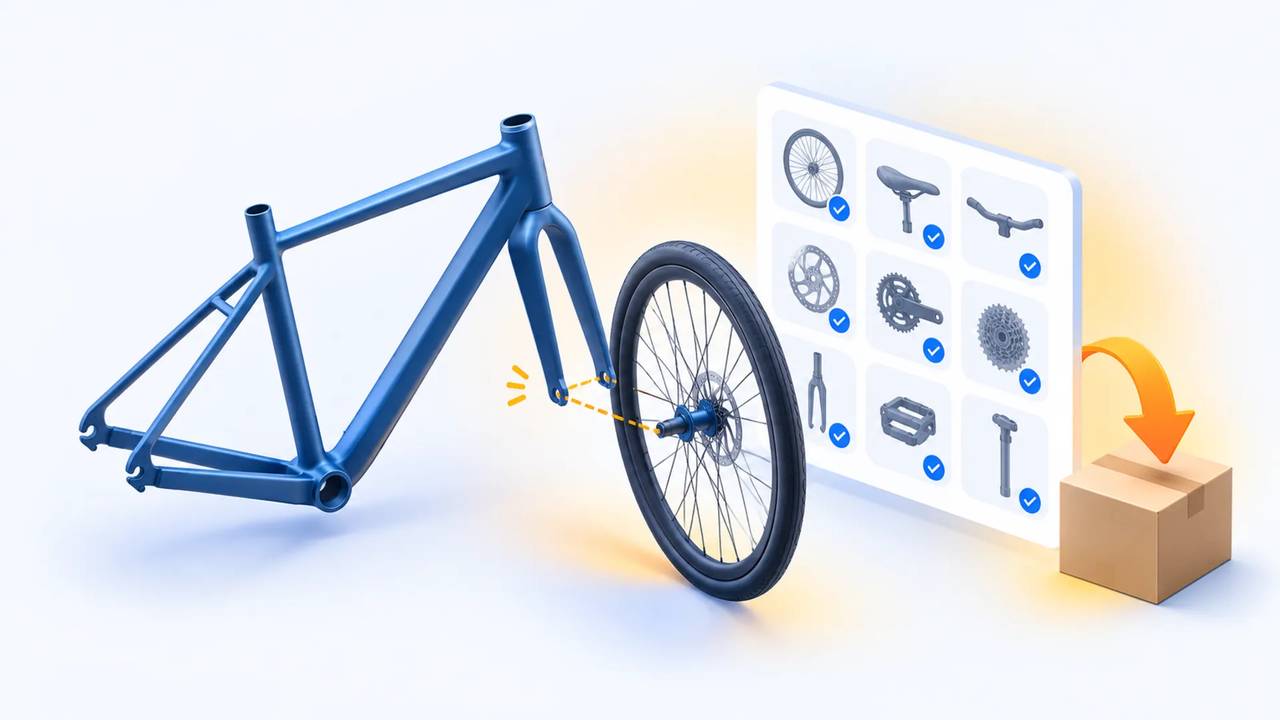
A cycling components brand sold parts that fit some bikes and not others, and left shoppers to work it out. Building fitment guidance into every listing cut wrong-part returns by two thirds.
At a glance
- Category
- Cycling
- Marketplaces
- US, UK, DE
- Revenue at start
- $208k / month
- Problem
- 21% return rate, 84% of them wrong fitment
- Engagement
- Listing SEO + creative
- Timeframe
- 8 months
Results
The challenge
A bicycle component either fits or it does not, and the difference can be two millimeters of steerer diameter or a freehub standard the shopper has never heard of. The brand's listings named the standard and assumed that was enough. For a mechanic it was; for the majority of buyers it was a riddle they solved by ordering and finding out.
One in five orders came back, and 84% of those returns said some version of “doesn't fit my bike”. That is expensive twice over — the return itself, and the review, because a customer who ordered the wrong part very reliably blames the part. The hero ASIN sat at 3.8 stars in a category where anything under four is filtered out.
Our approach
We made compatibility something the page resolves rather than something the shopper guesses.
- A compatibility matrix per product — standards, diameters and model years listed explicitly, including the common bikes the part does not fit.
- A measurement guide in the image stack, showing exactly what to measure on the bike and where, since most buyers can measure but do not know which dimension matters.
- Fitment language in titles and search terms, so the listing appears for the model-and-standard searches people actually run.
- The variation family rebuilt so each standard is a selectable option rather than four near-identical listings competing with each other.
Inside the ad account
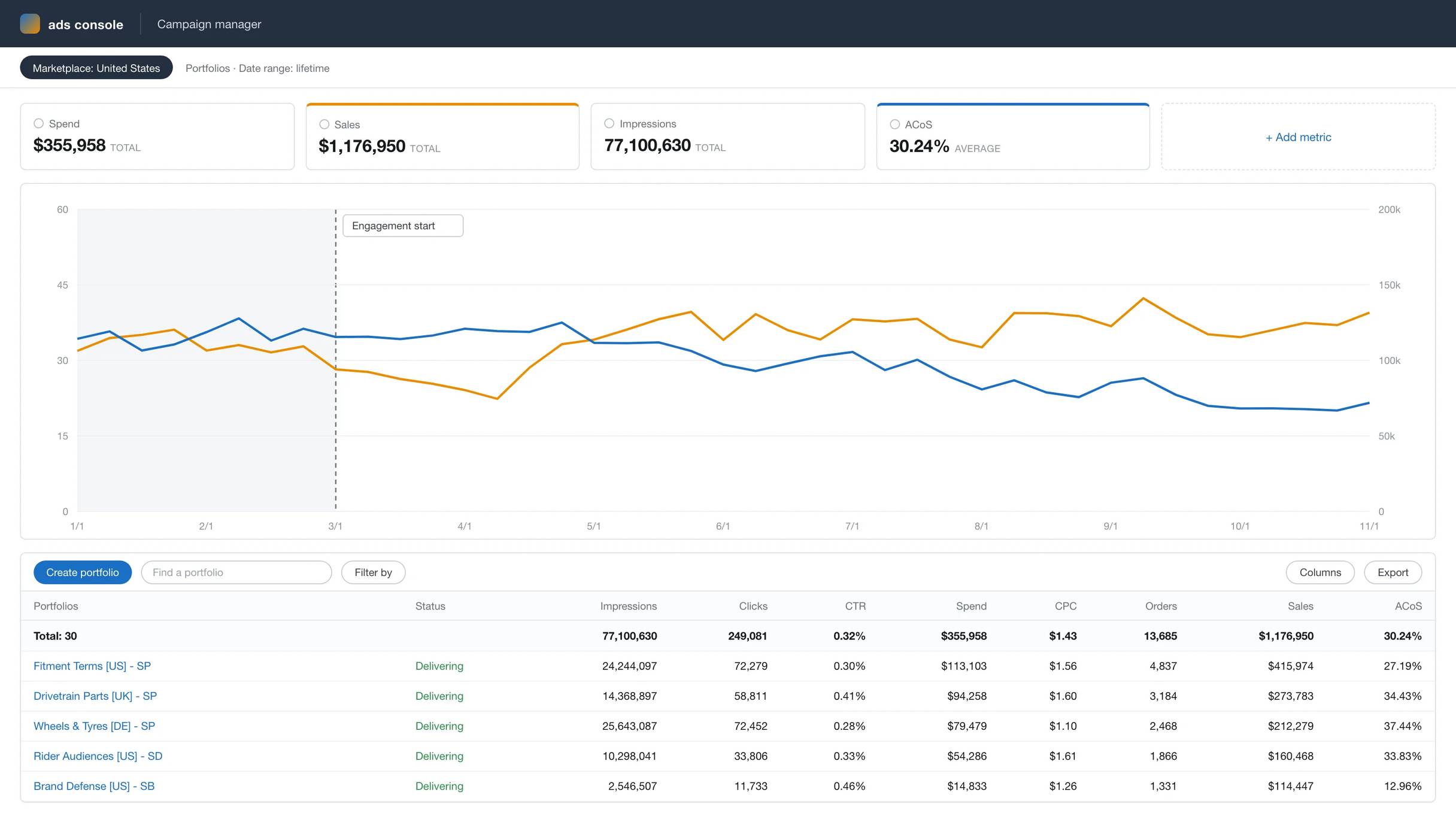
Anonymized account view, rebuilt from the figures reported above: ad sales growing from $94k to $153k a month while ACoS falls from 34% to 23% across the 8-month engagement.
The results
Returns fell from 21% to 7%, and net revenue rose 63% — about a fifth of that is orders that stopped coming back, and the rest is the conversion the page gained.
Conversion rose 44% because the page now removes the doubt that had been stopping purchases: a shopper who cannot confirm fitment does not order and hope, they leave. The rating recovered from 3.8 to 4.2 once reviews stopped being written by people who had received exactly what they ordered and could not use it.
“We were naming a standard and calling it a spec sheet. Our customers needed a tape measure and one sentence.”
Services we delivered
Related case studies


Ready to scale your Amazon brand?
Talk to a senior strategist and leave with a growth plan for your store — no obligation.