
Helping a beginner avoid the racquet a professional would choose
Conversion rate 5.6% → 9.8%
A racquet brand's best-reviewed model was its most advanced, so beginners bought it, struggled with it and rated it badly. Sorting the catalog by playing level fixed both the reviews and the sales.

At a glance
- Category
- Racquet Sports
- Marketplaces
- US, UK
- Revenue at start
- $97k / month
- Catalog
- 9 models, no level guidance
- Engagement
- Listing SEO + creative
- Timeframe
- 7 months
Results
The challenge
Beginners buy the best-reviewed thing they can afford. The brand's best-reviewed thing was a stiff, head-light frame designed for players who generate their own power — excellent in the right hands and punishing in everyone else's. So the listing collected glowing reviews from club players and a steady stream of two-star reviews describing it as heavy, harsh and hard to control.
Meanwhile the entry model, which is exactly what those buyers needed, sold twelve percent of units and looked like an afterthought on a page that gave no reason to choose it. The catalog offered nine racquets and no way to tell which one was meant for you — so shoppers used the only proxy available, the review count, which reliably pointed them at the wrong frame.
Our approach
We put the selection question on the page before the product.
- Each model assigned a playing level — improver, intermediate, advanced — stated in the title area and the first image rather than implied by specification.
- A comparison module across the range, so every listing routes a mismatched shopper to the right frame instead of losing them or selling them the wrong one.
- Level vocabulary in search terms, capturing the “beginner tennis racquet” and “intermediate” searches the brand had never ranked for.
- Entry model repositioned as a deliberate choice, with copy explaining why a forgiving frame is the faster path to improving.
Inside the ad account
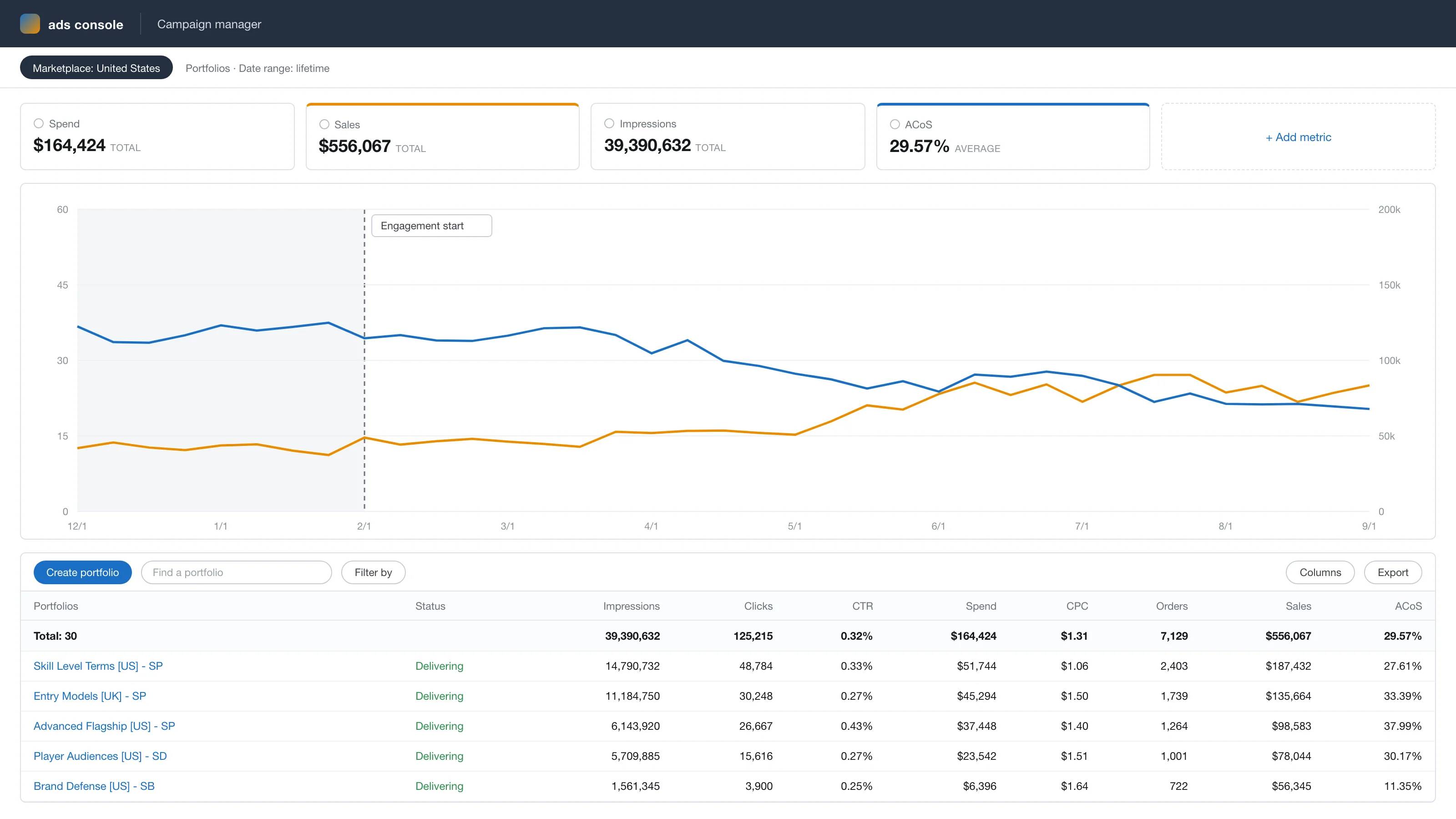
Anonymized account view, rebuilt from the figures reported above: ad sales growing from $44k to $84k a month while ACoS falls from 35% to 22% across the 7-month engagement.
The results
Conversion rose from 5.6% to 9.8% and revenue grew 54%, with the same nine products at the same prices.
The flagship's rating recovered four tenths of a star simply by being bought by people it suits — the two-star reviews were never a verdict on the racquet, they were a verdict on the selection process. The entry model went from 12% to 31% of units, which also builds the future: a player who starts on the right frame upgrades within the brand.
“Our hardest racquet was our best seller for the worst possible reason. It had the most reviews.”
Services we delivered
Related case studies


Ready to scale your Amazon brand?
Talk to a senior strategist and leave with a growth plan for your store — no obligation.