
Making safety certification the first thing a climber sees
Conversion rate 4.8% → 9.1%
A climbing hardware brand's certifications were buried in the technical details while uncertified imports outranked it on price. Putting the standards on the page turned a compliance fact into the sales argument.

At a glance
- Category
- Climbing
- Marketplaces
- US, DE
- Revenue at start
- $143k / month
- Context
- Competing against uncertified imports at half the price
- Engagement
- Creative & content + listing SEO
- Timeframe
- 8 months
Results
The challenge
Climbing hardware is life-safety equipment, and the buyer knows it. They also see a search page where the brand's certified carabiner sits beside an import at half the price with a similar photograph and a higher review count, and the page gives them no way to tell the difference.
The brand's certifications — the standards its products are tested to, the batch traceability, the rated strengths — appeared in the technical details table, three screens down, in the same typeface as the packaging dimensions. The single most important fact about the product was formatted like a shipping weight, and the brand was losing sales to products that would not pass a test it had paid to pass.
Our approach
We moved the certification from a compliance footnote to the top of the argument.
- Standards in the image stack — the CE and UIAA marks, the rated strengths and what each certification actually tests for, in frame two.
- Strength figures shown as the comparison they are, with the testing method explained plainly enough to be credible.
- Traceability made visible — batch marking and the ability to identify a specific unit, which matters to anyone buying for a club or a wall.
- Certification vocabulary in the listing's indexed text, capturing the shoppers who explicitly search for rated and certified gear.
Inside the ad account
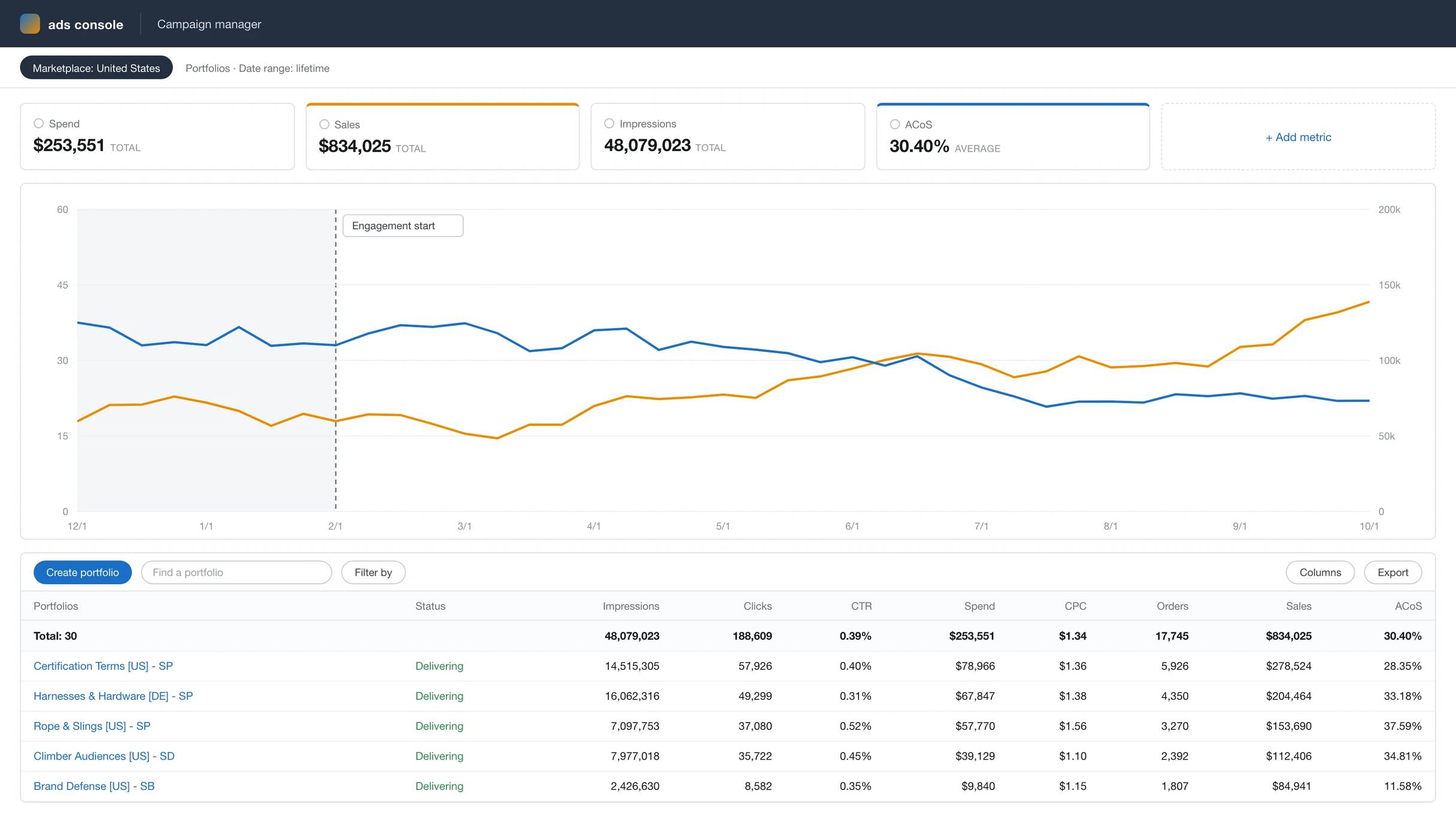
Anonymized account view, rebuilt from the figures reported above: ad sales growing from $64k to $118k a month while ACoS falls from 35% to 22% across the 8-month engagement.
The results
Conversion nearly doubled — 4.8% to 9.1% — and the average selling price rose 15%, because the page now explains what the price difference buys.
Revenue grew 83% against the same competitors at the same prices. The return rate also fell three points, which follows from the same change: a buyer who understands what they are purchasing is far less likely to send it back. The certification was always there; it was formatted like a footnote.
“We'd spent a fortune on testing and then printed the result next to the box dimensions.”
Services we delivered
Related case studies




Ready to scale your Amazon brand?
Talk to a senior strategist and leave with a growth plan for your store — no obligation.