
The complete board sells once; the wheels sell forever
Repeat revenue 7% → 39%
A skate brand sold finished boards and treated spare parts as warranty stock. Listing bearings, wheels, decks and grip as a catalog of their own turned one-off buyers into a recurring business.
At a glance
- Category
- Skates, Skateboards & Scooters
- Marketplaces
- US
- Revenue at start
- $154k / month
- Catalog at start
- 11 complete products, no parts listed
- Engagement
- Full account management + listing SEO
- Timeframe
- 9 months
Results
The challenge
Everything in this category wears out on a schedule. Wheels flat-spot, bearings grind, grip tape loses its bite, decks crack — and a rider who is actually riding replaces something every few months. The brand knew this; it held spare parts in its warehouse for warranty claims and shipped them free to anyone who complained.
On Amazon it sold only complete products. So a customer who wore out a set of wheels searched for wheels, found a competitor, bought theirs, liked them, and progressively became that brand's customer one component at a time. The brand had a genuine annuity built into its product and was handing it to whoever bothered to list the parts.
Our approach
We listed the consumables as a business rather than as a spares cupboard.
- A parts catalog built out properly — wheels, bearings, decks, grip and hardware as their own ASINs with their own specifications.
- Compatibility stated with the brand's completes, so an owner can identify the right part without measuring anything.
- Component search terms captured, which are high-intent, low-competition and previously produced zero traffic for the brand.
- Sponsored Display remarketing to previous buyers, timed to the typical wear interval, with the component they are statistically about to need.
How we worked
- 1
Map the wear cycle
Warranty and support history analyzed to establish which components fail, in what order, and roughly when.
- 2
Build the catalog
Forty-six component ASINs created with full specifications and compatibility data rather than generic spare-part listings.
- 3
Connect parts to completes
Cross-references added in both directions so an owner finds the right part and a part buyer discovers the completes.
- 4
Time the follow-up
Brand-follower messaging and on-listing cross-placement aligned to each component's typical wear interval.
- 5
Watch the second order
Repeat purchase tracked as the primary metric, with the parts range extended into the three components that sold out first.
Inside the ad account
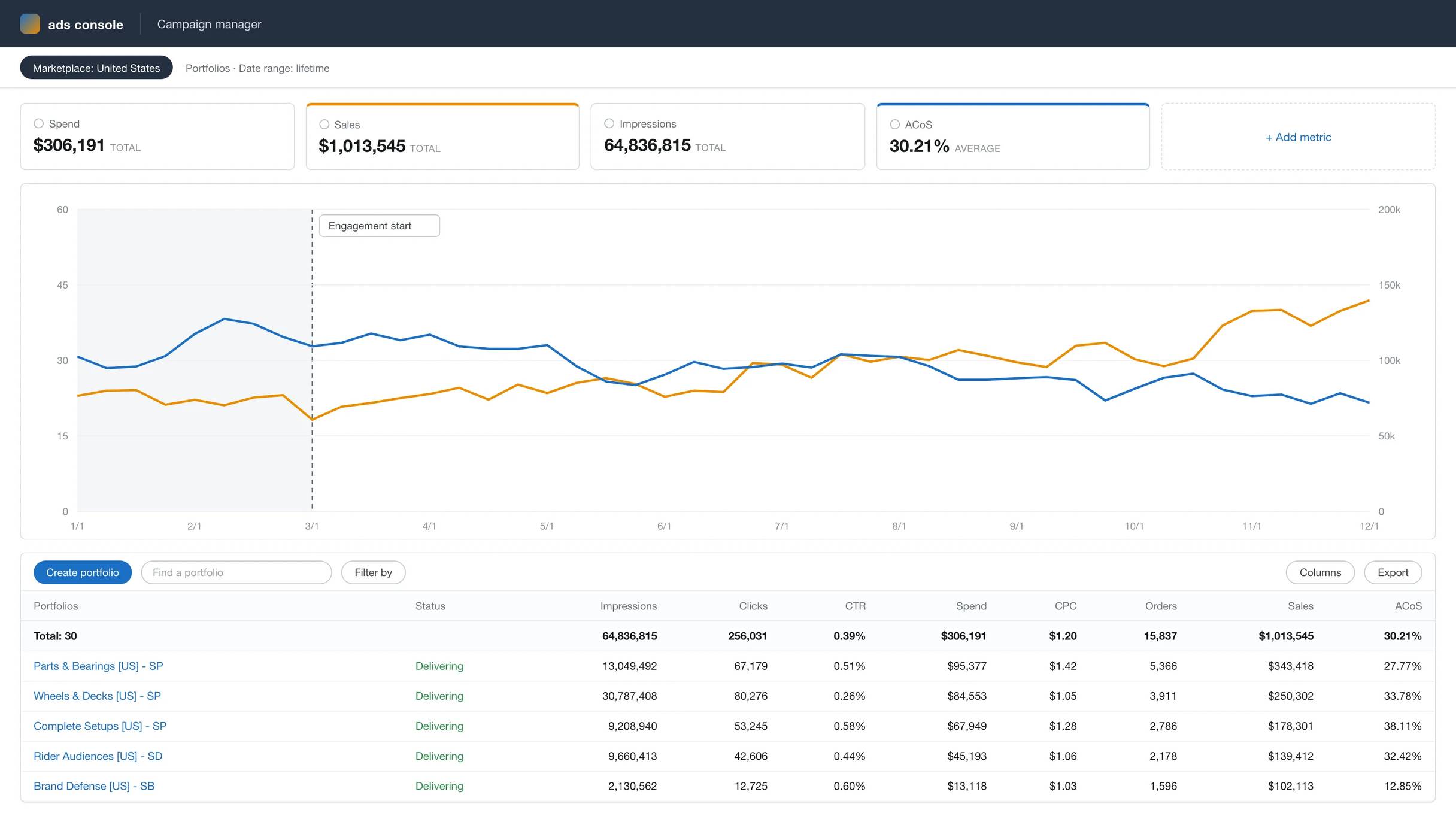
Anonymized account view, rebuilt from the figures reported above: ad sales growing from $69k to $126k a month while ACoS falls from 33% to 22% across the 9-month engagement.
The results
Repeat customers went from 7% of revenue to 39%, and orders per customer per year more than doubled.
Total revenue grew 82% without a single new complete product — the growth is the same customers buying the things they were always going to buy, from the brand that made the board rather than from whoever ranked for “skate bearings”. Component traffic is also far cheaper to acquire, because the search is specific and the buyer already knows what they want.
“We were giving parts away to keep people happy and then watching them buy their next set from someone else.”
Services we delivered
Related case studies


Ready to scale your Amazon brand?
Talk to a senior strategist and leave with a growth plan for your store — no obligation.