
The product worked; the first fifteen minutes did not
One-star reviews cut 68%
A paddleboard brand's returns and angry reviews all described the same thing — the first setup. Instructional content before and after purchase turned the worst hour of ownership into a non-event.
At a glance
- Category
- Water Sports
- Marketplaces
- US, AU
- Revenue at start
- $194k / month
- Problem
- 16% returns, most citing assembly or inflation
- Engagement
- Creative & content + account management
- Timeframe
- 6 months
Results
The challenge
Reading two years of one-star reviews took an afternoon and produced one finding: almost none of them were about the board. They were about the pump, the fin that seemed not to lock, the valve that appeared to leak because a pin had not been depressed, and a printed leaflet that assumed the reader already knew how a high-pressure valve works.
The product performed well for anyone who got past that first hour. The brand's response had been to improve the product year after year, which addressed the thing customers were not complaining about, while the failure — a confusing fifteen minutes on a beach, often with children waiting — stayed exactly where it was.
Our approach
We designed the first fifteen minutes as carefully as the product.
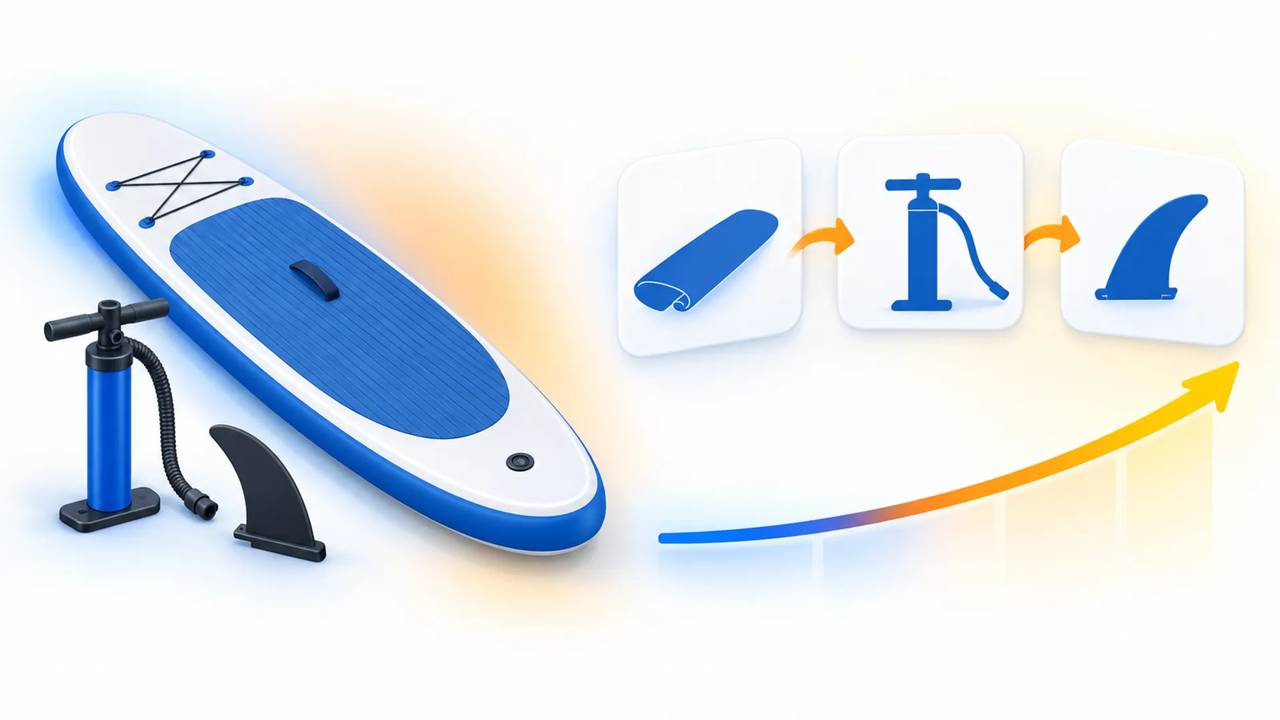
- Setup shown before purchase — the image stack and A+ now walk through inflation, fin and valve, which also sets an accurate expectation of effort.
- A QR-linked video series on the packaging insert, one short clip per step, reachable at the beach on a phone with no app and no manual.
- The valve step called out explicitly in three places, since it alone accounted for a third of the “defective” returns.
- Review requests timed after the first successful use rather than on delivery, so the rating reflects the product rather than the unboxing.
Inside the ad account
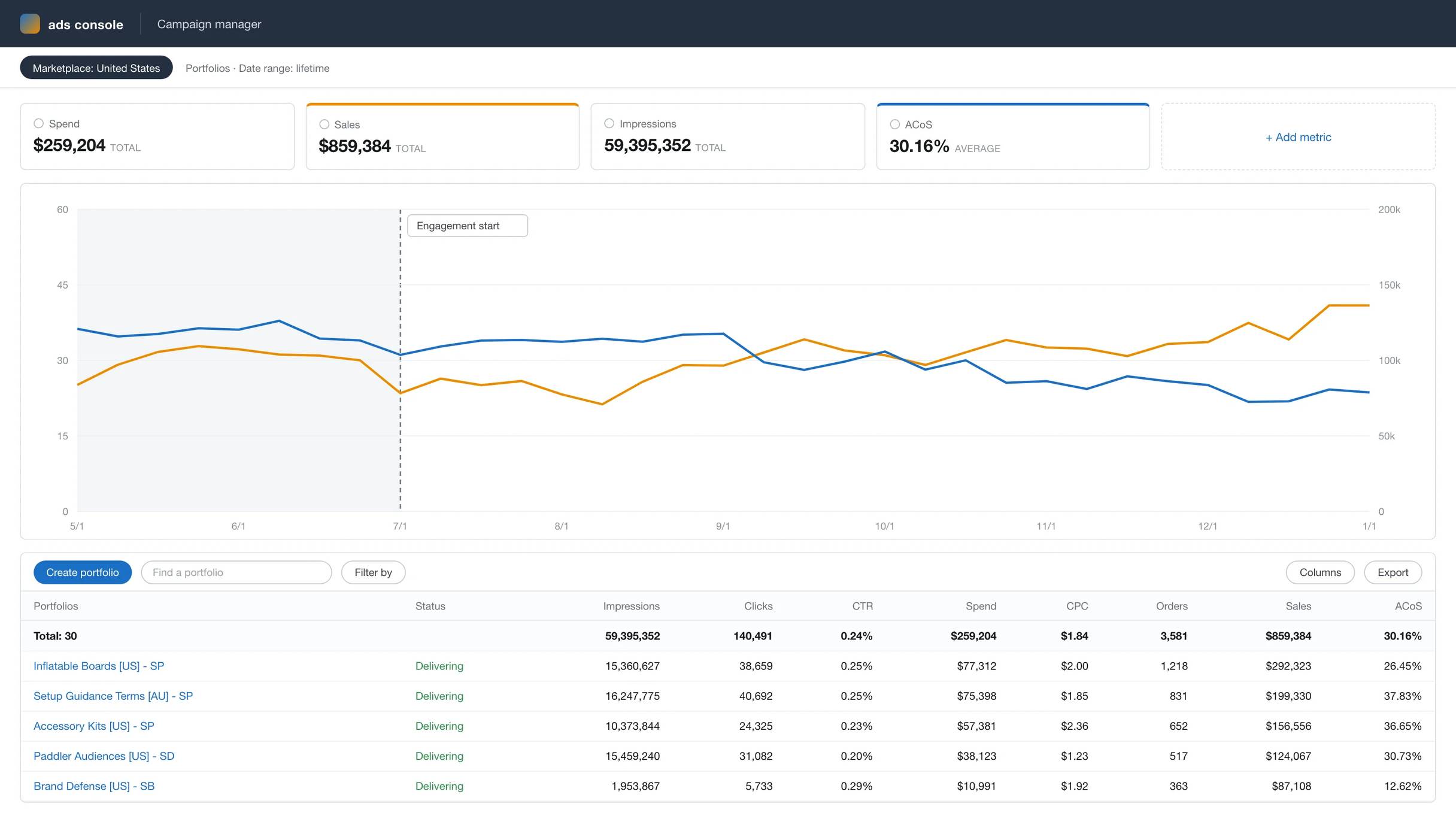
Anonymized account view, rebuilt from the figures reported above: ad sales growing from $87k to $129k a month while ACoS falls from 33% to 23% across the 6-month engagement.
The results
One-star reviews fell 68% and the return rate went from 16% to 6%, with the product physically unchanged.
The rating rose from 4.0 to 4.3, which in this category moves a listing above the filter most shoppers apply, and that is where the 48% revenue growth comes from — conversion improved on every listing without a single change to advertising. The returns that remain are genuine, and the brand can finally see them.
“Three product cycles went into making the board better. The problem was a valve pin and a leaflet.”
Services we delivered
Related case studies


Ready to scale your Amazon brand?
Talk to a senior strategist and leave with a growth plan for your store — no obligation.