
Taking page one during the two weeks the category leaders run dry
Page-one share 11% → 38%
Twice a season the biggest brands in team sports sell out for two or three weeks. A challenger brand learned to see those windows coming and spend into them, winning positions it then kept.
At a glance
- Category
- Team Sports
- Marketplaces
- US
- Revenue at start
- $163k / month
- Context
- Outspent 20:1 by the category leaders
- Ad budget
- Unchanged throughout, re-timed
- Engagement
- PPC + account management
- Timeframe
- 10 months
Results
The challenge
The brand competes against manufacturers who outspend it roughly twenty to one. On an ordinary week there is no bid it can place that wins a position worth having, and the previous strategy — spreading a modest budget evenly across the year — guaranteed it was never meaningfully present at any single moment.
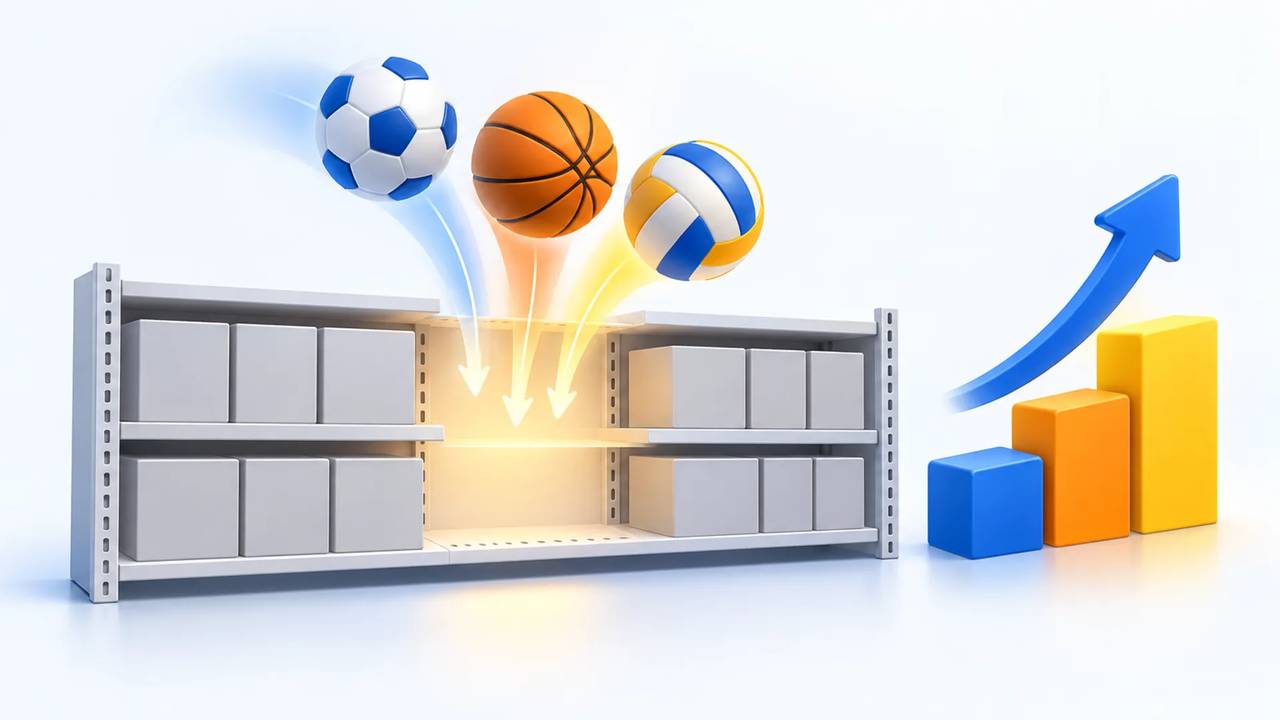
What the account had never used is the one advantage a small brand has in this category: the giants run out of stock. Demand is bunched around season starts and tournament dates, their forecasts are built nationally, and twice a season the leading products go unavailable for two to three weeks. During those windows the auction is suddenly cheap and the shelf is genuinely open — and the brand was spending exactly the same amount that week as every other week.
Our approach
We turned an evenly spread budget into an opportunistic one.
- Daily availability monitoring of the twenty competing ASINs that actually own the hero terms, so a stockout is noticed within a day rather than in a monthly report.
- A reserve held back — a fixed share of the annual budget deliberately unspent, existing only to be deployed into a window.
- Aggressive bidding while the window is open, taking top-of-search positions that are unaffordable when the leaders are in stock.
- Inventory readiness as the precondition — cover checked and restocked ahead of the known seasonal peaks, since a window is worthless to a brand that runs out too.
How we worked
- 1
Identify the windows
Two years of competitor availability reconstructed, showing repeatable stockout periods around the season start and mid-season tournaments.
- 2
Build the trigger
Daily availability checks on the twenty competing ASINs, with a defined threshold that releases reserve budget.
- 3
Hold the reserve
Around 18% of the annual budget withheld from routine spend, which meant accepting a quieter presence for most of the year.
- 4
Spend hard, briefly
During each window bids raised to take top-of-search, with spend running three to four times the normal daily rate.
- 5
Convert position into rank
Stock, price and content prepared in advance so the sales velocity earned in the window turned into organic rank that survived the competitor's return.
Inside the ad account
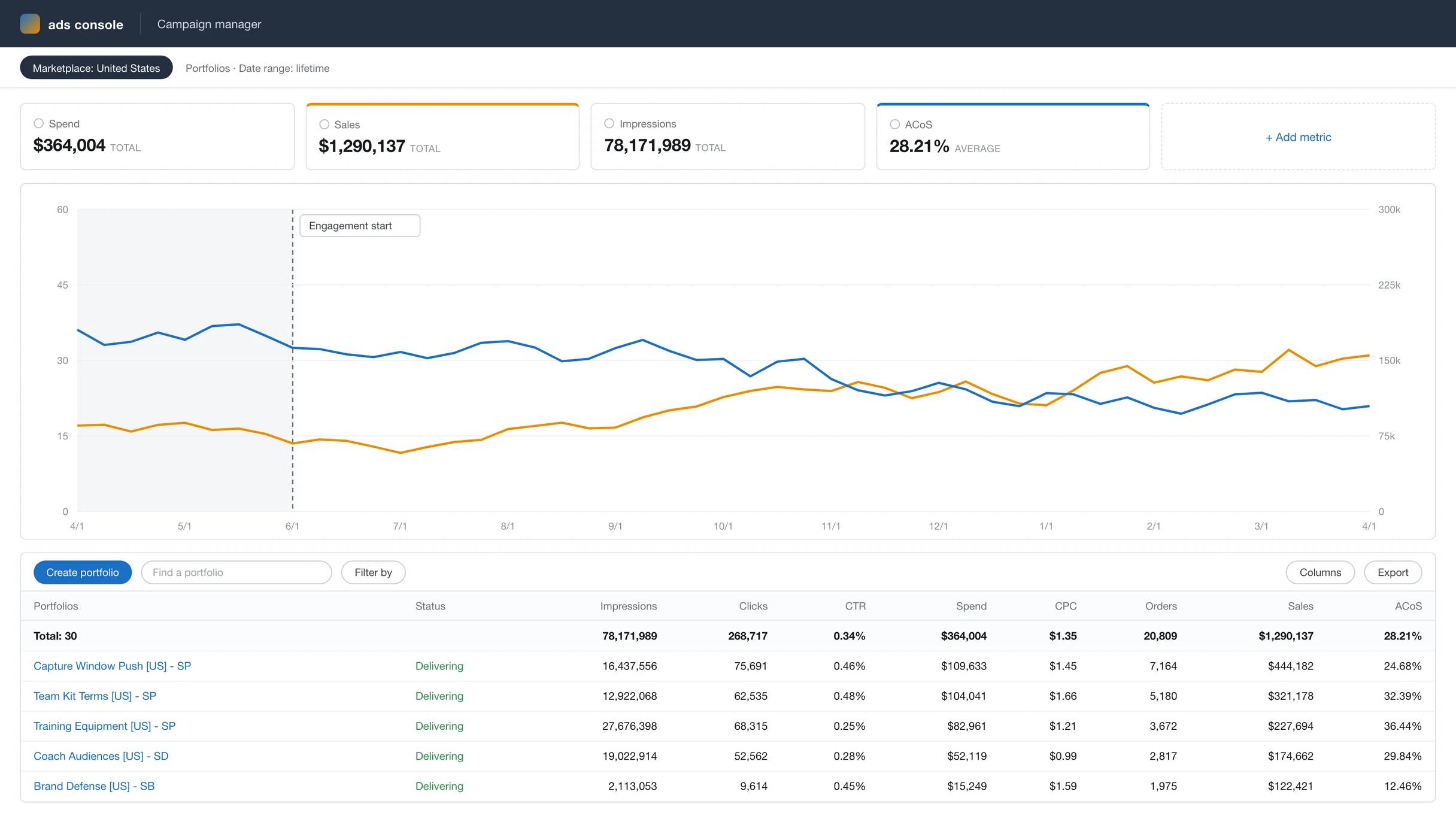
Anonymized account view, rebuilt from the figures reported above: ad sales growing from $73k to $140k a month while ACoS falls from 33% to 20% across the 10-month engagement.
The results
Page-one share on the hero terms went from 11% to 38%, and revenue grew 91% on the same annual advertising budget, only re-timed.
The capture windows run at a 14% ACoS against a 33% baseline, because the auction empties out at the same moment demand does not. And 71% of the rank gained during a window was still held eight weeks after the competitor restocked — the organic position earned by two weeks of real sales velocity does not hand itself back.
“We can't outbid them for fifty weeks. We can outbid them for two, and it turns out that's when it matters.”
Services we delivered
Related case studies


Ready to scale your Amazon brand?
Talk to a senior strategist and leave with a growth plan for your store — no obligation.