
Sizing a boot that fits nothing like a shoe
Size-related returns 27% → 9%
A winter sports brand sold boots in mondopoint while its customers think in shoe sizes, and absorbed a quarter of orders back every season. A proper sizing system fixed the returns and the reviews with them.
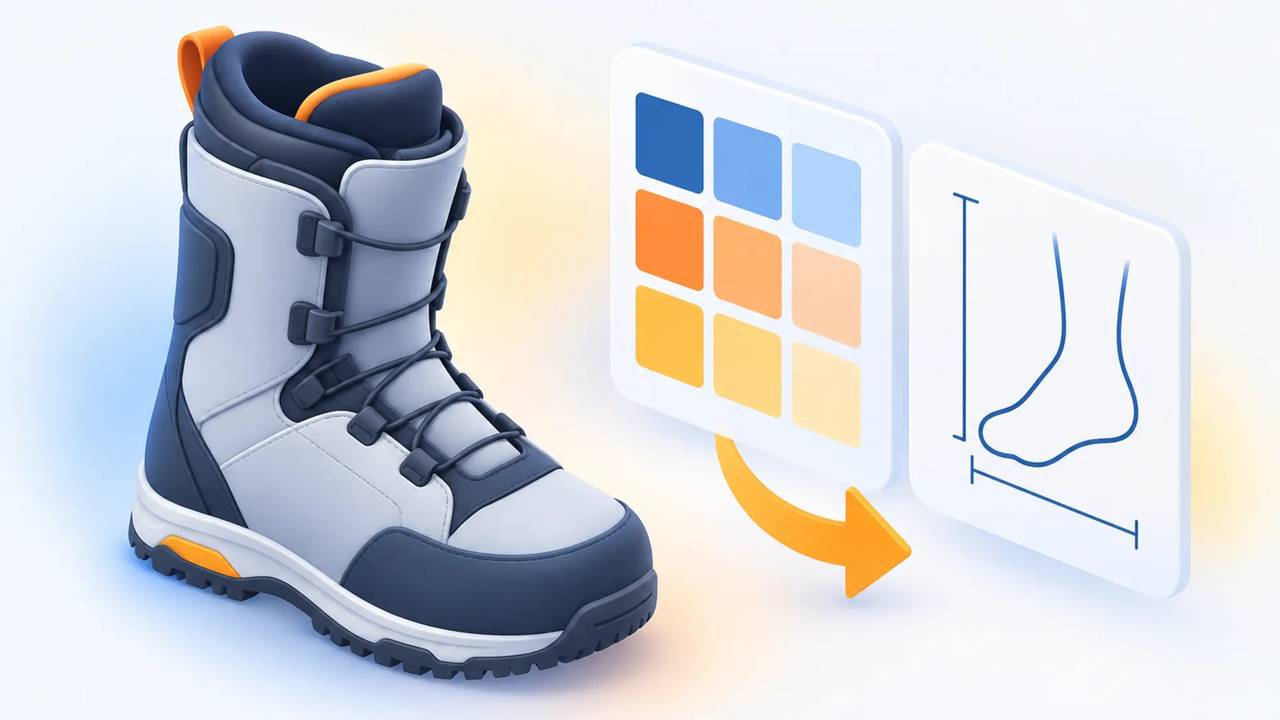
At a glance
- Category
- Winter Sports
- Marketplaces
- US, CA
- Revenue at start
- $246k / month in season
- Problem
- 27% returns, nearly all size-related
- Engagement
- Creative & content + listing SEO
- Timeframe
- 9 months, spanning one full season
Results
The challenge
The boots are sized in mondopoint, which is the correct way to size them and a system almost no online shopper uses. The listing printed the mondopoint value, a converted shoe size from a chart of unclear origin, and nothing about width, volume or how a performance fit is supposed to feel — which is snugger than any shoe the buyer owns.
A quarter of every season's orders came back. Worse, the reviews carried the confusion forward: a third of them discussed sizing, which meant the next shopper arrived already unsure, and either bought a size up to be safe — producing a boot that performs badly and gets returned for a different reason — or did not buy at all.
Our approach
We replaced a conversion chart with a measurement method.
- Measure, don't convert — a foot-length-in-centimeters guide as the primary instruction, since mondopoint is that measurement and the shoe-size detour is where the error enters.
- Width and volume stated separately, with plain guidance on which model suits which foot shape.
- Fit expectation set explicitly — what a correct performance fit feels like on day one versus after packing out, which prevents the size-up reflex.
- Variation family and size charts corrected, so the size selected in the dropdown matches the size described in the content on every listing.
How we worked
- 1
Code the returns
One full season of returns categorized: 89% size-related, two thirds of them a boot returned as too large after the shopper had sized up to be safe.
- 2
Rebuild the chart
A measurement-based chart produced from the actual lasts rather than a generic conversion table.
- 3
Rewrite the content
Measurement guide, width guidance and fit expectation added to the image stack and A+ on every boot listing.
- 4
Fix the catalog data
Size attributes and variation families corrected so the dropdown, the chart and the copy finally agree.
- 5
Watch the season
Returns tracked weekly through the season; two models still over-returning were re-measured and their guidance corrected mid-season.
Inside the ad account
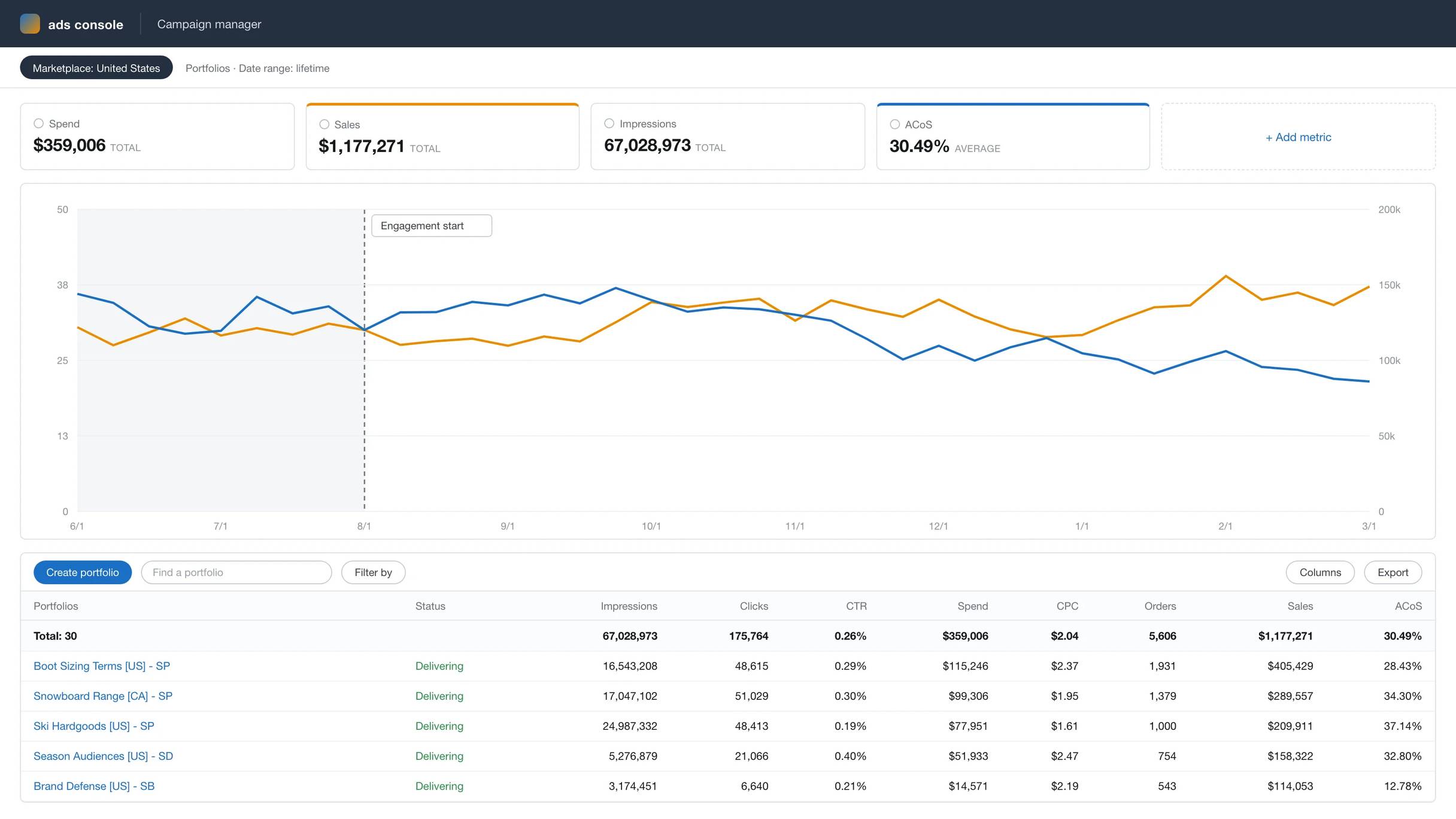
Anonymized account view, rebuilt from the figures reported above: ad sales growing from $111k to $160k a month while ACoS falls from 34% to 22% across the 7-month engagement.
The results
Size-related returns fell from 27% to 9%, and net revenue for the season rose 44% against the same season a year earlier — most of it from orders that previously came back rather than from new demand.
Conversion rose 20% because the page now gives a shopper a way to be confident before ordering, and the review body changed with it: sizing mentions fell from a third of reviews to under a tenth, which removes the doubt the next shopper used to inherit.
“We'd been publishing a conversion chart nobody could trace. Telling people to measure their foot in centimeters was the entire fix.”
Services we delivered
Related case studies



Ready to scale your Amazon brand?
Talk to a senior strategist and leave with a growth plan for your store — no obligation.