
Running the main image as an experiment instead of an argument
Click-through rate +41%
A camping gear brand argued about hero images in meetings and shipped whichever version the loudest person preferred. Structured split testing replaced the opinion with a result on twelve listings.

At a glance
- Category
- Camping & Hiking
- Marketplaces
- US, CA
- Revenue at start
- $174k / month
- Catalog
- 12 core listings
- Engagement
- Creative & content + listing SEO
- Timeframe
- 7 months
Results
The challenge
The brand's hero images were decided by preference. Someone would argue that the tent should be shown pitched in a forest, someone else that it should be on white with the pack size visible, and the version that shipped was whichever argument ran longest. Nobody could point at evidence, because none was ever collected.
In a search grid the main image is doing almost all of the work — it is competing against fifteen thumbnails for a click before any copy is read. The brand's click-through rate was a third below the category benchmark, and every proposed explanation involved price, reviews or advertising, none of which a shopper has evaluated at the moment they decide which thumbnail to tap.
Our approach
We converted the argument into a testing program.
- One variable per test — angle, crop, which configuration is shown, or how the product itself signals its size; never an outdoor scene, because the main image has to be the product on white.
- Managed experiments on the eligible listings, with a fixed minimum run length so a test is not called early by whoever is watching the dashboard.
- A hypothesis written before each test, which is what makes a losing result useful rather than merely disappointing.
- Winners rolled across the catalog — the patterns that won repeatedly became the brand's image standard rather than a one-off fix.
Timeline
Baseline
- Current images benchmarked against the category
- Testing queue built from twelve listings
- First four tests launched on the highest-traffic ASINs
Iterate
- Eleven tests completed, six with a clear winner
- Scale-reference framing wins on every product tested
- Click-through rate up 26% by month five
Standardize
- Winning patterns written into an image brief
- Remaining listings updated to the standard
- Four further tests confirm the pattern holds
Inside the ad account
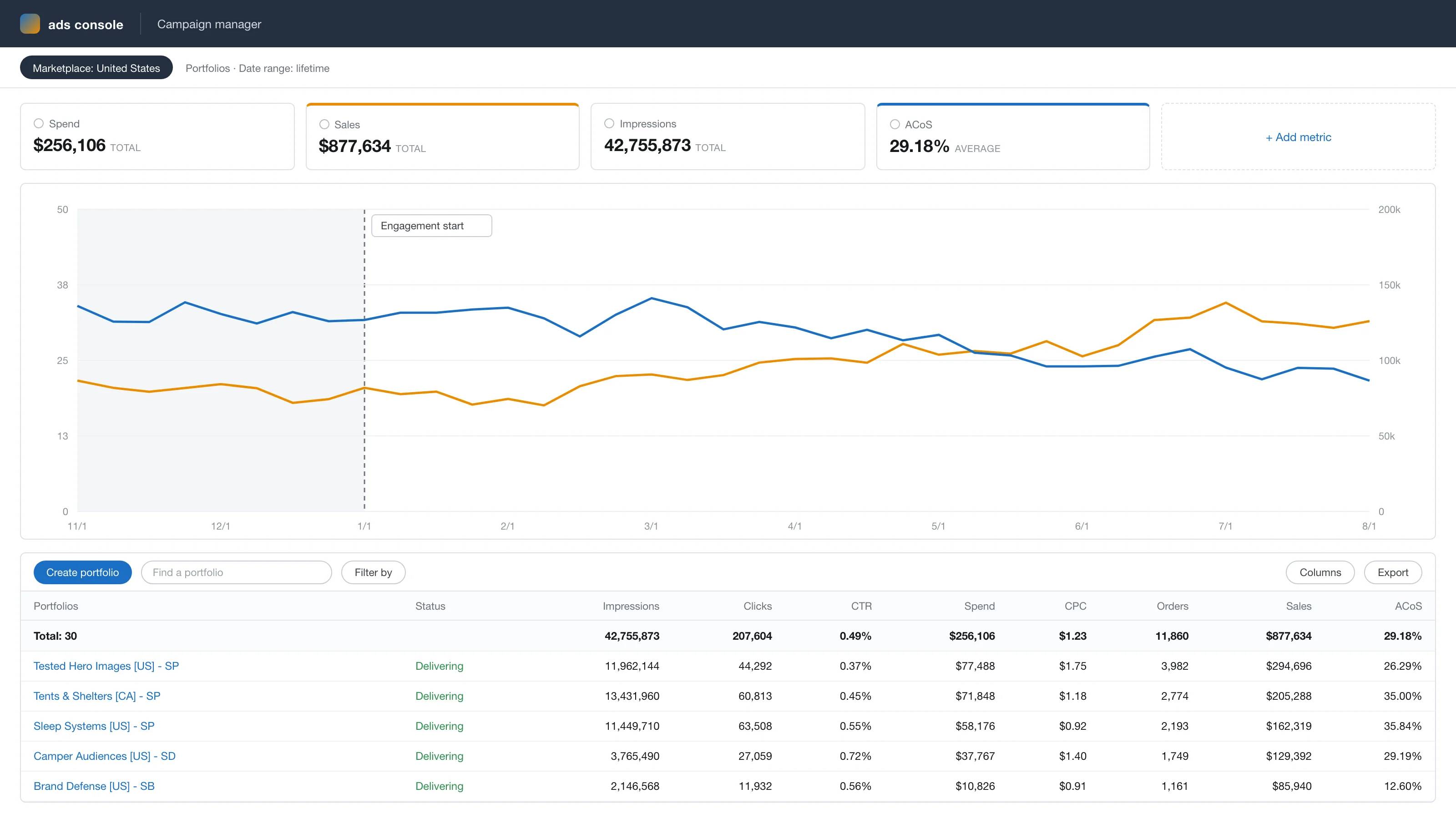
Anonymized account view, rebuilt from the figures reported above: ad sales growing from $78k to $121k a month while ACoS falls from 33% to 23% across the 7-month engagement.
The results
Click-through rose 41% and conversion 18%, taking revenue up 54% on a catalog that did not change.
The most valuable finding was the one nobody expected: the pitched-and-square-on shots that make the size of a tent unmistakable beat every more artful angle the team had preferred for years. The atmospheric scenes still exist — they live in frames two and three, where they are allowed to. The thumbnail is only ever being asked how big this is.
“Nineteen tests told us more than four years of opinions, and most of what they told us was that we were wrong.”
Services we delivered
Related case studies



Ready to scale your Amazon brand?
Talk to a senior strategist and leave with a growth plan for your store — no obligation.