
Two audiences, one keyword: separating wild-bird from pet-bird buyers
Wasted ad spend cut 61%
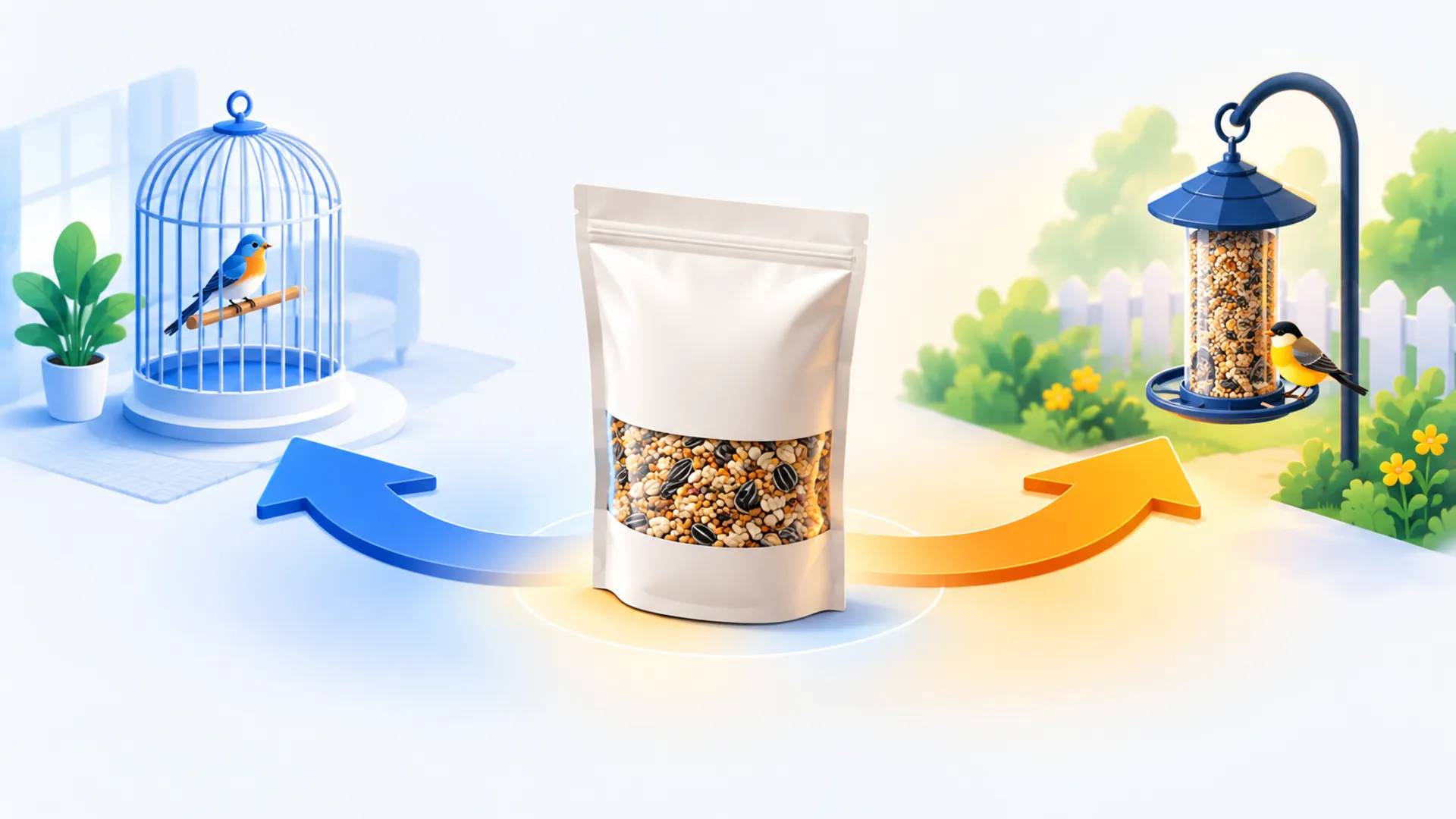
A bird nutrition brand was bidding on terms that two entirely different shoppers use — a backyard feeder buying by the sack and a parrot owner buying by the bag — and losing money on both.
At a glance
- Category
- Birds
- Marketplaces
- US
- Revenue at start
- $71k / month
- Catalog
- Pet bird formulas only, no wild-bird line
- Engagement
- PPC + listing SEO
- Timeframe
- 7 months
Results
The challenge
“Bird food”, “bird seed” and most of the obvious category terms are shared by two populations who have nothing in common. One is filling a garden feeder and buys twenty-pound sacks on price. The other keeps a parrot or a cockatiel indoors, buys a two-pound bag of a species-specific formula, and cares about pellet composition rather than cost per pound.
The brand made only the second kind of product and was bidding on terms dominated by the first. Roughly two thirds of its paid clicks came from garden-feeder shoppers who bounced on price per pound, and its conversion rate of 5.2% was an average of a good number and a terrible one. Worse, the traffic mix was teaching Amazon the wrong thing about the listings, so the organic impressions it earned were increasingly wild-bird impressions too — a loop that got more expensive every month.
Our approach
We separated the two audiences everywhere the account touches them.
- Intent audit of the search-term report, classifying every converting and non-converting term as wild-bird, pet-bird or ambiguous.
- Wild-bird intent negated across the account, including the ambiguous head terms that had been kept for volume.
- Species-first listings — the copy, title and first image now lead with cockatiel, conure, budgie and parrot rather than with “bird”, which both qualifies the shopper and corrects the relevance signal.
- Cage-life language in the backend and bullets — indoor, daily feeding, pellet and enrichment terms that a garden-feeder shopper would never type.
Inside the ad account
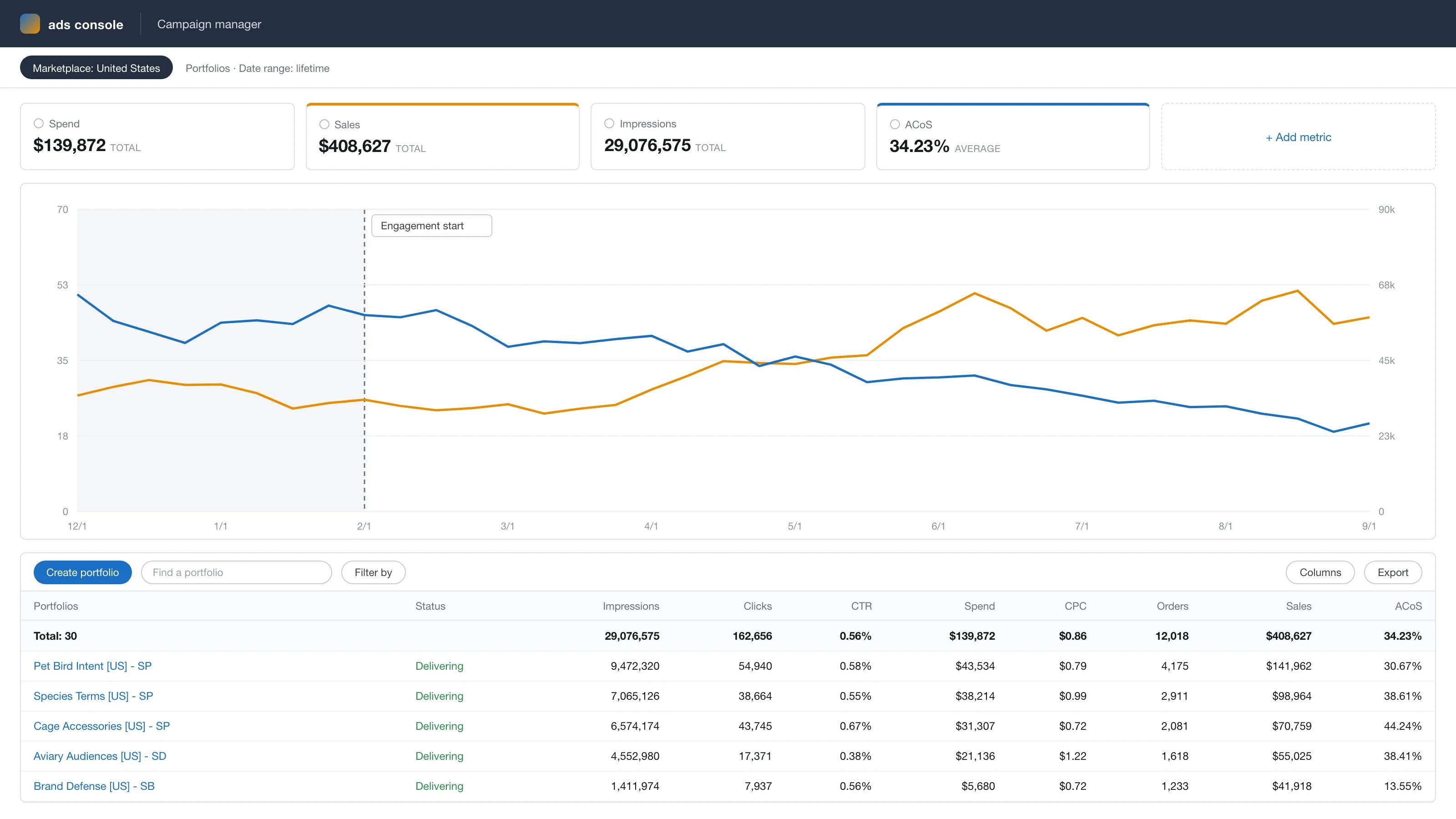
Anonymized account view, rebuilt from the figures reported above: ad sales growing from $32k to $63k a month while ACoS falls from 46% to 20% across the 7-month engagement.
The results
Spend on traffic that cannot convert fell 61%, conversion doubled to 10.4%, and ACoS dropped twenty-six points.
Revenue grew 96% on a slightly smaller advertising budget, because the account stopped paying for one of its two audiences entirely. The slower and more valuable effect was on organic placement: once the listings' clicks and conversions came consistently from pet-bird shoppers, Amazon began showing them to more of the same, so the relevance loop that had been working against the brand started working for it.
“Half our clicks were people filling a bird feeder in their garden. We make food for a parrot that lives in a living room.”
Services we delivered
Related case studies




Ready to scale your Amazon brand?
Talk to a senior strategist and leave with a growth plan for your store — no obligation.