
Writing for a buyer who reads the spec sheet before the marketing
Pre-purchase questions down 74%
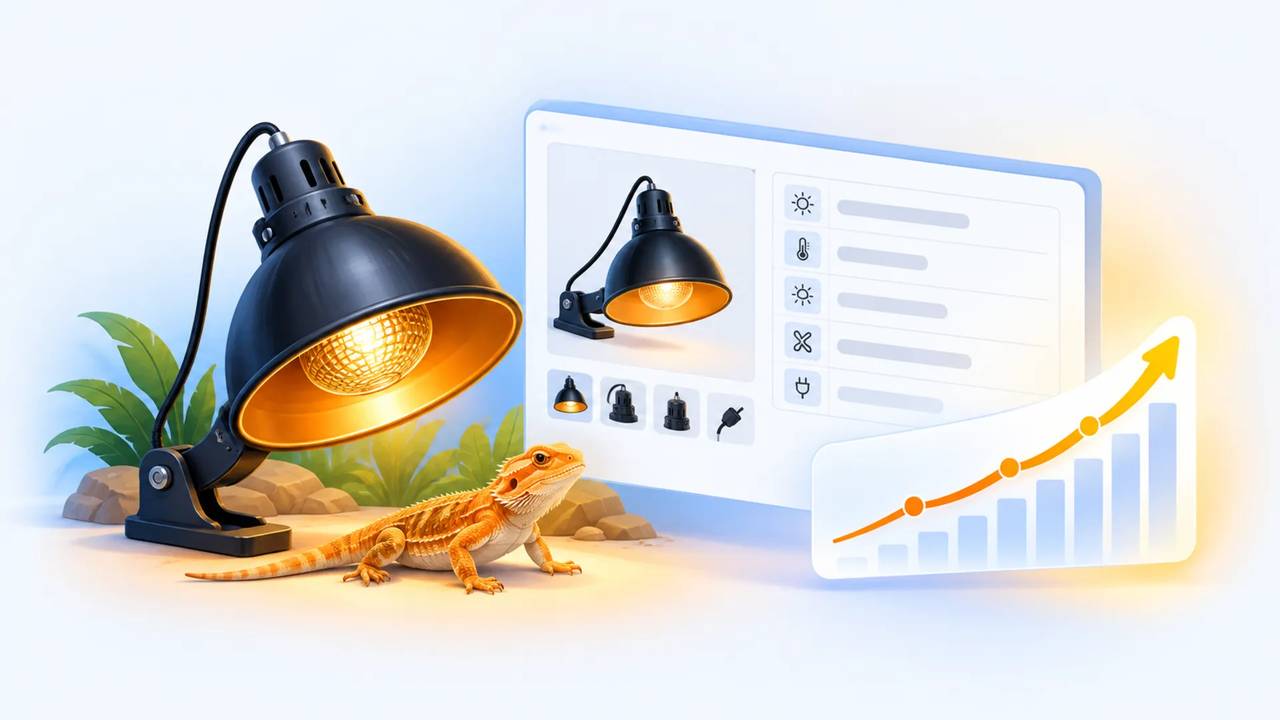
Reptile keepers buy on numbers — wattage, UVB output, temperature range, enclosure dimensions. The brand's listings were written in adjectives, and the questions section was doing the selling.
At a glance
- Category
- Reptiles & Amphibians
- Marketplaces
- US, UK
- Revenue at start
- $83k / month
- Catalog
- Heating, lighting and habitat equipment
- Symptom
- 38 unanswered customer questions per listing
- Engagement
- Creative & content + listing SEO
- Timeframe
- 9 months
Results
The challenge
A bearded dragon needs a specific basking temperature, a specific UVB gradient and a specific distance between lamp and animal, and a keeper who gets it wrong harms the animal. So this buyer arrives with a list of numbers to verify, and the brand's listings offered “powerful heat for a happy reptile” and a photograph of the box.
The evidence was sitting in plain sight on every detail page. Each listing had dozens of unanswered customer questions, almost all of them factual — what wattage, what UVB percentage, what socket, what enclosure depth. Every one of those questions is a shopper who wanted to buy and could not confirm they should, and the brand's own competitors were answering some of them in the comments. The marketing language was not merely useless here; it signalled that the seller was not a specialist, which in this category is disqualifying.
Our approach
We wrote the listing the buyer was trying to assemble themselves.
- A complete specification block in the image stack — wattage, output, socket type, beam spread, dimensions and safe mounting distance, laid out as a table.
- Species-and-enclosure guidance — which model suits which animal in which tank size, which is the actual purchase question underneath the specs.
- Every existing customer question answered and the recurring ones promoted into the listing content so they stop being asked.
- Search terms taken from the specs themselves, since keepers search by wattage, UVB percentage and species rather than by product name.
Inside the ad account
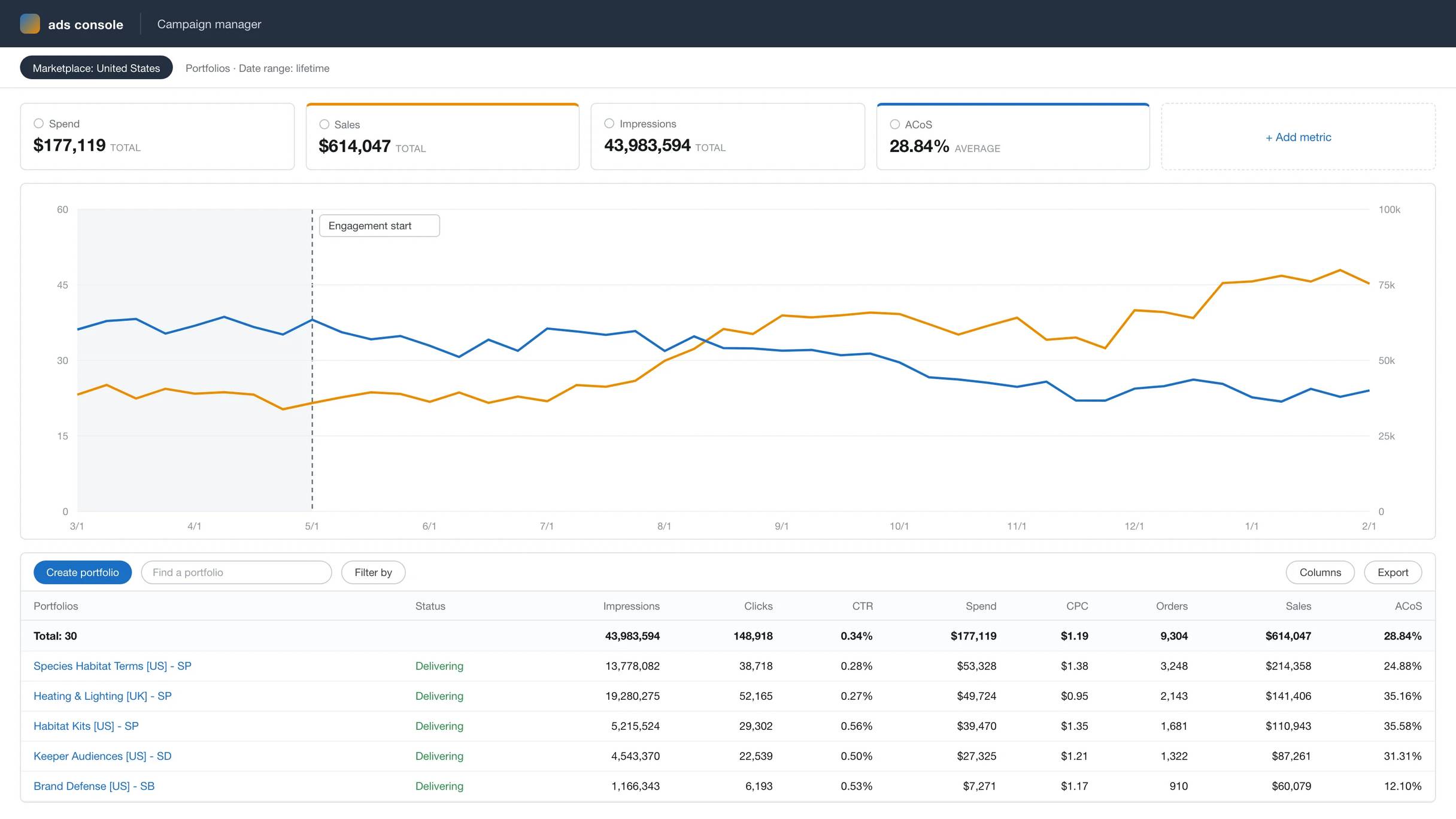
Anonymized account view, rebuilt from the figures reported above: ad sales growing from $37k to $74k a month while ACoS falls from 36% to 22% across the 9-month engagement.
The results
Conversion rose 81% to 10.7% and revenue nearly doubled, on the same equipment at the same prices.
The questions metric is the cleanest read on what happened: thirty-eight unanswered factual questions per listing became ten, because the page now contains the answers. Returns halved for a related reason — a keeper who can confirm the wattage and mounting distance before buying orders the right model, while one who guesses sends back the wrong one. In a technical hobby category, the specification table is the sales copy.
“Our listings were reassuring. This customer doesn't want reassurance, they want a number they can check against a care sheet.”
Services we delivered
Related case studies



Ready to scale your Amazon brand?
Talk to a senior strategist and leave with a growth plan for your store — no obligation.