
Selling to barns, not to riders: building for the professional buyer
Average order value $74 → $168
An equine supplies brand had built everything around the individual horse owner and never noticed that its largest orders came from stables buying for twenty animals at a time.
At a glance
- Category
- Horses
- Marketplaces
- US
- Revenue at start
- $118k / month
- Catalog
- Supplements, grooming and stable supplies
- Buyer mix at start
- Assumed individual owners; 34% of revenue was actually professional
- Engagement
- Full account management + PPC
- Timeframe
- 12 months
Results
The challenge
The brand's marketing pictured a rider with one beloved horse, and its Amazon catalog matched: single tubs, single halters, retail pack sizes, copy about the bond between horse and owner. When we segmented the order data, a third of revenue was already coming from accounts buying eight and twelve units at a time — boarding barns, training yards and breeding operations that keep twenty or more animals and reorder on a fixed schedule.
Nothing in the account served them. There were no case quantities, no business pricing, nothing enrolled in Amazon Business, and the copy addressed a customer these buyers are not. They were buying anyway, in the most inconvenient way available, which is a strong signal and an expensive one to ignore: a barn that has to add twelve individual tubs to a cart will eventually find a supplier that sells a case.
Our approach
We built the catalog the professional buyer had been improvising around.
- Case quantities listed for the products that reorder predictably — supplements, bedding additives, grooming consumables.
- Amazon Business enrollment with quantity pricing, so the discount structure matches how a twenty-horse operation actually buys.
- Copy and imagery for the yard — per-horse cost, storage footprint and shelf life, which are the professional buyer's criteria and mean nothing to a single-horse owner.
- Campaigns targeting professional vocabulary — barn, yard, stable and bulk terms, kept separate from the rider-facing campaigns that still serve the retail side.
Inside the ad account
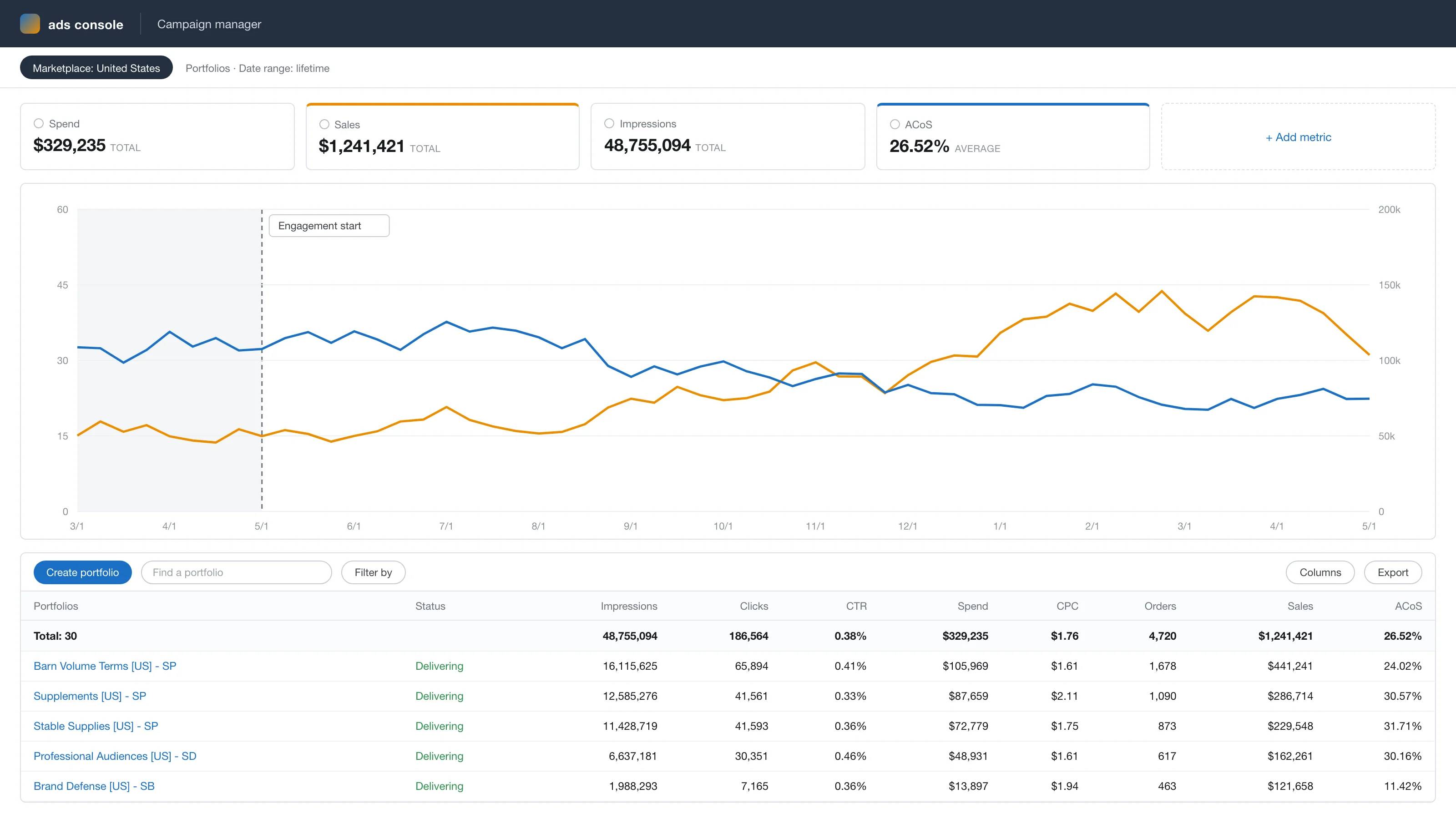
Anonymized account view, rebuilt from the figures reported above: ad sales growing from $53k to $128k a month while ACoS falls from 34% to 21% across the 12-month engagement.
The results
Average order value went from $74 to $168 and revenue grew 141%, with the professional segment moving from a third of revenue to two thirds.
The reorder frequency number explains why this compounds: a barn buying at scale comes back about four times a year against a retail owner's two, and it does so on a schedule set by the size of the operation rather than by marketing. The retail business did not shrink — it simply stopped being the only customer the account was built for.
“A third of our revenue came from yards adding twelve tubs to a cart one at a time, and we had never once written a listing for them.”
Services we delivered
Related case studies




Ready to scale your Amazon brand?
Talk to a senior strategist and leave with a growth plan for your store — no obligation.