
Studio photography lost to phone photos of real pets
Click-through rate +88%
The brand's imagery was professionally lit, perfectly styled, and outperformed by customer snapshots in every test we ran. In this category, polish reads as advertising and advertising reads as doubt.

At a glance
- Category
- Pet Supplies
- Marketplaces
- US, UK
- Revenue at start
- $187k / month
- Creative
- Full studio shoot, refreshed annually
- Engagement
- Creative & content + PPC
- Timeframe
- 7 months
Results
The challenge
The brand had spent well on photography. Its hero images showed immaculate animals on seamless backgrounds under three-point lighting, and every one of them looked like what it was: an advertisement. In a category where the buyer is choosing something for a member of their family, that polish carries an unhelpful message — it says the picture was arranged, which invites the shopper to wonder what the product looks like when it isn't.
Meanwhile the reviews section of the same listings was full of badly lit phone photographs of ordinary dogs and cats using the product in ordinary rooms, and those were the images shoppers scrolled down to look at. The brand's own asset library contained nothing of the kind, and its creative refresh cycle — one shoot a year — made testing anything expensive and slow.
Our approach
We rebuilt the image stack out of the material the category actually trusts.
- A customer photography program — existing buyers invited to submit pictures of their pets using the product for the brand's own creative, with usage permission handled properly and a small credit in return. No review was asked for in exchange, which would breach Amazon's policy.
- Real homes, real animals, mixed breeds and mixed sizes, deliberately including the scruffy and the elderly rather than only photogenic young pets.
- Tested where testing is actually possible — main image and A+ through Manage Your Experiments, with the secondary frames rotated in timed blocks and conversion read week over week, because the platform will not split-test frame five.
- Video from owners, not from a set — short clips of first use, which answer the questions a product description cannot.
Inside the ad account
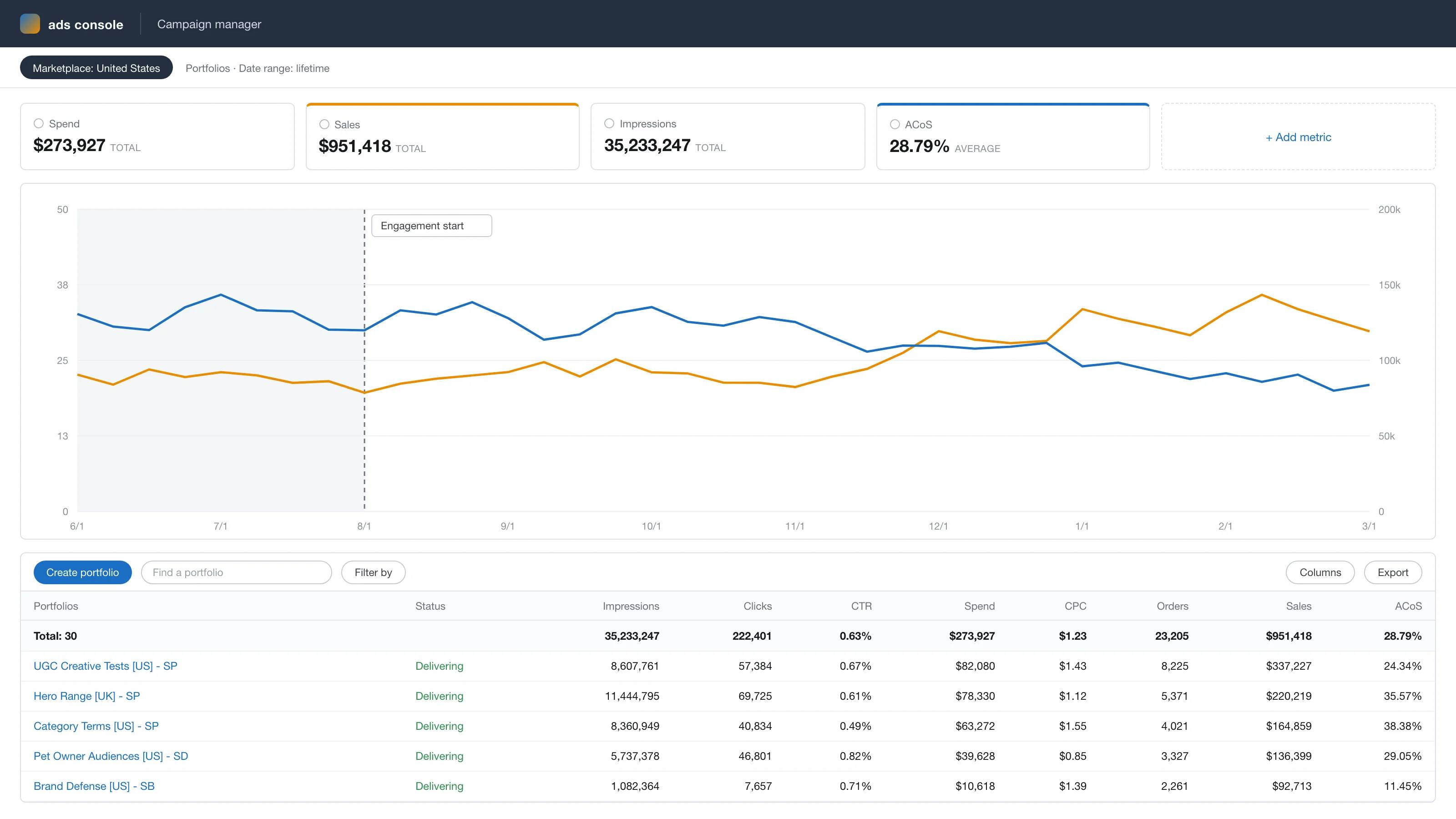
Anonymized account view, rebuilt from the figures reported above: ad sales growing from $84k to $144k a month while ACoS falls from 33% to 22% across the 7-month engagement.
The results
Click-through rate nearly doubled and conversion rose 41%, on a catalog whose products and prices did not change.
The explanation is about evidence rather than aesthetics. A studio photograph shows what the brand wants the product to look like; a customer photograph shows what it looks like in a house like the shopper's, on an animal like theirs. Cost per click fell 29% as the stronger click-through rate improved the ads' standing in the auction — not a guarantee in every account, but it held across all four campaigns here — so the new imagery cut advertising cost at the same time as it lifted sales — and it costs a fraction of an annual shoot to keep fresh.
“We were outbid on attention by our own customers' blurry phone pictures. So we started asking them for more.”
Services we delivered
Related case studies



Ready to scale your Amazon brand?
Talk to a senior strategist and leave with a growth plan for your store — no obligation.