
Building a business out of thirty searches nobody else wanted
Organic revenue share 22% → 71%
Guinea pigs, ferrets, chinchillas and rats are each too small a market to interest a large brand. Together, and owned completely, they are a category.

At a glance
- Category
- Small Animals
- Marketplaces
- US, CA
- Revenue at start
- $62k / month
- Species covered
- Guinea pig, rabbit, ferret, chinchilla, rat, hamster
- Engagement
- Listing SEO + account management
- Timeframe
- 14 months
Results
The challenge
Every keyword in this brand's world is small. “Chinchilla dust bath” does a few thousand searches a month; “ferret harness” is smaller still. Those numbers are unattractive to a large pet brand, which is precisely why the category is full of unbranded imports with poor listings — and it was also why the brand's own agency had previously steered it toward the big generic small-pet terms, where it spent heavily and ranked nowhere.
The result was an account that looked busy and earned little: 22% of revenue came from organic placement, the rest was bought, and margin was being eaten by advertising on terms where the brand had no structural advantage. Meanwhile dozens of species-specific searches — high-intent, high-margin, low-competition — were being answered by listings with one photograph and a machine-translated title.
Our approach
We treated the long tail as the strategy rather than as a supplement to it.
- A species-and-need matrix — every animal the brand serves crossed with housing, feeding, enrichment and grooming, producing about ninety addressable terms.
- One listing per intersection, properly written, rather than universal “small pet” products stretched across species.
- Owner vocabulary researched per species, because chinchilla and ferret keepers use different words for comparable products and neither says “small animal”.
- Advertising used only to seed rank, then withdrawn from terms once organic position held — the portfolio has to earn organically to be worth owning.
Timeline
Map
- Ninety species-need intersections identified and sized
- Existing catalog mapped onto them; 60% of listings found to be species-agnostic
- Broad small-pet paid terms switched off
Build
- Listings rewritten or split species by species, roughly four per month
- Advertising used in short seeding bursts per new listing
- Top-3 organic positions reached on 21 terms
Compound
- Spend withdrawn from 26 terms now holding organic rank
- Margin recovered as the paid share of revenue fell
- 37 species terms in the top three
Inside the ad account
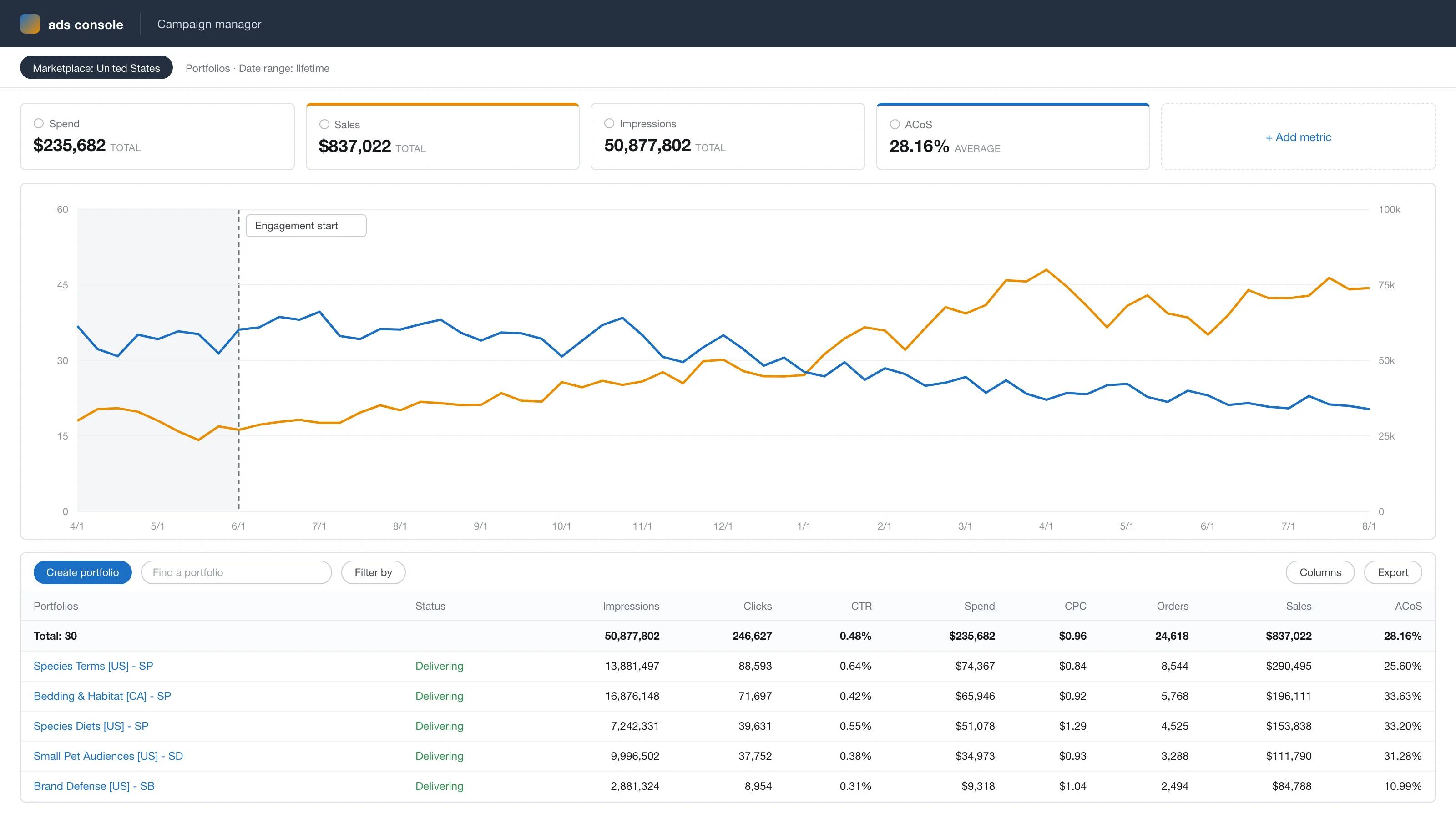
Anonymized account view, rebuilt from the figures reported above: ad sales growing from $28k to $73k a month while ACoS falls from 36% to 22% across the 14-month engagement.
The results
Organic went from 22% to 71% of revenue, total revenue grew 163%, and margin after advertising improved eleven points.
None of the individual wins is impressive — being first for “chinchilla dust bath” is not a headline. The portfolio is: thirty-seven such positions, each cheap to hold and effectively unassailable because no competitor's economics justify fighting for a term that size. The margin gain follows directly, since organic revenue carries no click cost and the brand now buys advertising only while a new listing is establishing itself.
“Every one of these keywords was too small to matter. We just needed forty of them.”
Services we delivered
Related case studies


Ready to scale your Amazon brand?
Talk to a senior strategist and leave with a growth plan for your store — no obligation.