
Launching a plant-based protein line to page one in 19 weeks
Page one on the hero term in 19 weeks
A sports nutrition brand entered one of Amazon's most crowded categories with no reviews and no rank. We built the launch around a narrow flavor-and-use-case entry point instead of the head term, then widened once velocity and reviews could hold it.

At a glance
- Category
- Sports Nutrition
- Marketplaces
- US
- Starting point
- New line, 0 reviews, 4 ASINs
- Category context
- Head term dominated by brands with 20k+ reviews
- Engagement
- PPC + listing SEO
- Timeframe
- 6 months
Results
The challenge
Plant-based protein is a category where the first page belongs to brands with five-figure review counts and a decade of sales history. A new line has none of the signals Amazon ranks on — no velocity, no reviews, no conversion history — and the obvious move, bidding on the head term from day one, is how launch budgets die: the clicks are expensive, the conversion rate of an unreviewed listing is poor, and the resulting data teaches the algorithm that the listing doesn't convert.
The brand also had a real advantage that the head term hides: a flavor and a texture profile that a specific slice of shoppers searches for by name.
Our approach
We refused the head term for the first three months and bought rank where it was affordable.
- Launch on long-tail demand — flavor, dietary and use-case terms where an unreviewed listing can still win the click and convert.
- Listing built for the same terms — title, bullets and backend copy written for the entry point, not for the category head, so paid and organic pulled the same direction.
- Review velocity as a campaign — Amazon Vine on the launch units and the Request a Review automation on every order; nothing in the box asks for a review, because no insert may.
- Widen only on evidence — the head term was opened once conversion rate and review count could survive its traffic, not on a calendar date.
Timeline
Entry point
- Long-tail keyword set built from flavor and diet modifiers
- Listings written to those terms
- Exact-match campaigns only, tight budgets
Velocity and reviews
- Vine and Request a Review running on the hero SKU
- Bids raised on the terms that convert above category average
- First page-one placements on long-tail terms
Widen
- Category and competitor targeting opened
- Head term entered with a defined rank-buying budget
- Page one reached on the hero term at week 19
Consolidate
- ACoS brought from 88% at launch to 26%
- Second and third SKU pulled up behind the hero
- Organic share growing week over week
Inside the ad account
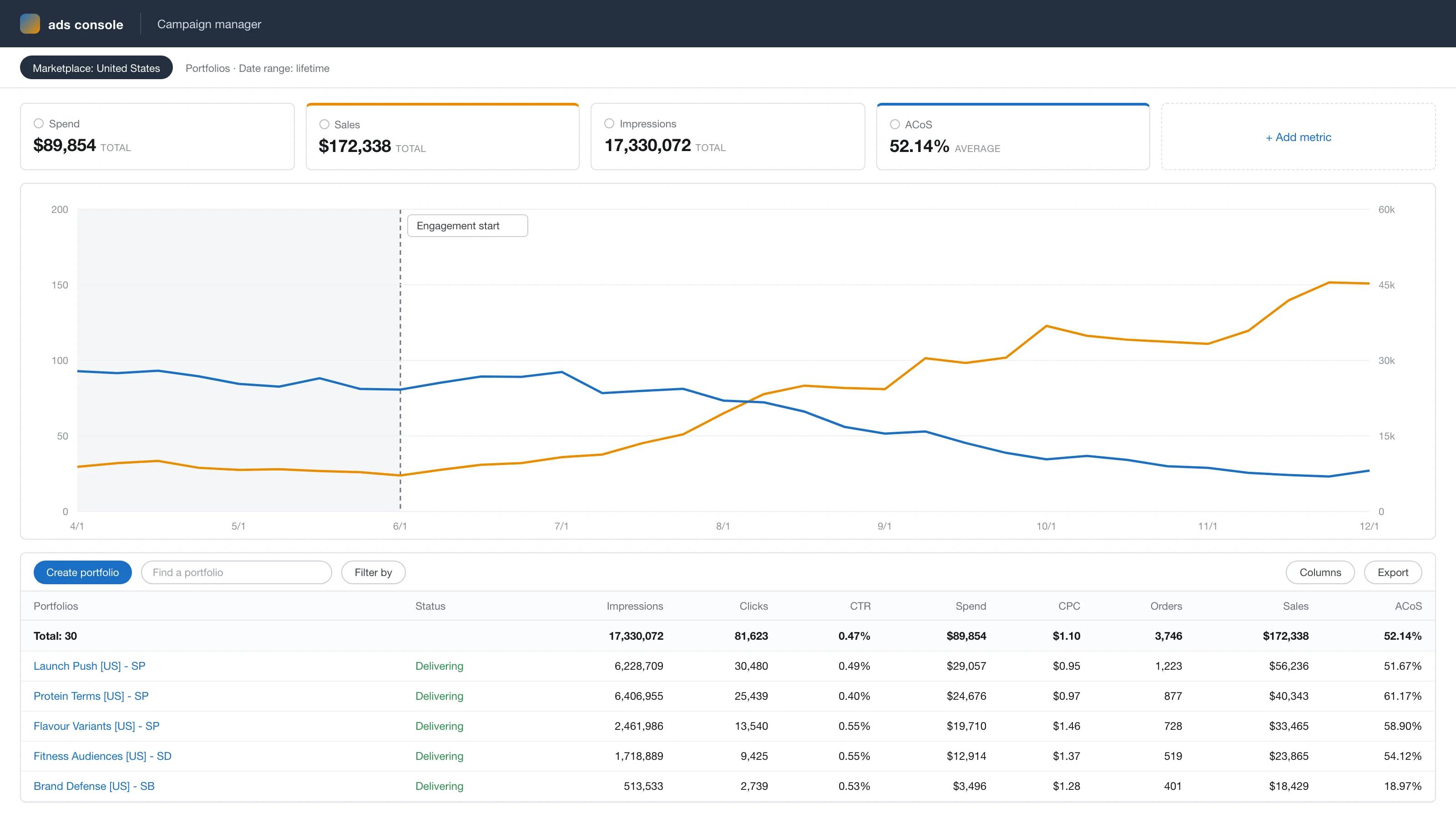
Anonymized account view, rebuilt from the figures reported above: ad sales growing from $8k to $44k a month while ACoS falls from 88% to 26% across the 6-month engagement.
The results
The line reached page one on its hero term in 19 weeks and $97k in monthly revenue by month six, from a standing start.
ACoS tells the story of the sequence: 88% in the first weeks, when every click was buying rank, down to 26% once organic position and 380 reviews were doing the work advertising had been paying for. The brand now has a launch pattern it can repeat for the next flavor, instead of a one-off result.
“Everyone told us to go straight at the main keyword. Spending three months where we could actually win is what got us there.”
Services we delivered
Related case studies




Ready to scale your Amazon brand?
Talk to a senior strategist and leave with a growth plan for your store — no obligation.