
The product worked. The router didn't.
Setup-failure reviews down 82%
A smart home brand's worst reviews came from people who never got the device online. The device was fine — it needed a 2.4GHz network, and a third of buyers did not know what that meant.
At a glance
- Category
- Smart Home
- Marketplaces
- US, CA
- Revenue at start
- $178k / month
- Problem
- 61% of one-star reviews were failed setups
- Engagement
- Creative & content + account management
- Timeframe
- 10 months
Results
The challenge
The devices connect over 2.4GHz Wi-Fi, which is ordinary for the category and invisible to most buyers. Modern routers broadcast both bands under one network name, so the phone doing the setup is usually on 5GHz, the pairing fails, and the customer concludes the product is broken.
That failure was producing 61% of the brand's one-star reviews and most of its returns. The support team had a reliable fix and used it dozens of times a week, but by the time someone contacts support they have already been frustrated for twenty minutes, and a good number never contact anyone — they return the device and write the review on the way. A 3.8 rating on a product with no defect rate to speak of is an expensive way to discover that setup is part of the product.
Our approach
We moved the fix to before the purchase instead of after the failure.
- The network requirement stated on the listing — an image frame and a bullet, phrased as a one-line router check rather than as a technical caveat.
- A two-minute setup walkthrough in the image stack and A+, including the band-separation step that support was explaining by phone.
- The fix pinned in the Q&A, which is the one public place a seller can answer, so a shopper who lands from a bad review finds it on the same screen.
- Post-purchase sequencing — the packaging insert and first-run app screen rewritten around the same check, so the moment of failure has the answer next to it.
Timeline
Diagnose
- Support tickets and negative reviews coded by cause
- Band mismatch confirmed as the dominant failure
- Baseline setup-success measured from app telemetry
Prevent
- Requirement and walkthrough added to every listing
- The fix pinned into the Q&A and the A+ content
- Setup-related negatives down by half
Rebuild
- Rating recovering as new review volume comes from successful setups
- Advertising scaled back onto the hero ASIN
- Return rate halved against the starting baseline
Inside the ad account
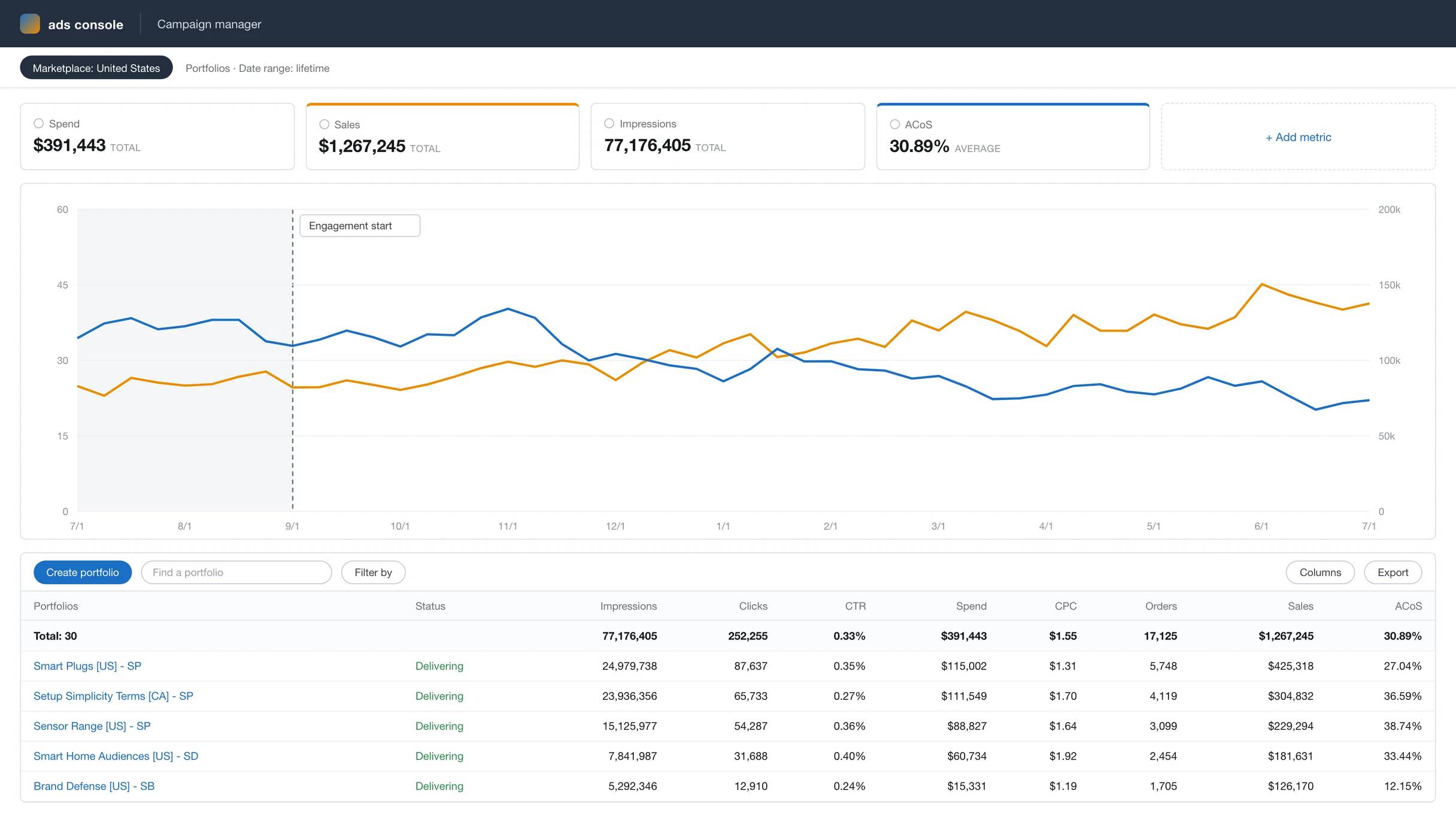
Anonymized account view, rebuilt from the figures reported above: ad sales growing from $80k to $140k a month while ACoS falls from 35% to 23% across the 10-month engagement.
The results
Setup failures fell from 61% of negative reviews to 11%, the rating climbed from 3.8 to 4.3, and revenue grew 74%.
Nothing about the hardware changed. What changed is that a shopper now learns about the requirement while they are curious rather than while they are angry, and a two-line check in the listing prevents a failure that used to cost a return, a review and a support call at once.
“Our support team had been solving this thirty times a week for two years. Nobody thought to put the answer on the page where people buy it.”
Services we delivered
Related case studies


Ready to scale your Amazon brand?
Talk to a senior strategist and leave with a growth plan for your store — no obligation.