
Saying plainly what the product doesn't do
Return rate 16% → 6%
An office equipment brand's mid-range model lacked one feature buyers assumed every model had. Nobody had lied — the listing simply never said no, and one order in six came back.

At a glance
- Category
- Office Electronics
- Marketplaces
- US, DE
- Revenue at start
- $139k / month
- Problem
- 16% returns on the mid-range model
- Cause
- An assumed feature the model does not have
- Engagement
- Creative & content + listing SEO
- Timeframe
- 6 months
Results
The challenge
The mid-range unit does not do double-sided printing. The entry model doesn't either, the top model does, and shoppers who have used office equipment for twenty years assume anything at this price does. The listing described everything the product has and never mentioned the thing it hasn't, which is technically complete and practically misleading.
Sixteen percent of orders came back, and a steady stream of reviews accused the brand of hiding it. The internal instinct was the opposite of the fix: stating a missing feature on the page felt like volunteering a reason not to buy, so the bullets kept describing speed and print quality while the return rate stayed where it was and the rating fell to 3.9.
Our approach
We put the disqualifier where it prevents the wrong sale.
- The limitation stated in the bullets and in an image frame, in the same plain tone as the features, not as a footnote.
- A three-model comparison on every page, so a buyer who needs the missing feature is routed to the model that has it rather than lost.
- Search terms adjusted — the mid-range model removed from the queries that specify the feature, and pushed harder on the ones it genuinely wins.
- The Q&A answered with the same clarity, since the standing questions were the first thing a cautious shopper read after the reviews.
Inside the ad account
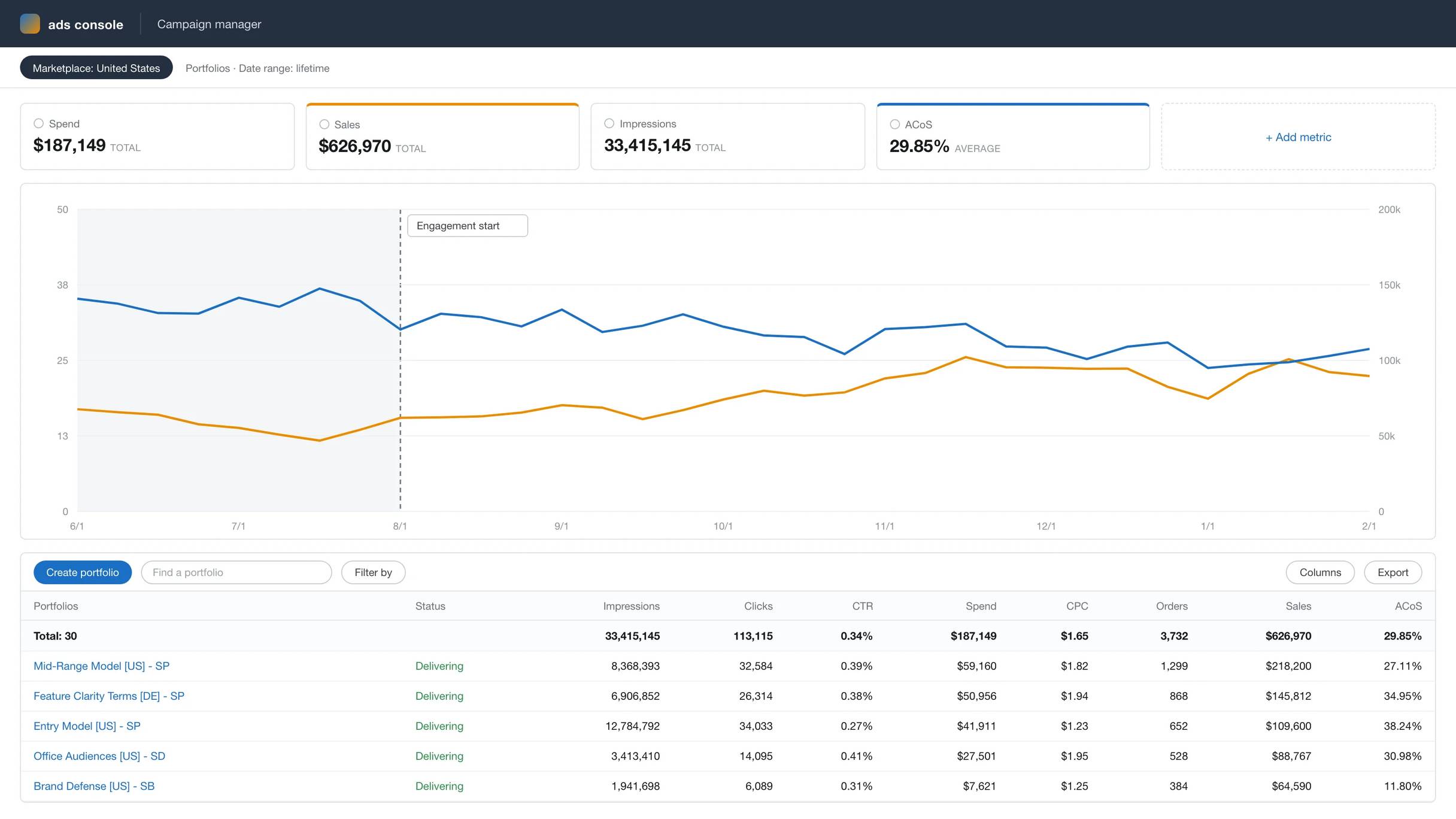
Anonymized account view, rebuilt from the figures reported above: ad sales growing from $63k to $95k a month while ACoS falls from 34% to 24% across the 6-month engagement.
The results
Returns on the mid-range model fell from 16% to 6%, and conversion rose 24% — the opposite of what the team expected from publishing a limitation.
Two things are happening. Shoppers who need the missing feature now buy the top model instead of returning the wrong one, so the revenue stays in the account. And a page that states a limitation plainly is read as trustworthy on everything else it says, which lifts conversion among the majority who never needed that feature at all. Net revenue grew 53% from the same catalog, sold more honestly.
“Writing “this model does not do that” in a bullet felt like sabotage. It was the single most profitable sentence we've published.”
Services we delivered
Related case studies




Ready to scale your Amazon brand?
Talk to a senior strategist and leave with a growth plan for your store — no obligation.