
The catalog spoke engineering; the buyers spoke forum
+39% sessions
Enthusiast buyers describe components in a vocabulary that grew up in forums and videos, not in datasheets. The brand's listings were written by the people who designed the parts.

At a glance
- Category
- PC Components
- Marketplaces
- US, DE
- Revenue at start
- $174k / month
- Catalog
- 26 SKUs across three component types
- Engagement
- Listing SEO + creative
- Timeframe
- 10 months
Results
The challenge
The brand's copy was written by its engineers and read like it: accurate, dense, and phrased in the terms that appear on a specification sheet. Its customers, meanwhile, had learned the category from build videos and forum threads, where components are described by feel, by nickname, by the problem they solve and by comparison to whatever part everyone was arguing about last month.
The two vocabularies barely overlap. A shopper looking for a quieter build searches for silence and noise, not for an acoustic figure in decibels. Someone choosing a case searches by what will fit inside it in everyday language. The result was a catalog that ranked for the precise technical strings competitors also targeted, and was invisible on the much larger body of searches written in the way the community actually talks — which are also cheaper, more specific and far better at signalling what the shopper will be happy with.
Our approach
We rewrote the catalog in the language of its own community, without losing the accuracy.
- A vocabulary map built from community sources — the recurring phrasings, nicknames and problem statements that appear where this audience learns, matched to the specifications they correspond to.
- Colloquial phrasing in titles and bullets, the exact figure right beside it, so neither audience is lost and the listing indexes for both.
- Use-case framing over specification framing — quiet build, small build, first build — which is how the decision is actually described before it is made.
- Imagery that answers the community's standard questions, including the size and clearance comparisons that dominate every thread about these parts.
Inside the ad account
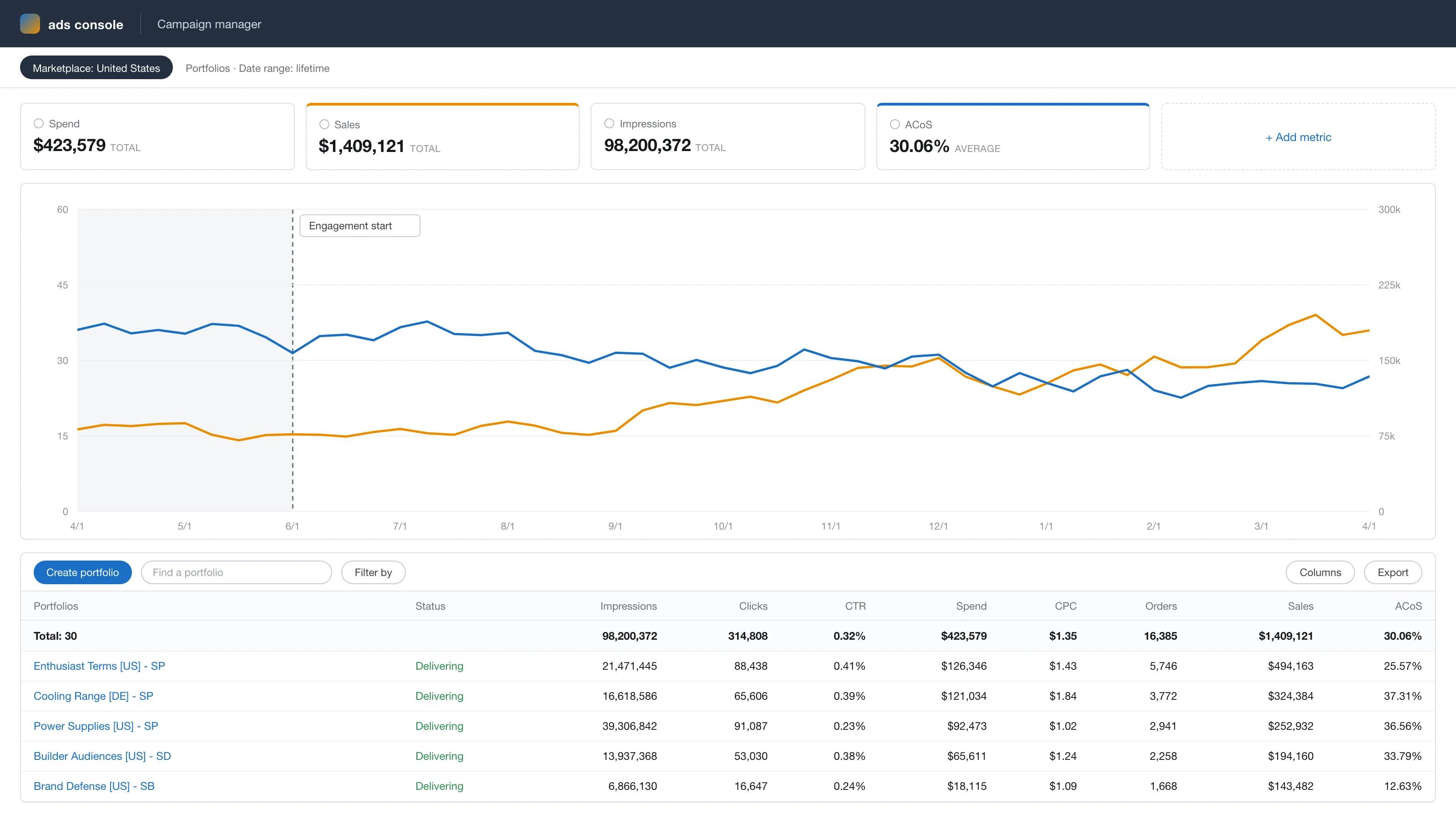
Anonymized account view, rebuilt from the figures reported above: ad sales growing from $78k to $154k a month while ACoS falls from 35% to 24% across the 10-month engagement.
The results
Sessions grew 39% and ranking keywords almost sixfold, because the catalog now matches an entire register of search it previously did not contain a single word of.
Conversion improved 41% alongside it, which the keyword count alone would not predict — a shopper who arrives via the phrase they were thinking in finds a page that sounds like it was written for them. The specifications did not change, and neither did their accuracy; they simply stopped being the only thing on the page.
“Our datasheets were flawless. Nobody searches in datasheet.”
Services we delivered
Related case studies



Ready to scale your Amazon brand?
Talk to a senior strategist and leave with a growth plan for your store — no obligation.