
Moving the safety certifications out of the fine print
Conversion 4.6% → 8.1%
A nursery brand held three certifications its competitors did not, and listed them in a compliance line at the bottom of the bullets. Parents were reading that line as legal boilerplate.

At a glance
- Category
- Nursery
- Marketplaces
- US
- Revenue at start
- $178k / month
- Differentiator
- 3 certifications no direct competitor held
- Engagement
- Creative & content + listing SEO
- Timeframe
- 8 months
Results
The challenge
Nothing is bought more anxiously than the furniture a baby sleeps in unattended. The purchase is high-consideration, expensive, and the shopper's real question is never about the finish — it is “is this safe to leave my child in”.
The brand had the best possible answer and had hidden it. Its certifications appeared as an acronym string in the final bullet, in the same register as the warranty terms, where they read as regulatory boilerplate rather than as a claim. Meanwhile the top of the listing sold dimensions, wood tone and assembly time. Cheaper competitors without those certifications looked identical on the search page, so the brand's advantage cost it money to hold and earned it nothing.
Our approach
We made the safety argument the product's leading claim, in language a parent understands.
- Certifications translated into plain outcomes — what was tested, against what risk, and what the result means for a sleeping child.
- The proof moved into image frames two and three, ahead of the styling shots, because that is where the anxious shopper looks first.
- Testing shown rather than asserted — the physical tests illustrated, which converts a logo into evidence.
- Safety vocabulary indexed — the terms parents search when they are worried, mapped into title, bullets and backend.
Inside the ad account
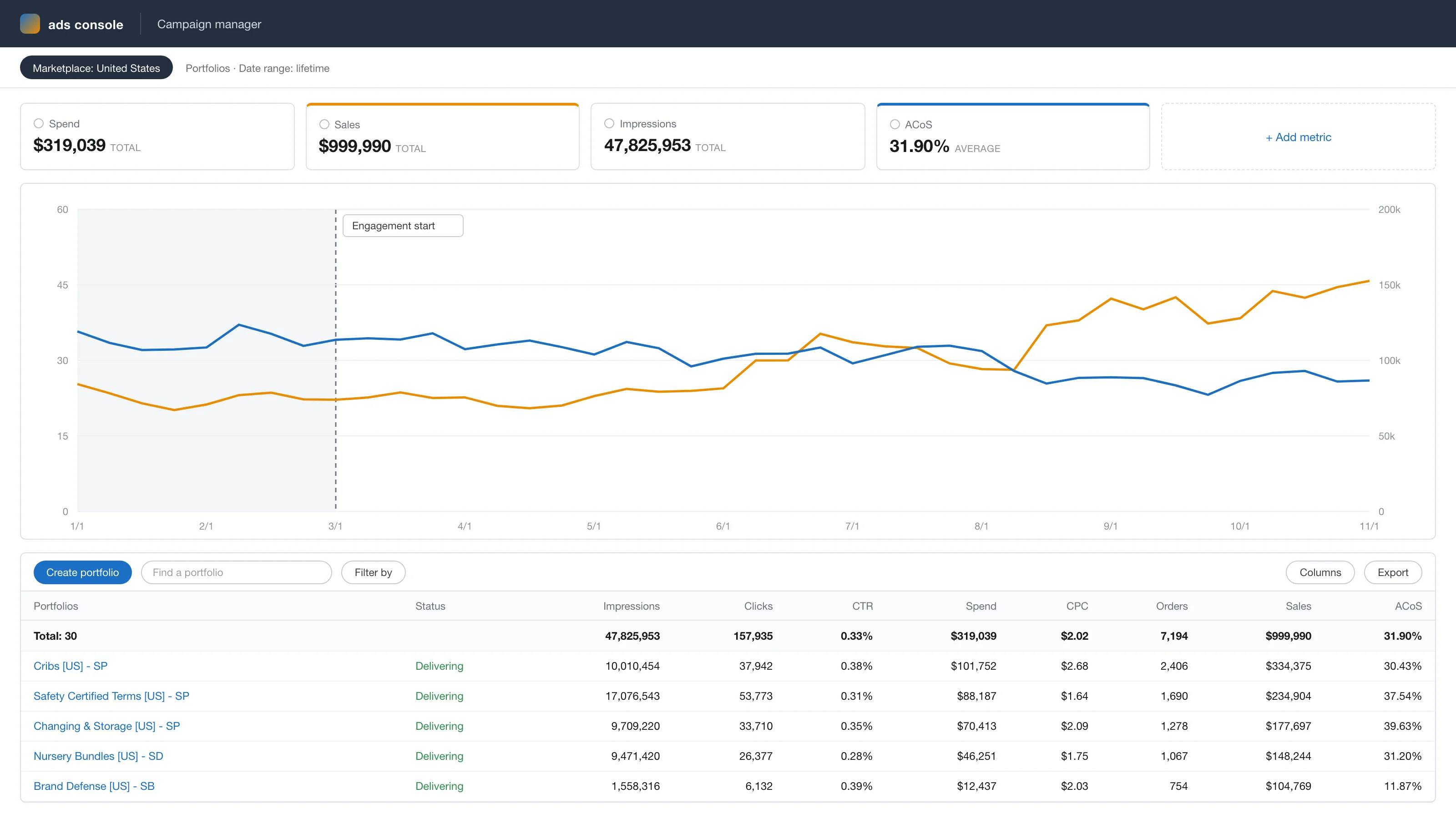
Anonymized account view, rebuilt from the figures reported above: conversion-led efficiency pulling ACoS down eleven points.
The results
Conversion rose from 4.6% to 8.1%, and revenue grew 79% while the average selling price rose 16%.
The price movement is the clearest evidence of the mechanism: an argument that justifies a premium only works if the shopper can see it before they compare prices. Pre-purchase questions fell by 72% because the page now answers the one thing everybody was writing in to ask. The certifications had been on the product the whole time — the brand had been paying for them and describing them as paperwork.
“We treated our certifications like a legal requirement. Parents treat them like the only thing that matters.”
Services we delivered
Related case studies



Ready to scale your Amazon brand?
Talk to a senior strategist and leave with a growth plan for your store — no obligation.