
The one-star reviews were about the instructions, not the carrier
Rating 3.7 → 4.0
A wrap brand read its negative reviews as a product failure and was preparing a redesign. The reviews described a learning curve, not a defect — and that is a content problem.

At a glance
- Category
- Baby Carriers & Wraps
- Marketplaces
- US, CA
- Revenue at start
- $71k / month
- Rating at start
- 3.7 across the wrap range
- Engagement
- Creative & content + account management
- Timeframe
- 8 months
Results
The challenge
A stretchy wrap is sixteen feet of fabric and a technique. Tied correctly it is the most comfortable carrier a newborn parent can own; tied incorrectly it is frightening, and a parent who cannot get it right in the first ten minutes concludes the product is unsafe.
The brand's reviews reflected exactly that. Reading the one and two-star text closely, almost none of them described a fault in the fabric, the stitching or the sizing — they described confusion, a printed diagram nobody could follow, and the specific, awful feeling of not trusting a knot with a baby in it. The team had interpreted a 3.7 rating as a product problem and had a redesign in progress. The product was not the problem; the first ten minutes with it were.
Our approach
We rebuilt the first ten minutes of ownership.
- Instructional video on the listing, filmed at real speed with a real infant, showing the whole tie rather than an illustrated abstraction.
- The image stack turned into a sequence — each frame one step, so the method is visible before purchase and reassuring during it.
- A printed card redesigned around the two steps the reviews consistently named as the point of failure.
- Post-purchase follow-up pointing new owners to the video in the first days, before frustration turns into a review.
Timeline
Diagnose
- Every negative review coded by cause
- 91% described the tying process, not the product
- Redesign paused
Rebuild the onboarding
- Instructional video produced and published
- Image stack converted into a step sequence
- Insert card rewritten around the two failure steps
Compound
- Rating climbing as new reviews outweigh old
- Returns down to single digits
- Advertising scaled once the rating supported it
Inside the ad account
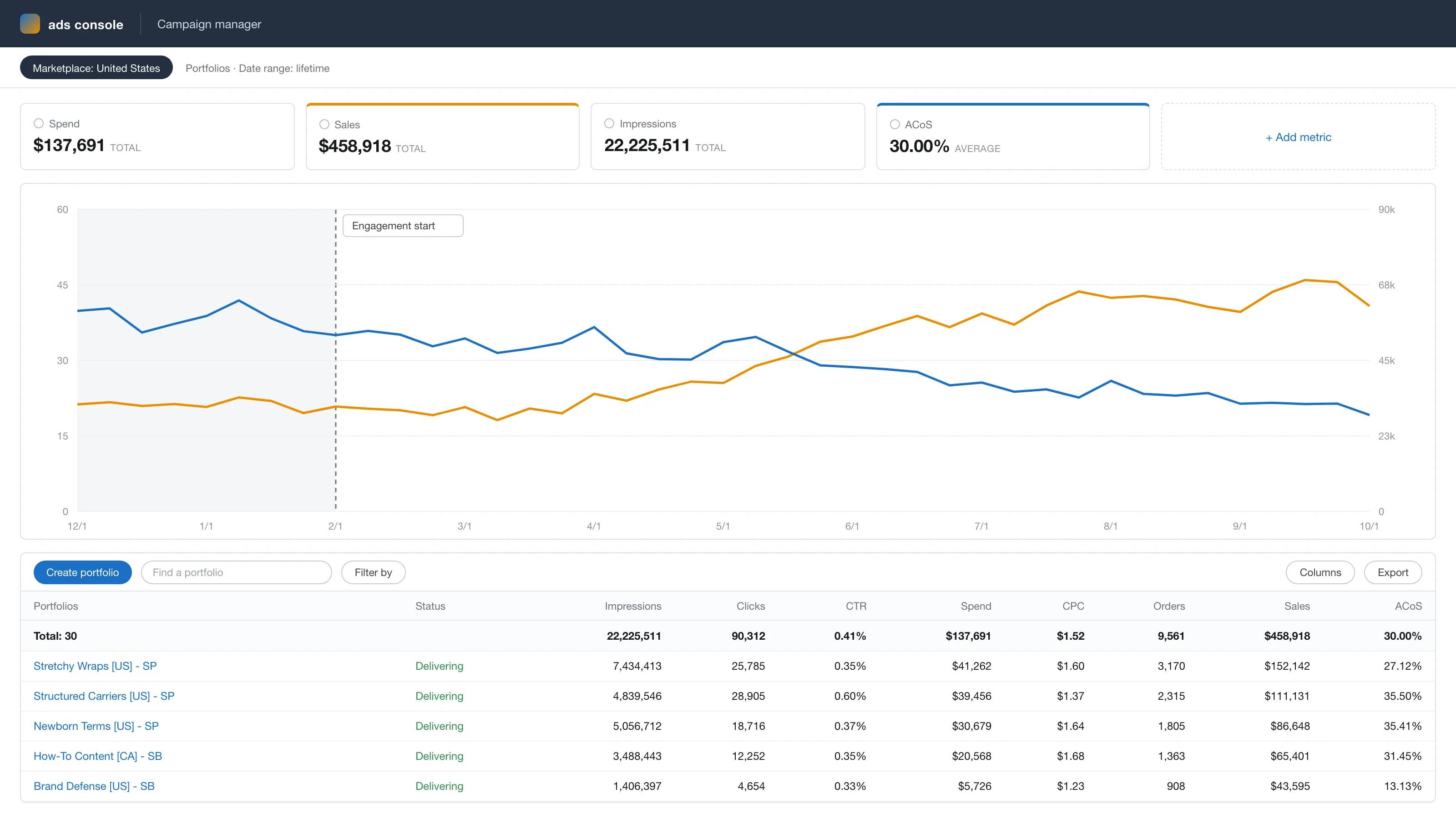
Anonymized account view, rebuilt from the figures reported above: ad sales doubling once the recovered rating supported scale.
The results
The rating recovered from 3.7 to 4.0 and returns fell from 19% to 5% — with the fabric, pattern and price entirely unchanged.
Rank followed the rating, as it does in this category: the head term went from #31 to #6, which is where most of the 106% revenue growth came from. The redesign that had been scheduled would have cost a year and solved nothing, because the product it was meant to fix worked correctly whenever someone knew how to tie it.
“We were about to re-engineer a product that people loved once they'd watched someone use it for ninety seconds.”
Services we delivered
Related case studies




Ready to scale your Amazon brand?
Talk to a senior strategist and leave with a growth plan for your store — no obligation.