
Ranking for a rule instead of a product
#1 on 9 airline-size queries
Travellers do not search for a bag. They search for the rule they are trying not to break — and the brand's dimensions were buried in a spec table three scrolls down.

At a glance
- Category
- Luggage & Travel Gear
- Marketplaces
- US
- Revenue at start
- $158k / month
- Catalog
- 11 bags, dimensions listed only in the spec table
- Engagement
- Listing SEO + PPC
- Timeframe
- 10 months
Results
The challenge
The searches that convert in this category are not product searches at all. They are constraints: a personal item that fits under a particular airline's seat, a carry-on inside a stated linear-inch limit, a bag that will survive a specific fare class. The shopper is not choosing a bag, she is trying to avoid a fee at the gate, and she types the rule.
The brand made bags that satisfied several of those rules and said so nowhere a search engine or a shopper could see it. Dimensions lived in the spec table below the fold, expressed to one decimal place, in the order the factory listed them. On a page full of lifestyle photography and capacity claims, the one number that decided the purchase was the hardest thing to find.
Our approach
We made the constraint the headline and the product the answer.
- Constraint query research — the airline and fare-class phrasings with real volume mapped against which bags in the range genuinely comply.
- Dimensions promoted to the title and the second image, stated the way the rule is written — inches, then linear inches — with no airline named in the copy, since that name is not ours to use; the airline phrasing stays in campaign targeting, where a keyword is not a claim.
- One bag claimed per constraint, never all of them for all rules — an overclaim here returns as a gate-side failure and a one-star review.
- Campaigns on the constraint cluster, where almost nobody bids against us because most of the category is still buying “carry-on luggage”.
How we worked
- 1
Compliance audit
Every bag measured externally, wheels and handles included, against the limits the target queries reference — three bags failed rules the old copy had implied.
- 2
Query-to-bag map
Fourteen constraint queries matched to the specific bags that genuinely satisfy them, and only those.
- 3
Dimension-first creative
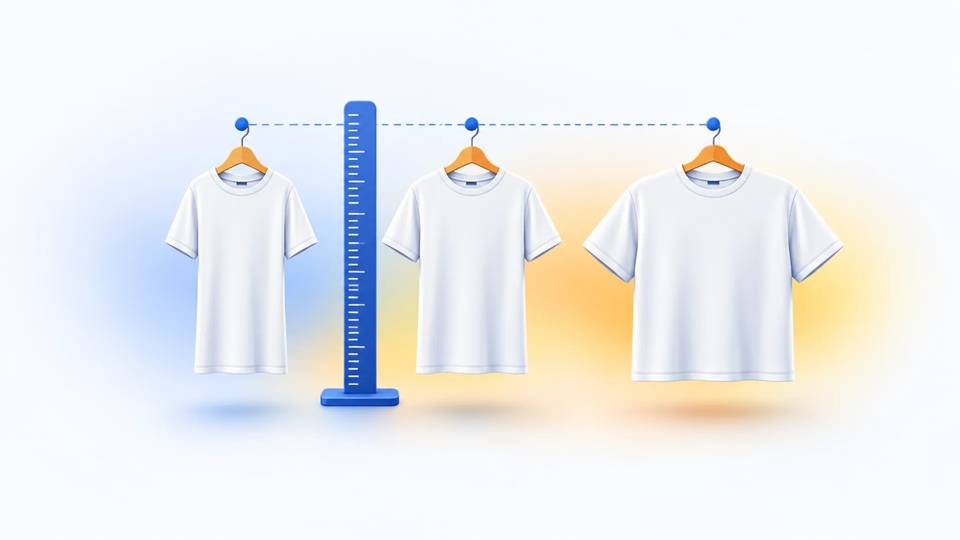
Title, second image and the first bullet rebuilt around the measurement, with a scale reference frame rather than a lifestyle shot.
- 4
Targeted campaigns
Exact-match campaigns per constraint phrase, each pointed at the one compliant ASIN.
- 5
Overclaim cleanup
The three non-compliant bags repositioned onto constraints they do meet, which removed the source of the gate-side complaints.
Inside the ad account
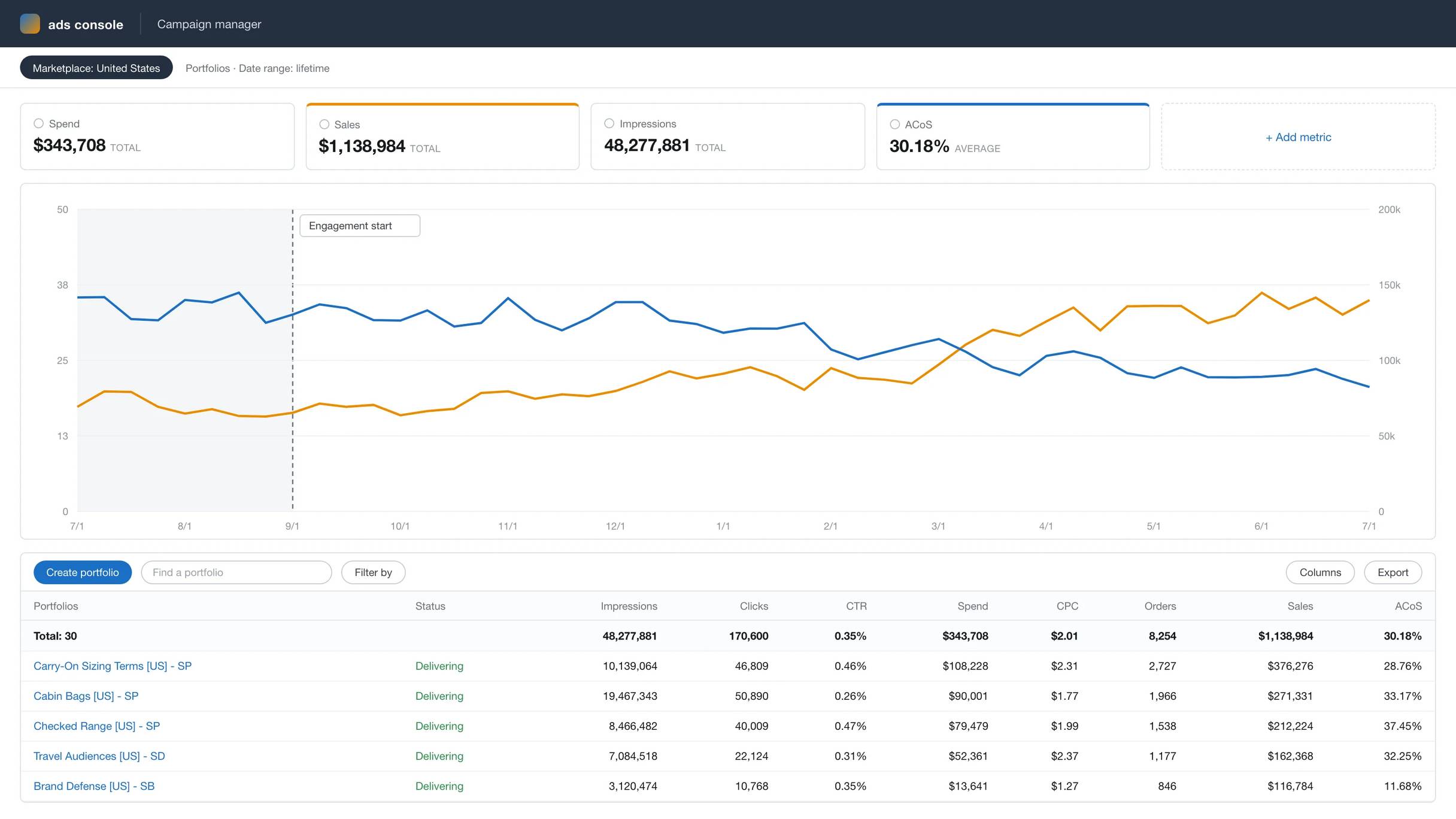
Anonymized account view, rebuilt from the figures reported above: ad sales growing from $71k to $129k a month while ACoS falls from 34% to 22% across the 10-month engagement.
The results
The brand holds a top-three position on eleven of fourteen constraint queries and #1 on nine of them, from none at the start.
Revenue grew 82% and sessions 58%, on traffic that is unusually cheap because most of the category still competes on the generic head term. Returns fell seven points as a side effect of the overclaim cleanup: a bag that is honestly matched to the rule the buyer cares about does not come back from the airport.
“Our dimensions were always correct. They were just in row nine of a table, and the customer was standing in an airport reading a fare policy.”
Services we delivered
Related case studies



Ready to scale your Amazon brand?
Talk to a senior strategist and leave with a growth plan for your store — no obligation.