
Three sub-lines, three different size 8s, one very confused repeat customer
Repeat purchase 21% → 39%
The brand's own lines were graded by three different factories, so a customer who knew her size in one collection was wrong in the next. The fix was internal consistency, not a better size chart.
At a glance
- Category
- Women
- Marketplaces
- US, CA
- Revenue at start
- $240k / month
- Structure
- 3 sub-lines, 3 factories, 3 grading rules
- Engagement
- Full account management + creative
- Timeframe
- 9 months
Results
The challenge
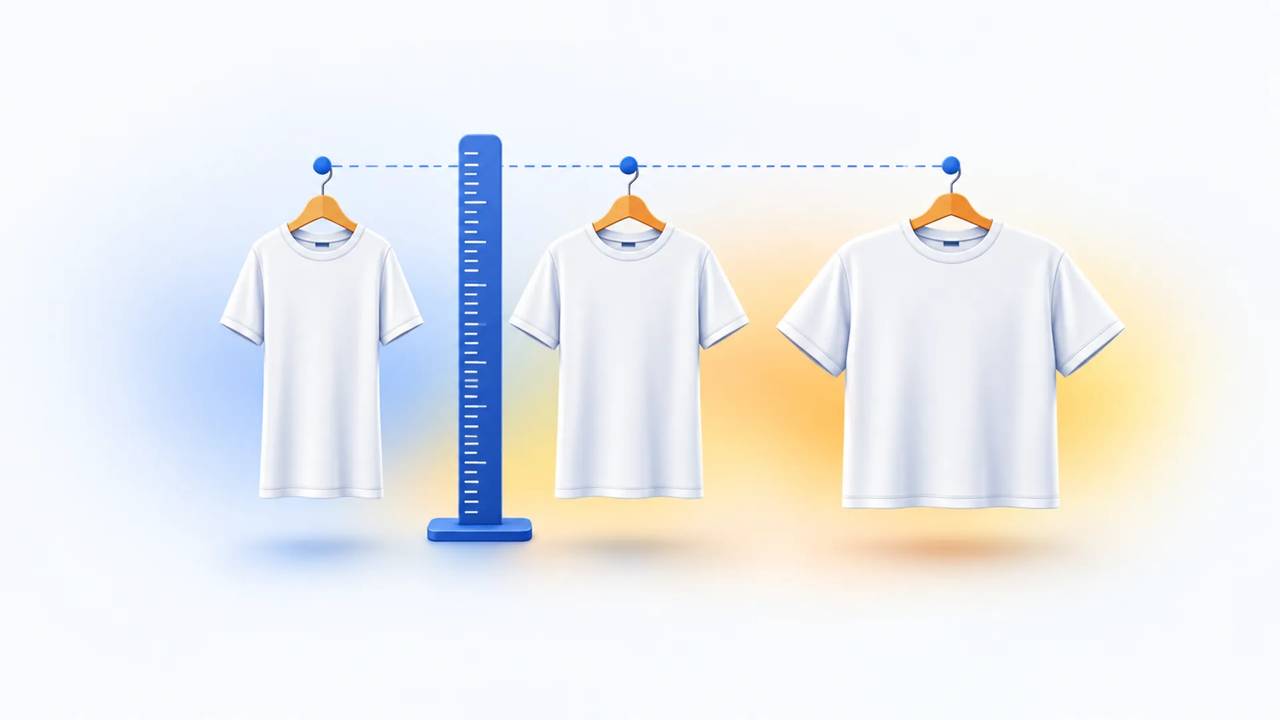
The obvious version of this problem is a brand whose sizes do not match the customer's body. This was the other one: a brand whose sizes did not match each other. Three sub-lines had been developed over five years with three different manufacturers, each working to its own grading rules, and nobody had ever laid the specs side by side. A size 8 in the knitwear line measured an inch and a half wider at the bust than a size 8 in the woven line.
That is invisible to a first-time buyer and lethal to a second purchase. A customer who had found her size, liked the garment and come back — the brand's most valuable shopper — ordered confidently, got it wrong, returned it and stopped. The return rate on repeat orders was higher than on first orders, which is the opposite of how a healthy apparel account behaves, and the reviews said so in plain language the team had been reading as generic sizing noise.
Our approach
We measured the brand against itself before saying anything to customers.
- A grading audit across all three lines, every size measured flat on the same points and tabulated in one sheet for the first time — then one house block adopted as the reference, with the two divergent lines corrected at the next production run rather than re-labeled after the fact.
- Per-garment flat measurements published on every listing, so a customer can compare an item to one she already owns instead of trusting a size letter.
- Interim honesty — while the old stock sold through, affected listings carried an explicit note that this line runs narrower, which cost some conversion and saved far more in returns.
Inside the ad account
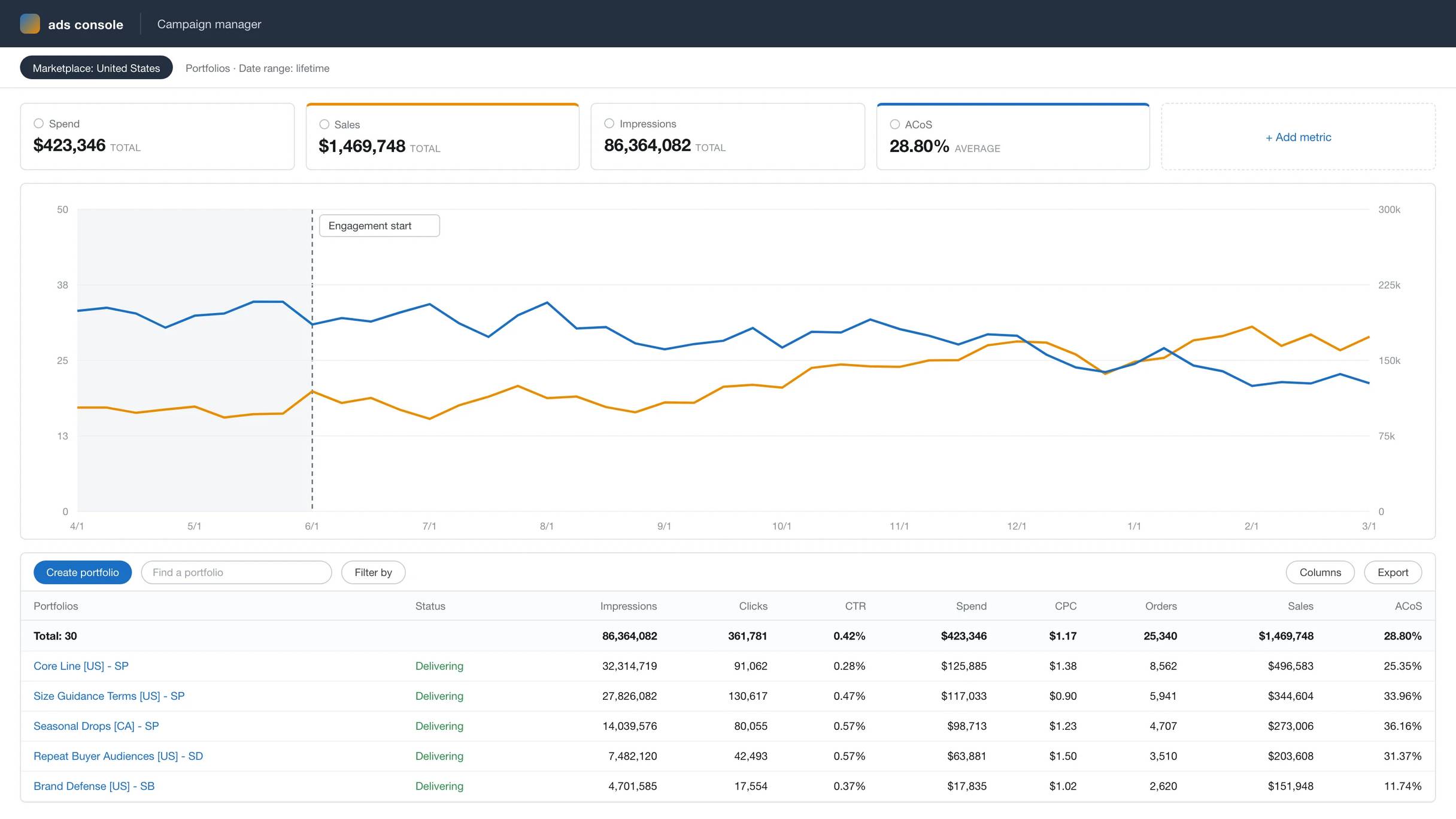
Anonymized account view, rebuilt from the figures reported above: ad sales growing from $108k to $160k a month while ACoS falls from 33% to 23% across the 9-month engagement.
The results
The repeat purchase rate went from 21% to 39%, and returns on repeat orders — the number that exposed the problem — fell from 34% to 16%.
Revenue grew 48% almost entirely on that retained demand: the brand did not acquire dramatically more customers, it stopped losing the ones it had at exactly the moment they were ready to spend more. The catalog rating recovered half a point once the reviews describing an inconsistent size stopped arriving.
“Customers kept telling us our sizing was inconsistent and we kept sending them the size chart. They meant inconsistent with our own other line.”
Services we delivered
Related case studies


Ready to scale your Amazon brand?
Talk to a senior strategist and leave with a growth plan for your store — no obligation.