
Priced at $28 in a category where shoppers tick the “under $25” box
Units +96% at a lower price
A menswear basics brand sat two dollars above the price filter most of its shoppers use, and was therefore absent from half the search results it should have appeared in.

At a glance
- Category
- Men
- Marketplaces
- US
- Revenue at start
- $268k / month
- Pricing
- Hero items at $27.99 and $52.00
- Engagement
- Full account management + PPC
- Timeframe
- 12 months
Results
The challenge
Men's basics is a category where a large share of shoppers narrows the results before they look at anything. They tick a price band in the left rail, or tap one of the price refinements Amazon offers above the grid, and everything outside that band ceases to exist for the rest of the session.
The brand's hero tee was $27.99 and its overshirt was $52.00 — both a couple of dollars on the wrong side of the bands most of its shoppers were using. The prices had been set the ordinary way, by adding a target margin to landed cost, and they were defensible on a spreadsheet. On a search page they meant the catalog was quietly excluded from a large fraction of qualified sessions, and no amount of bidding fixed it: a filtered shopper never sees the product no matter what the ad costs, because the filter is applied before the results are ranked.
Our approach
We priced to the shopper's bracket instead of to the margin sheet.
- Filter behavior measured first — which price refinements the category's shoppers actually apply, and what share of sessions arrive already narrowed.
- Repricing to just inside the band ($24.99 and $49.99) rather than to a round number, so the product is included instead of two dollars excluded.
- Margin recovered on the other side of the ledger — pack quantity, carton dimensions and the fulfillment tier reviewed so the lower price did not simply cost the difference.
- The premium line moved clearly upward instead of hovering near a threshold, so it competes as a premium product rather than as a marginally-too-expensive basic.
Timeline
Measure
- Filter and refinement usage analyzed across the category's search pages
- Each SKU mapped against the bracket edges it sat near
- Two hero items identified as excluded from the majority of filtered sessions
Reprice
- Hero tee moved to $24.99 and the overshirt to $49.99
- Cost recovered through carton and fulfillment-tier changes
- Sessions on the hero pair up 60%
Separate the ladder
- Premium line repositioned well above the threshold rather than beside it
- Campaign budgets shifted toward the now-visible hero items
- Units per month nearly doubled at a 14% lower average price
Inside the ad account
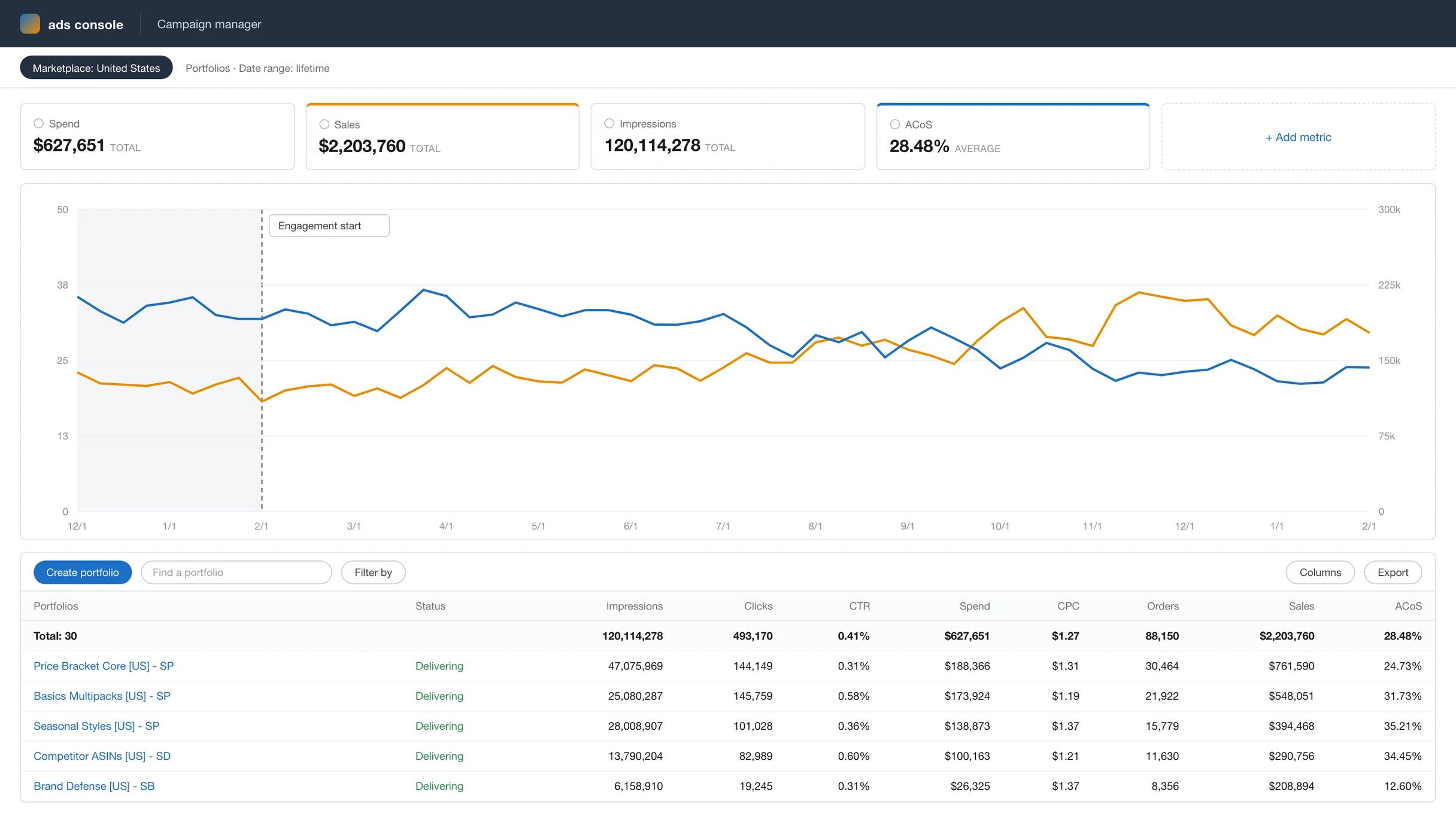
Anonymized account view, rebuilt from the figures reported above: ad sales growing from $121k to $204k a month while ACoS falls from 34% to 23% across the 12-month engagement.
The results
Units nearly doubled — 9,400 to 18,400 a month — and revenue grew 69% even though the average selling price fell 14%.
Sessions on the two hero ASINs doubled. The brand was not losing a comparison, it was not being shown one. The repricing cost $2.60 a unit at the top line, of which about $1.40 came back through carton and fulfillment-tier changes; the volume made the remaining dollar twenty irrelevant.
“Twenty-seven ninety-nine looked like a rounding decision. It was the difference between being in the results and not being in them.”
Services we delivered
Related case studies



Ready to scale your Amazon brand?
Talk to a senior strategist and leave with a growth plan for your store — no obligation.