
When the color is the search term and the swatch is called “Willow”
Sessions 71k → 105k
An apparel brand named its colors the way a design studio does. Shoppers search for “sage green” and “rust”, so twenty-seven of thirty-one colorways were invisible to the query that would have sold them.

At a glance
- Category
- Clothing, Shoes & Jewelry
- Marketplaces
- US, UK
- Revenue at start
- $184k / month
- Catalog
- 9 styles, 31 colorways, studio color names
- Engagement
- Listing SEO + PPC
- Timeframe
- 11 months
Results
The challenge
The brand's color names were part of its identity: Willow, Ember, Harbour, Clay. On its own website that works, because the customer is already looking at the swatch. On Amazon the color name is a search term — “sage green midi dress” and “rust wrap dress” carry real, purchase-ready volume — and the word “sage” appeared nowhere in the brand's catalog.
The damage was concentrated in a place nobody looks. A variation family's child listings each own their color field, and only the parent's title had been written with any care. So twenty-seven of thirty-one colorways existed as inventory, took up warehouse space, and were reachable only by a shopper who had already found the style and then opened the dropdown.
Our approach
We kept the brand's names and added the shopper's.
- Color vocabulary mapped from search data — every swatch matched to the one or two plain-language color terms shoppers actually type for it.
- Two-part color values — the variation now reads “Willow / Sage Green”, so the poetic name survives and the searchable one indexes.
- Child listings written individually, each with its color term in the title, the first bullet and the backend fields, instead of inheriting the parent.
- Campaigns split by colorway for the twelve colors with meaningful volume, so bids follow demand rather than averaging across a style.
How we worked
- 1
Swatch-to-term research
Each of the thirty-one colorways matched against search volume for the plain-language color words shoppers use, including the near-misses like “terracotta” versus “rust”.
- 2
Variation relabelling
Color values rewritten as a two-part name across every family, which required rebuilding three variation parents that had been assembled incorrectly.
- 3
Child-level copy
Titles, first bullets and backend terms written per colorway rather than cloned from the parent.
- 4
Color-level campaigns
The twelve highest-volume color terms given exact-match campaigns pointed at the matching child ASIN.
- 5
Assortment feedback
After six months of color-level data, two colorways that no shopper searches for were dropped from the next production run.
Inside the ad account
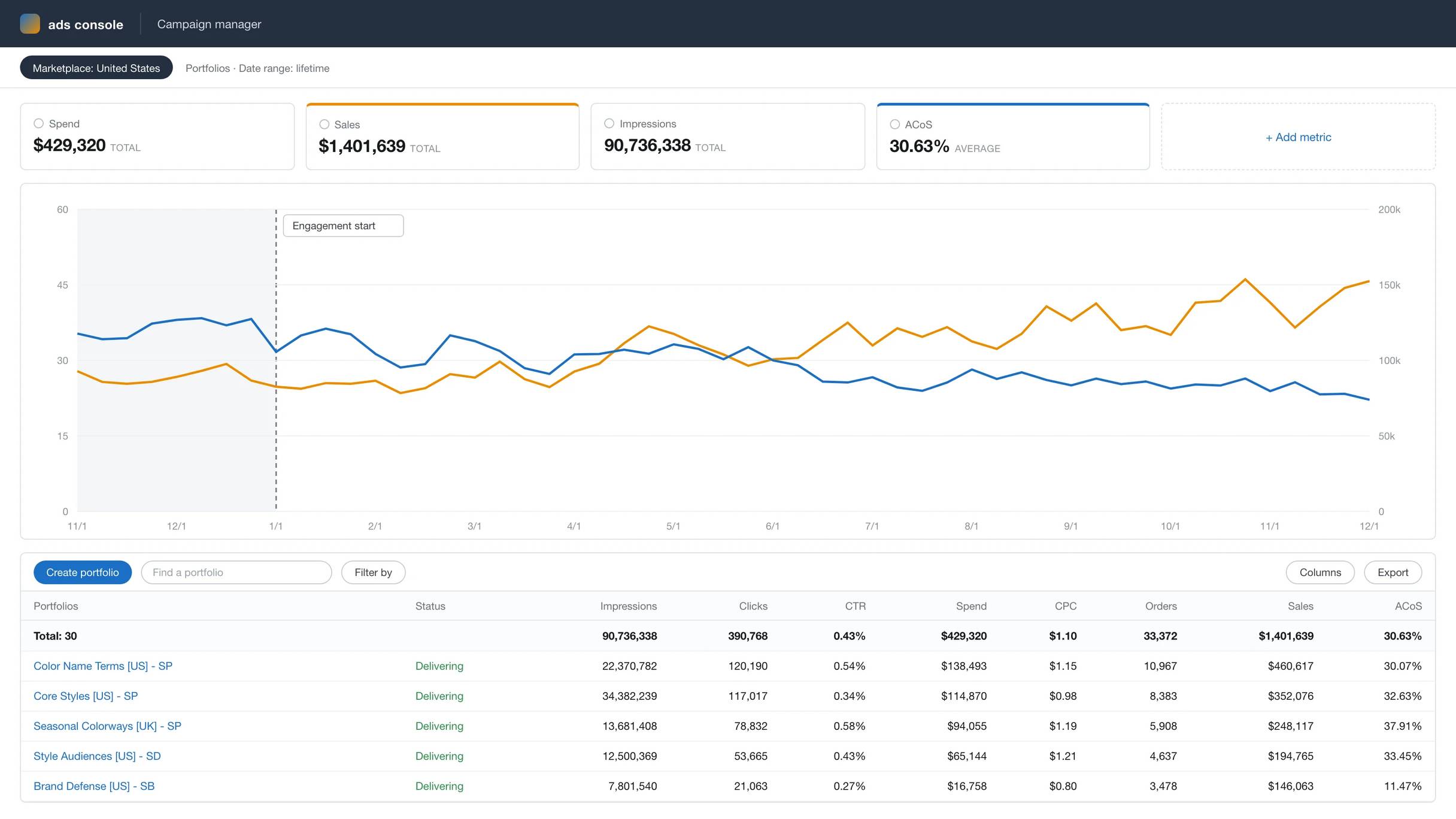
Anonymized account view, rebuilt from the figures reported above: ad sales growing from $83k to $140k a month while ACoS falls from 35% to 23% across the 11-month engagement.
The results
Sessions went from 71k to 105k a month, and revenue grew 70% on a catalog that did not gain a single new style.
The mechanism is unglamorous: twenty-nine of thirty-one colorways now appear for the color a shopper typed, against four before. Color-qualified searches went from 6% of revenue to 39%, and because those queries name both the garment and the color, they convert well above the style-level terms the brand had been paying for.
“A week of meetings about whether “Willow” could be called sage. Nobody searches for a mood board.”
Services we delivered
Related case studies




Ready to scale your Amazon brand?
Talk to a senior strategist and leave with a growth plan for your store — no obligation.