
Losing on paper to competitors quoting a different number
Conversion +76% at an unchanged price
The brand's speakers were rated honestly and looked half as powerful as rivals quoting peak figures. The fix was to make the two numbers comparable on the page.

At a glance
- Category
- Live Sound & DJ
- Marketplaces
- US, DE
- Revenue at start
- $224k / month
- Position
- 600W rated against competitors advertising “2000W”
- Engagement
- Creative & content + account management
- Timeframe
- 12 months
Results
The challenge
The category had quietly stopped using the same units. Competitors advertise peak or momentary figures — numbers that describe an instant rather than what the speaker can actually sustain — and the brand quoted continuous power, measured properly. On a search page, that made an honest 600W product look a third as capable as a 2000W one costing less.
The brand's buyers are semi-professional: they gig, they read forums, and they are more skeptical than most shoppers. But skepticism does not help when every listing on the screen quotes a big number and only one quotes a small one. The support inbox took a hundred and forty questions a month about it, which is the sound of a page failing to answer the only question the shopper has.
Our approach
We stopped competing on a number and started explaining the unit.
- Both ratings printed on the page — continuous and peak for the brand's own product, so it appears in the comparison with a figure in the same currency as everyone else's.
- A plain explanation of what each rating means, positioned as buyer education rather than as an accusation against competitors.
- Real-world capability instead of watts — the size of room and audience each model covers, which is what the buyer is trying to work out anyway.
- Support questions fed back into the page — the hundred and forty monthly questions became a fixed part of the content, answered before they are asked.
Inside the ad account
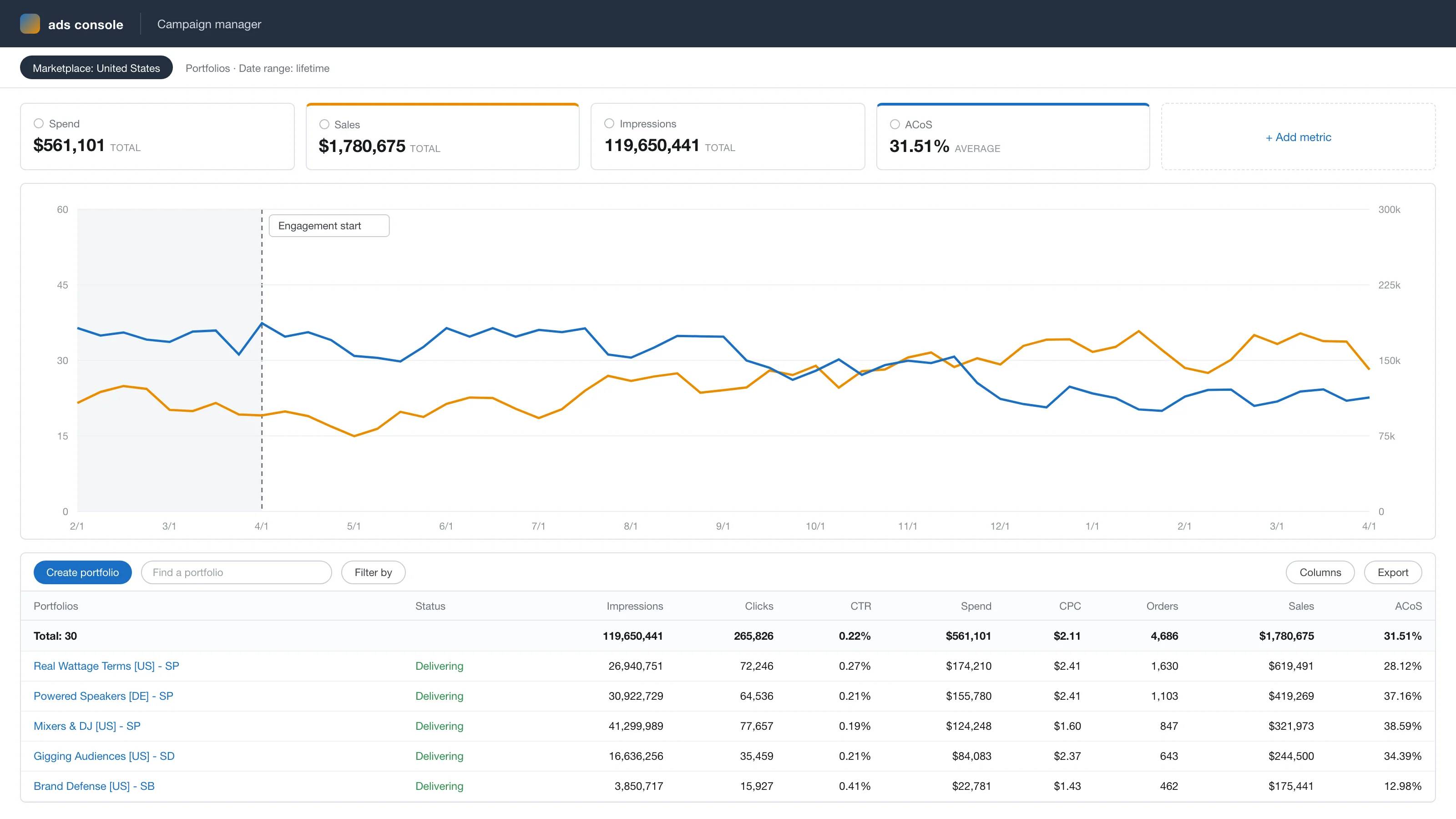
Anonymized account view, rebuilt from the figures reported above: ad sales growing from $101k to $166k a month while ACoS falls from 35% to 22% across the 12-month engagement.
The results
The same speakers at the same price now convert at 6.0% against 3.4%, and revenue is up 76% on flat traffic.
Returns halved. That number is the confirmation the strategy is honest rather than just better marketing: customers who were previously buying on an inflated claim and discovering it at a gig were coming back, and the brand's buyers now arrive knowing what they are getting. Power questions to support dropped by 84%, which freed a person's week as a side effect.
“We refused to print a peak number for years on principle. Printing both, with an explanation, turned out to be the principled version.”
Services we delivered
Related case studies




Ready to scale your Amazon brand?
Talk to a senior strategist and leave with a growth plan for your store — no obligation.