
Advertising next to what the accessory attaches to
31% of sales from complement placements
The brand's accessories were fighting other accessories for the same clicks. The buyer was one page away, on the instrument listing, with an incomplete purchase in front of them.
At a glance
- Category
- General Accessories
- Marketplaces
- US, CA, UK
- Revenue at start
- $143k / month
- Catalog
- Stands, straps, cables and cases
- Spend at start
- 92% on accessory keywords and rival accessory ASINs
- Engagement
- PPC + DSP
- Timeframe
- 13 months
Results
The challenge
Accessory advertising is usually a brawl: everyone bids on “guitar stand”, everyone targets everyone else's stand, and the cost per click rises until nobody makes money. The brand was doing exactly that with 92% of its spend, at a 41% ACoS on products that cost between eleven and forty dollars.
What that strategy ignores is when the demand is actually created. Nobody wakes up wanting a stand. They want one at the moment they are buying, or have just bought, the instrument it holds — and at that moment they are on a page the brand was not present on, because the whole industry's convention is to target products you compete with rather than products you complete.
Our approach
We inverted the targeting: complements rather than competitors.
- Product targeting on instrument listings the accessory physically fits, at the moment the shopper is completing that purchase.
- Sponsored Display creative that shows the fit — the accessory in use with the type of instrument the shopper is viewing, never another brand's name; Sponsored Products carries no creative of its own, so the visual argument is made where there is one.
- DSP retargeting of instrument viewers, weighted to the two weeks after the view — display cannot see when a parcel lands, so the timing is a pacing decision rather than a trigger.
- Accessory-keyword spend cut to the terms that still pay, freeing the budget for placements with far lower competition.
Inside the ad account
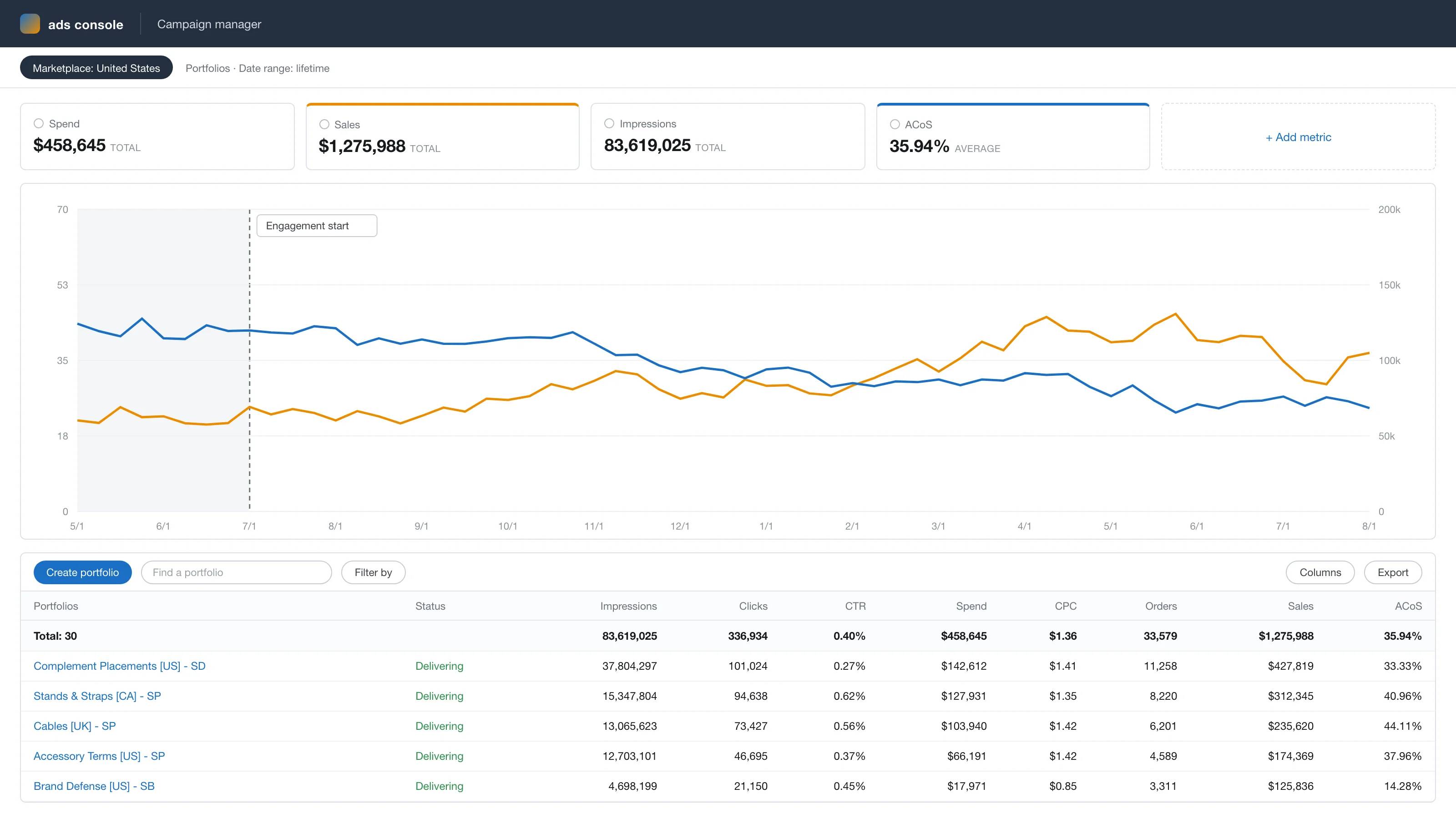
Anonymized account view, rebuilt from the figures reported above: ad sales growing from $64k to $117k a month while ACoS falls from 41% to 25% across the 13-month engagement.
The results
Complement placements now produce 31% of sales, and revenue grew 81% to $259k a month across thirteen months.
ACoS fell sixteen points for a structural reason rather than a tactical one: the brand stopped paying auction prices set by twenty competitors and started buying attention on pages where it has no direct rival at all. New-to-brand orders more than doubled, because an instrument buyer has almost certainly never heard of an accessory brand before that impression.
“We'd been fighting every other strap maker for the same click. The person who needs a strap is looking at a guitar.”
Services we delivered
Related case studies


Ready to scale your Amazon brand?
Talk to a senior strategist and leave with a growth plan for your store — no obligation.