
The instruments weren't faulty — they were unadjusted
Return rate 21% → 9%
One in five instruments came back described as broken. Almost none of them were: they needed twenty minutes of setup that nobody in the chain had been paid to do.
At a glance
- Category
- Musical Instruments
- Marketplaces
- US
- Revenue at start
- $486k / month
- Problem
- 21% returns, 76% coded as “defective”
- Engagement
- Full account management + creative
- Timeframe
- 7 months
Results
The challenge
The factory ships instruments at a neutral, safe factory setting: strings high, truss rod slack, nothing intonated. A shop would adjust that in twenty minutes before it reaches a customer. Shipped straight from a fulfillment center to someone's living room, the same instrument buzzes, plays hard and arrives out of tune after a week in a truck — and a beginner has no way to know that this is normal and fixable rather than a defect.
So one in five came back, three quarters of them marked defective, and the reviews said the same thing in less polite words. The brand had spent two years chasing a manufacturing fault that did not exist, while every returned unit was written down as damaged stock and the rating sat at 3.8 in a category where nobody buys below four.
Our approach
We treated setup as part of the product rather than as the customer's problem.
- A pre-shipment setup step added at the prep partner — action height, intonation and tuning checked on every unit before it enters inventory.
- The setup stated on the listing as a feature, since “adjusted by a technician before it ships” is exactly what the shopper is worried about.
- Honest arrival expectations — the page says plainly that the instrument will need tuning after transit, with a thirty-second explanation of how.
- Returns triaged on receipt, so the genuine defect rate became visible instead of staying buried under the setup complaints the dropdown reason never separates.
Inside the ad account
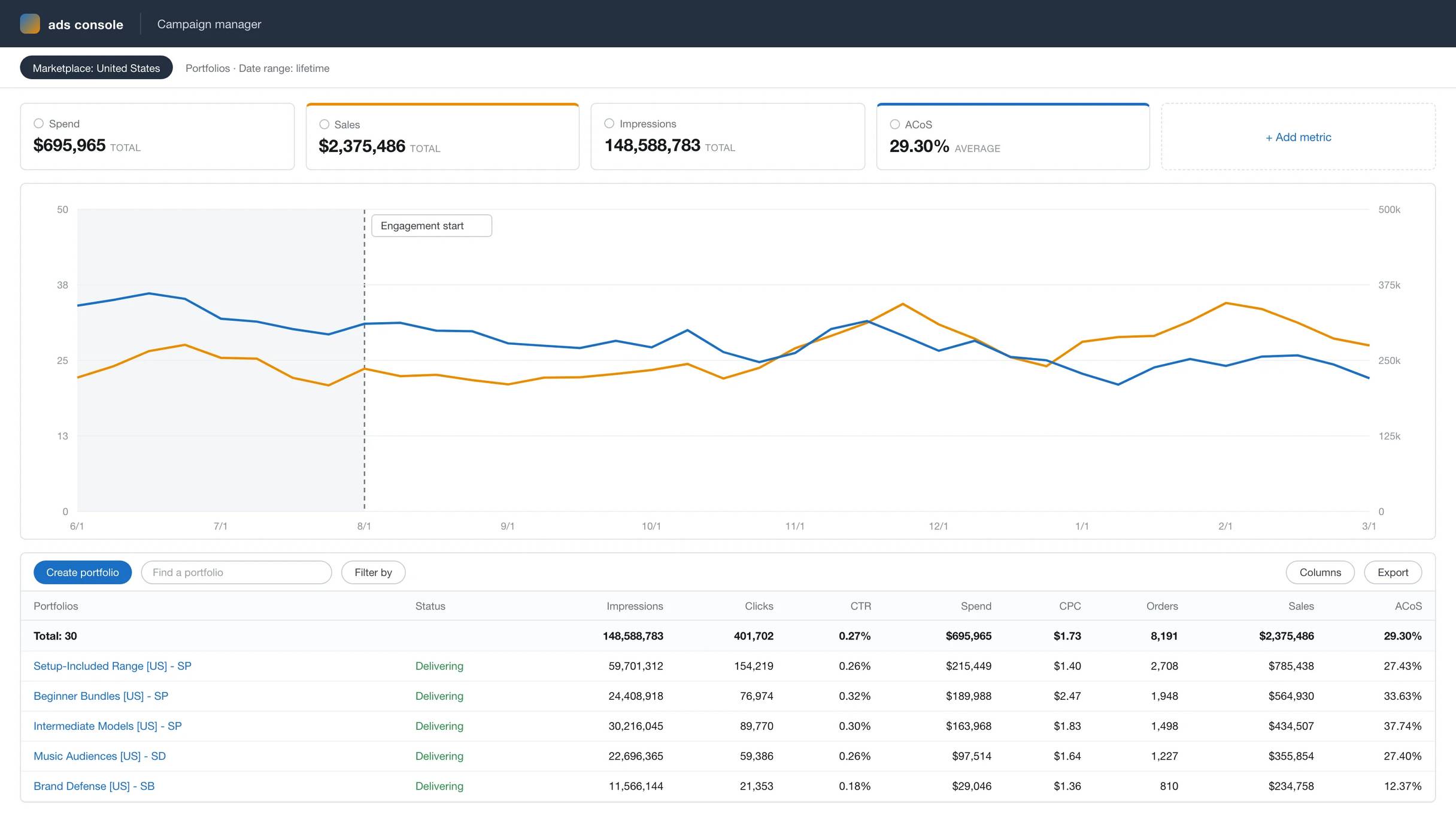
Anonymized account view, rebuilt from the figures reported above: ad sales growing from $219k to $316k a month while ACoS falls from 32% to 23% across the 7-month engagement.
The results
Returns fell from 21% to 9%, and the share of reviews complaining about buzzing or tuning dropped from 31% to 7%.
Revenue grew 44% on the back of the rating recovering to 4.2 — in this category the difference between 3.8 and 4.2 decides whether a shopper reads the page at all. The setup step costs the brand a few dollars per unit, against a returned instrument that could rarely be sold again at full price.
“We spent two years auditing a factory that was building exactly what we asked for. The problem was the twenty minutes nobody was doing afterwards.”
Services we delivered
Related case studies



Ready to scale your Amazon brand?
Talk to a senior strategist and leave with a growth plan for your store — no obligation.