
Solving the dye-lot problem knitters worry about before they buy
Skeins per order 3.1 → 7.4
Knitters buy the whole sweater's worth of yarn at once or they do not buy at all, because two dye lots will not match. The listing said nothing about lots, so the cautious ones bought one skein to check.

At a glance
- Category
- Knitting & Crochet
- Marketplaces
- US
- Revenue at start
- $62k / month
- Product
- Hand-dyed and mill-dyed yarn, 28 colorways
- Engagement
- Full account management + listing SEO
- Timeframe
- 9 months
Results
The challenge
Yarn dyed in separate batches is not quite the same color, and an experienced knitter can see the line across a finished sweater where the second lot started. Everyone in this category knows it, and it governs how they buy: either enough for the entire project in one order, or nothing.
The brand's listings were silent on the subject. Faced with silence, the careful shopper does the careful thing — orders one skein to inspect, then comes back for the rest weeks later, by which point the lot has usually changed and the fear was self-fulfilling. Forty-four percent of orders were single skeins, and the color-mismatch complaints in the reviews were the brand's own process being described back to it.
Our approach
We answered the question the category asks silently.
- Lot policy stated on the page — one order ships from one lot, and how much of a given lot is currently available.
- Project quantities offered directly — sweater, shawl and blanket quantities as selectable options rather than a number the shopper has to work out.
- Lot availability surfaced in stock planning, so a colorway nearing the end of a lot is flagged rather than quietly sold down.
- Search language matched to the fear — the terms knitters use about lots and matching, which the listings had never contained.
Inside the ad account
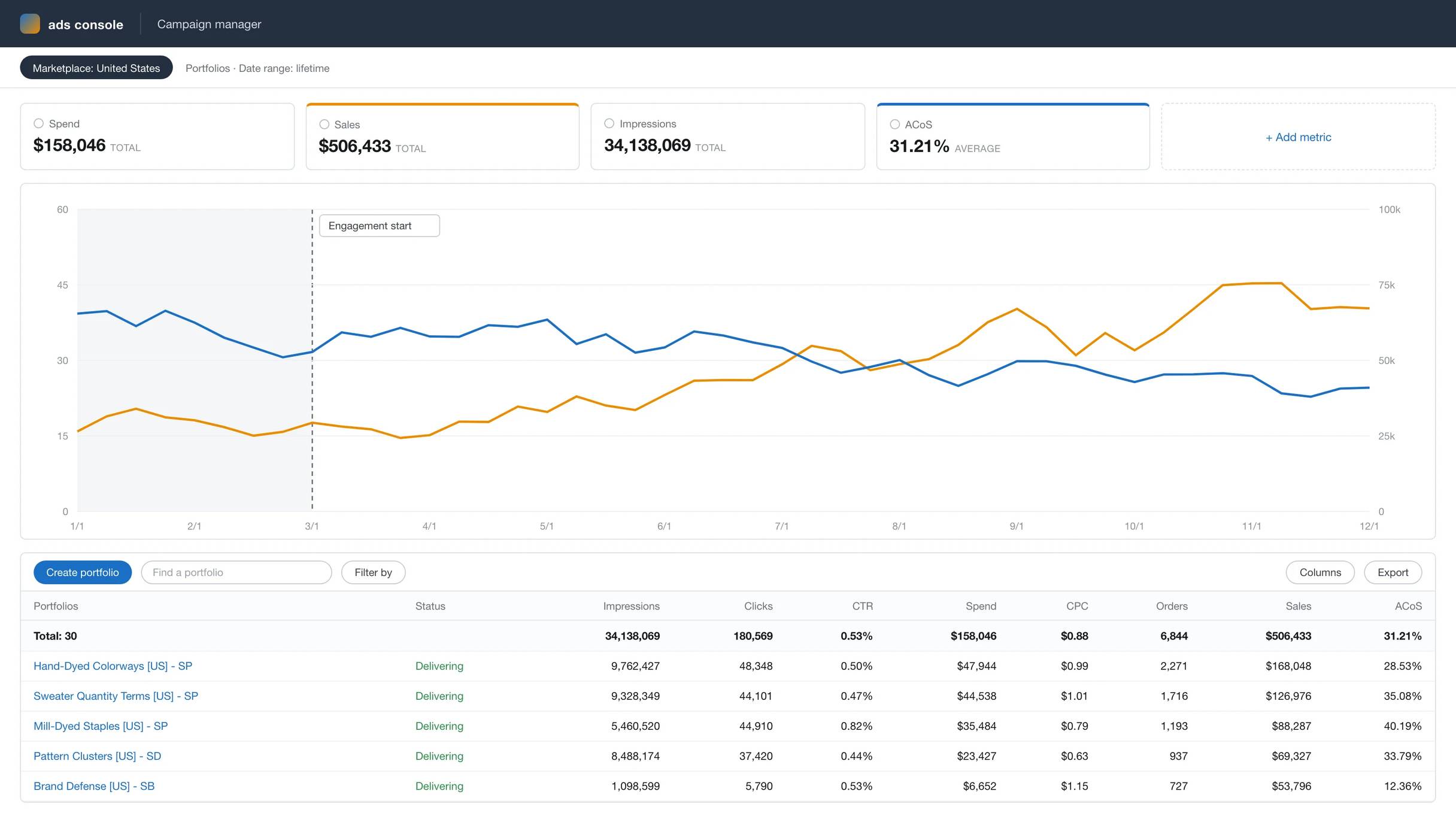
Anonymized account view, rebuilt from the figures reported above: ad sales growing from $28k to $67k a month while ACoS falls from 36% to 23% across the 9-month engagement.
The results
Skeins per order went from 3.1 to 7.4 and revenue grew 95% — the gap between the two is the order count, which fell about a fifth as the corrective second order stopped happening. This was not a pricing or a traffic change; it was the same customers buying, once, the amount they had always intended to buy.
Single-skein test orders fell from 44% to 12%, and color-mismatch reviews all but disappeared, because the mismatch had mostly been created by the two-stage buying pattern the silence caused. The yarn never changed; the brand simply stopped making people find out the hard way.
“Every knitter's first question is about dye lots. Our listings had no answer, so they answered it themselves by ordering one skein.”
Services we delivered
Related case studies


Ready to scale your Amazon brand?
Talk to a senior strategist and leave with a growth plan for your store — no obligation.