
Nobody finishes a necklace with one component
Catalog coverage per order 1.4 → 3.6 SKUs
A jewelry findings brand sold clasps, cord, crimps and wire as unrelated listings. The customer needed all four to finish one piece, and was buying three of them from somebody else.
At a glance
- Category
- Jewelry Making
- Marketplaces
- US
- Revenue at start
- $54k / month
- Catalog
- 190 component SKUs, no cross-references
- Engagement
- PPC + listing SEO
- Timeframe
- 6 months
Results
The challenge
A single piece of finished jewelry needs components from four or five different listings, and the shopper assembles that basket in one sitting. Whoever is visible at each step gets that part of the order.
The brand had 190 SKUs and no relationship between any of them. A customer landing on its clasps would be shown competitors' cord in Amazon's carousel, competitors' crimps in the sponsored slots, and nothing at all from the brand — which stocked all of it. It was paying to acquire a customer and then handing three quarters of that customer's basket to whoever was bidding on the adjacent step.
Our approach
We made the catalog behave like a project rather than a warehouse.
- Component compatibility mapped — which cord gauges take which crimps, which clasps suit which weights, expressed as combinations a maker recognizes.
- Self-targeting product ads on the brand's own detail pages, claiming the sponsored slots that were showing competitors' next steps.
- A+ comparison modules built as a project sequence, so each page shows what comes before and after it in the build.
- Search language extended to the piece, not just the part — the necklace and bracelet terms that lead a maker to the first component.
Inside the ad account
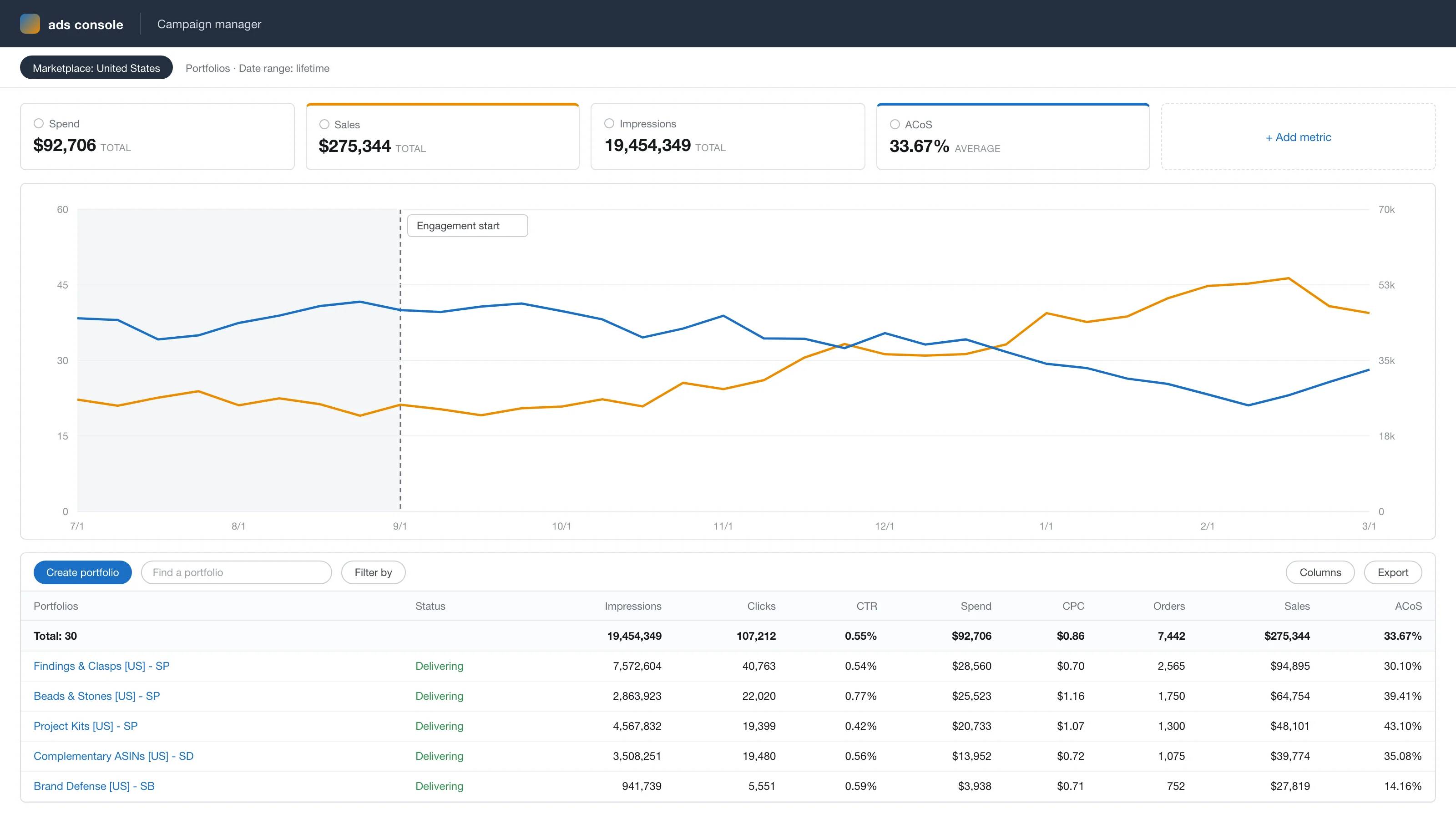
Anonymized account view, rebuilt from the figures reported above: ad sales growing from $24k to $48k a month while ACoS falls from 39% to 25% across the 6-month engagement.
The results
Orders now contain 3.6 of the brand's SKUs on average, against 1.4, and revenue grew 96% in six months on essentially the same number of customers.
ACoS fell fourteen points for the obvious reason: the acquisition cost is paid once and now returns a basket instead of a part. The single highest-leverage change was the least glamorous — buying the sponsored slots on the brand's own pages, which had been quietly advertising the competition to a customer the brand had already paid for.
“We had everything they needed in stock. We just never told them, and Amazon told them about someone else.”
Services we delivered
Related case studies

Ready to scale your Amazon brand?
Talk to a senior strategist and leave with a growth plan for your store — no obligation.