
Teaching the project that the materials are for
Project-term revenue $12k → $251k / mo
Nobody wakes up wanting adhesive vinyl. They want the thing it makes. A craft supplies brand was competing on the material term and ignoring the far bigger search around the project itself.

At a glance
- Category
- Craft Supplies
- Marketplaces
- US, CA
- Revenue at start
- $118k / month
- Catalog
- Consumable materials across 9 craft types
- Engagement
- Creative & content + PPC
- Timeframe
- 11 months
Results
The challenge
Craft demand starts with a project, not a material. Somebody sees a finished thing, decides to make one, and only then works out what to buy — and the searching they do in between is where most of the category's volume lives. Those searches name the outcome, not the input.
The brand was entirely absent from that stage. Its listings competed on material terms, where the shopper has already decided what they need and is choosing a brand on price. It was, in effect, arriving at the end of every purchase decision and competing only on the last variable.
Our approach
We built the page the shopper needs before they know what to buy.
- Project keyword map — the finished objects people make with each material, and the how-to phrasing they use while deciding.
- A+ content rebuilt as instruction — the project done step by step, with the material appearing as what it takes rather than what is being sold.
- Everything needed shown together, so a shopper arriving for a project sees the full set of materials rather than one of them.
- Campaigns on project terms, bid to acquire a first-time maker rather than to hit a material-term ACoS target.
Inside the ad account
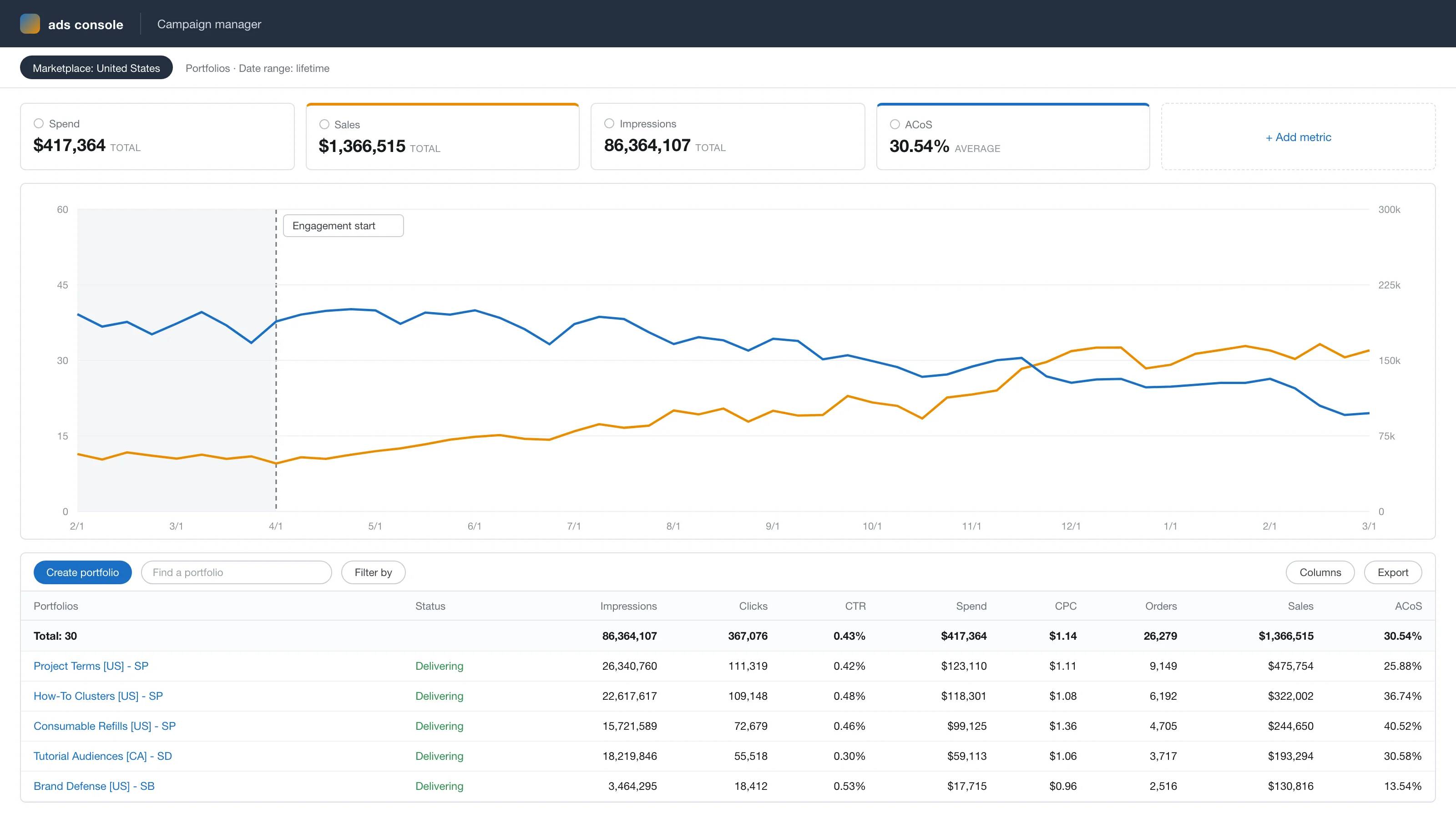
Anonymized account view, rebuilt from the figures reported above: ad sales growing from $53k to $156k a month while ACoS falls from 39% to 22% across the 11-month engagement.
The results
Revenue grew 193% to $346k a month, and the project and how-to terms went from a tenth of revenue to nearly three quarters of it.
Two things made the arithmetic work. Conversion on project terms more than doubled once the pages actually taught the project instead of describing a material. And items per order rose from 1.6 to 2.9, because a shopper who arrives without a shopping list buys the list you give them — which is the structural advantage of meeting demand one step earlier than the competition does.
“Anybody who already knew they needed vinyl could find us. Everyone one step upstream of that was invisible.”
Services we delivered
Related case studies



Ready to scale your Amazon brand?
Talk to a senior strategist and leave with a growth plan for your store — no obligation.