
Writing one page for two people: the engineer who chooses and the buyer who pays
Conversion 4.6% → 8.9%
In industry the person who selects the product and the person who places the order are rarely the same. The brand's listings spoke to one of them and lost the other.
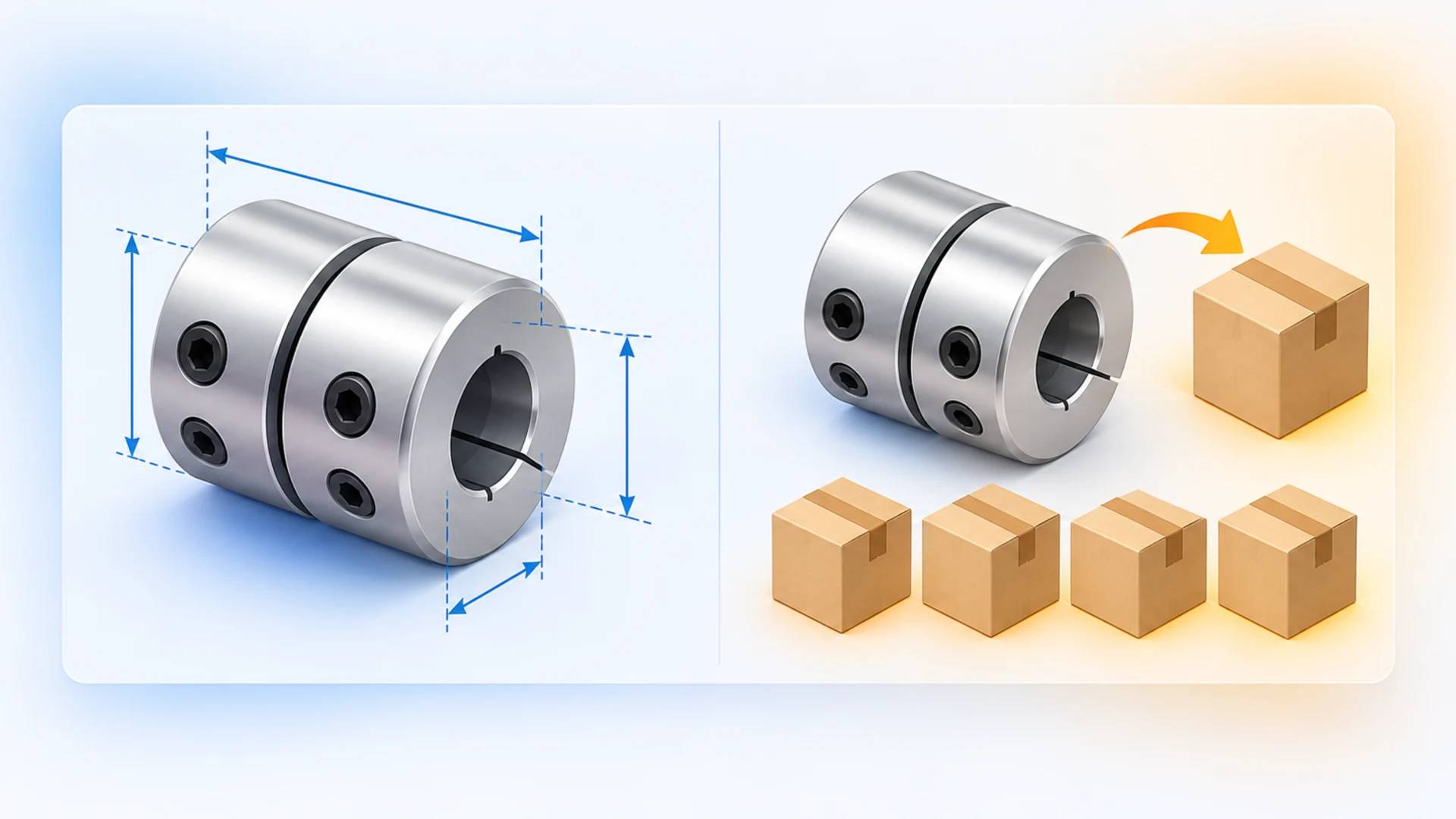
At a glance
- Category
- Industrial & Scientific
- Marketplaces
- US
- Revenue at start
- $267k / month
- Audience
- Selection and payment made by different people
- Engagement
- Listing SEO + creative
- Timeframe
- 8 months
Results
The challenge
Two different people were reading the same page and neither of them found what they came for. The engineer or maintenance lead who selects the part needs dimensions, materials, tolerances and the designation it replaces — enough to be certain it will work. The person who then places the order needs none of that and wants quantity, lead time, invoicing and whether a second order next month will get the same thing.
The brand's listings were written entirely for the first reader: dense technical copy top to bottom, with ordering details nowhere. Selection would happen, the link would be forwarded to purchasing, and the order frequently died there — which showed up in the data as a strong click-through rate, a weak conversion rate, and a stream of pre-purchase questions asking things the page could have answered in a line.
Our approach
We stopped arguing about which reader the page was for and served both, in order.
- A two-tier page structure with the selection facts made scannable — dimensions, material, rating and equivalence in a fixed position for the person who decides, ordering content immediately below for the person who buys.
- Ordering facts made explicit — pack quantity, what a repeat order receives, and the lead time for the larger quantities that do not ship from stock.
- A+ rebuilt as a handoff — the last modules written for the forwarded link, since that is how the page is most often opened the second time.
Inside the ad account
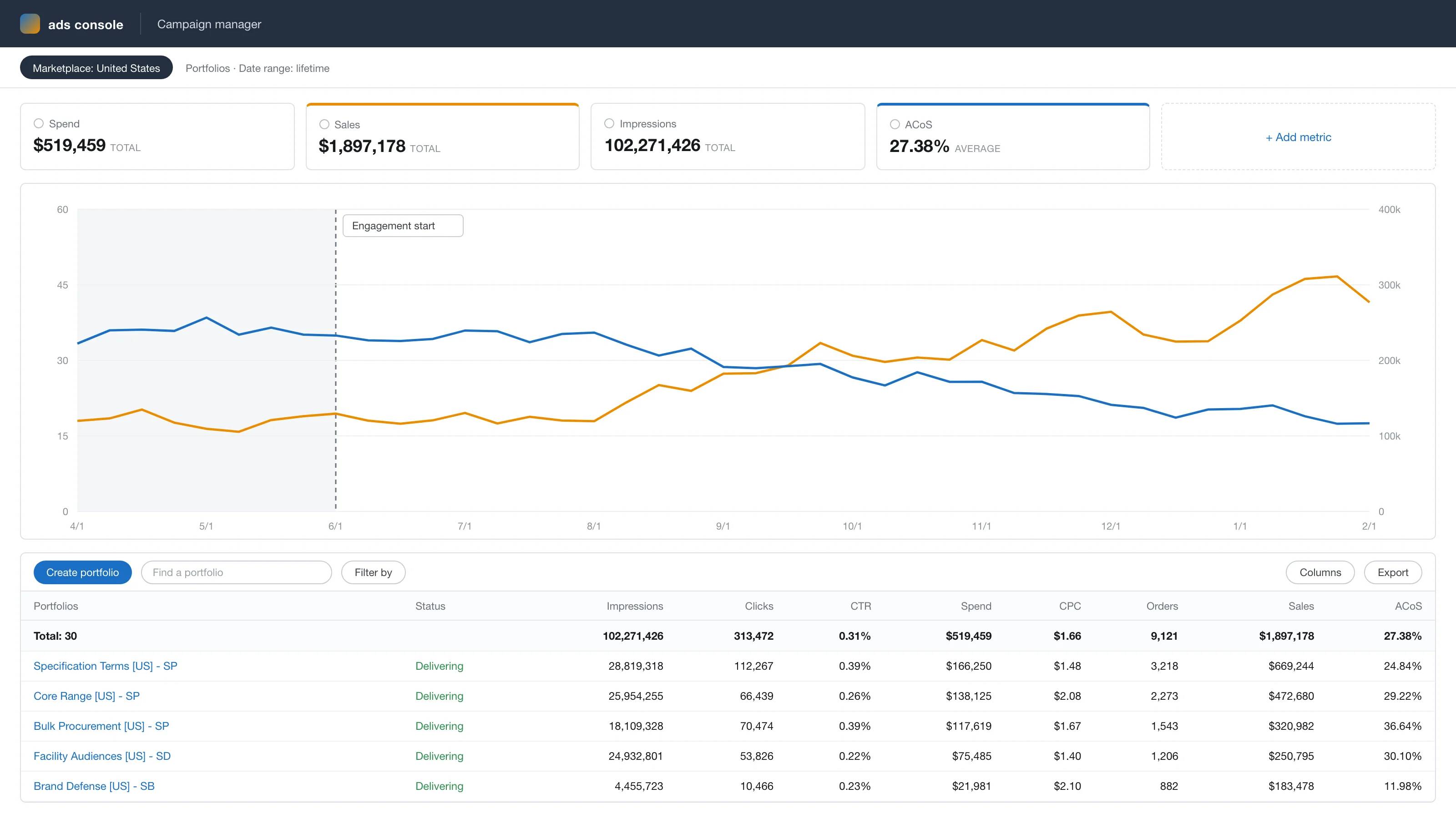
Anonymized account view, rebuilt from the figures reported above: ad sales growing from $120k to $261k a month while ACoS falls from 34% to 20% across the 8-month engagement.
The results
Conversion nearly doubled, from 4.6% to 8.9%, on essentially unchanged traffic, and revenue rose 117%.
Pre-purchase questions fell by four fifths, which is the clearest evidence of the mechanism: the questions were never curiosity, they were the second reader blocked. Average order value rose 12% on top of that, because a purchaser who can see the pack quantities and what a repeat order will contain orders the quantity the site actually needs rather than the smallest safe one.
“Our page was a data sheet. The person who had to approve the spend had no idea what he was looking at.”
Services we delivered
Related case studies



Ready to scale your Amazon brand?
Talk to a senior strategist and leave with a growth plan for your store — no obligation.