
From a Q4 stockout to a 2.4× peak season the following year
2.4× peak-month revenue year over year
A seasonal health brand sold out of its two best products in the first week of November and spent the rest of Q4 watching rank evaporate. The next year it went into peak with a forecast, a rank-protection plan and a catalog that could absorb demand.

At a glance
- Category
- Health & Household
- Marketplaces
- US
- Revenue at start
- $88k / month off-peak
- Trigger
- Out of stock on the two hero ASINs through Q4
- Engagement
- Full account management + PPC
- Timeframe
- 14 months, ending in a full peak season
Results
The challenge
The brand's season runs from October to February, and in the year before we started it ran out of its two hero ASINs on 6 November. By the time stock landed in mid-December the listings had fallen from the first page to the third, the Buy Box had been handed to resellers, and the advertising that was still running was paying to send shoppers to an unavailable product.
The cost was not just the lost quarter. Amazon's ranking is a memory: the sales velocity that disappears in peak is exactly the velocity the algorithm uses to rank the listing next season. The brand entered the following spring with lower organic rank than it had eighteen months earlier, and read that as “the category got more competitive”.
Our approach
We planned the next peak backwards from the week the brand ran out.
- Forecast built on last year's true demand, not on last year's sales — the stockout weeks were modeled as lost demand rather than treated as a slow period.
- Rank protection instead of blanket ad cuts — a defined floor of spend on the hero terms through peak, with bids managed to hold position rather than to hit a monthly ACoS target.
- Depth behind the heroes — secondary sizes and a bundle promoted into real listings, so demand had somewhere to go if a hero ran tight.
- Inventory and advertising in one plan — weekly cover reviewed against ad spend, with an agreed rule for throttling spend before a stockout rather than after it.
Timeline
Diagnosis
- Lost-demand model for the previous Q4
- Rank history reconstructed per hero ASIN
- Reseller Buy Box activity mapped
Rebuild the base
- Listings and A+ rewritten on the heroes
- Secondary sizes and a bundle brought up to hero standard
- Organic rank recovered to page one off-peak
Pre-peak
- Inventory placed against the lost-demand forecast
- Rank-protection budget agreed for October–January
- Throttling rules set for low-cover weeks
Peak and after
- Zero days out of stock across the quarter
- Hero term held inside the top five through December
- Post-peak plan to keep the earned rank into spring
Inside the ad account
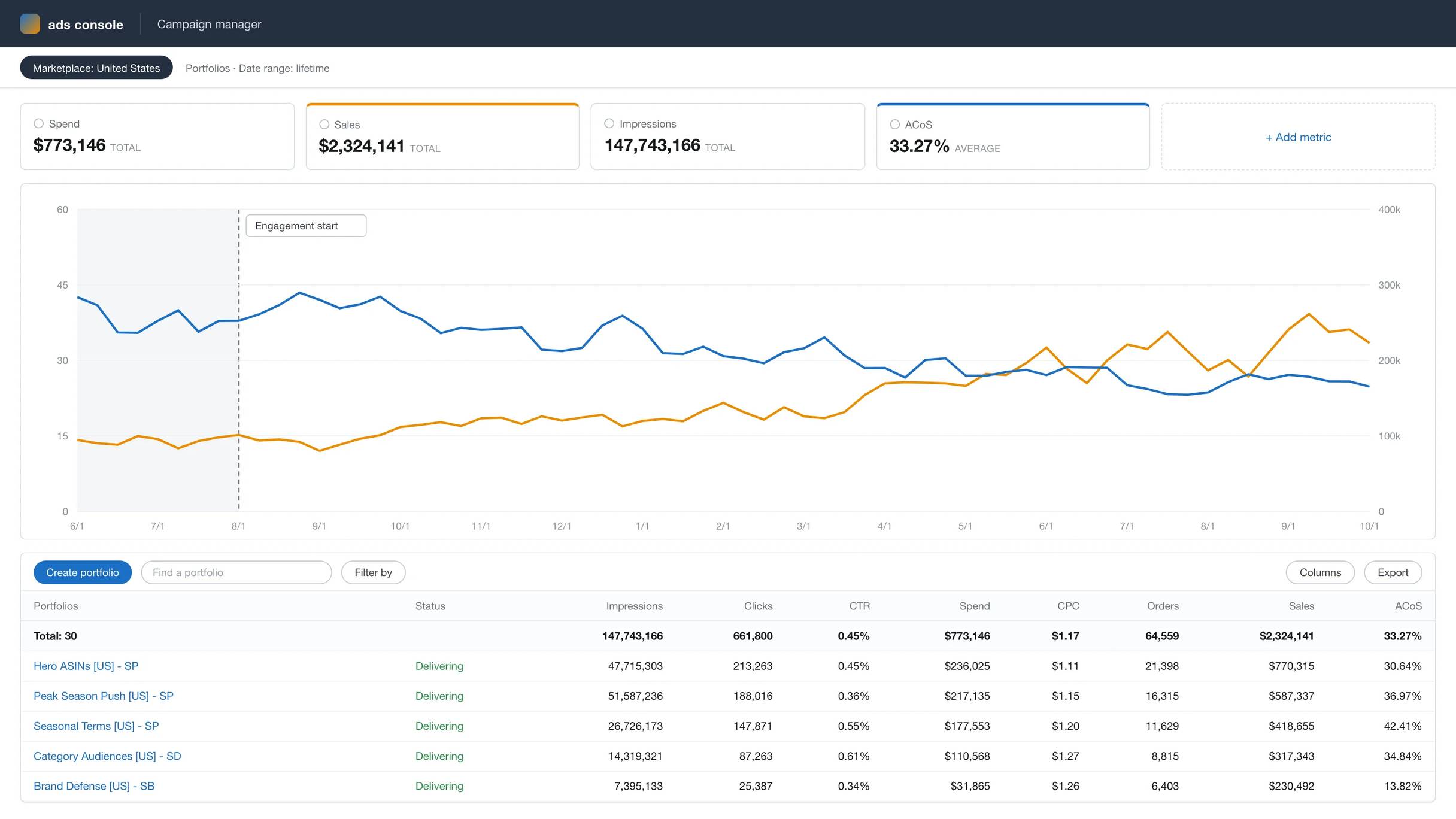
Anonymized account view, rebuilt from the figures reported above: ad sales growing from $92k to $224k a month while ACoS falls from 39% to 24% across the 14-month engagement.
The results
The following peak delivered $497k in its best month against $204k the year before — 2.4× — with zero days out of stock across the quarter.
Holding availability is what let the rest work: the hero term finished the quarter at #4 organically against #27 a year earlier, and peak ACoS fell from 39% to 24% because the account was no longer buying traffic to compensate for lost organic position. The brand now runs a single plan for inventory and advertising, which is the change most likely to keep this from repeating.
“We used to treat running out as a supply problem and rank as a marketing problem. They were the same problem.”
Services we delivered
Related case studies



Ready to scale your Amazon brand?
Talk to a senior strategist and leave with a growth plan for your store — no obligation.