
Sixty-four parts, four hundred grill models, one lookup table
Wrong-fit returns 24% → 5%
A brand selling covers, grates and burner parts across hundreds of grill models sold them as generic sizes. Building a real fitment database turned a guessing game into a search term.
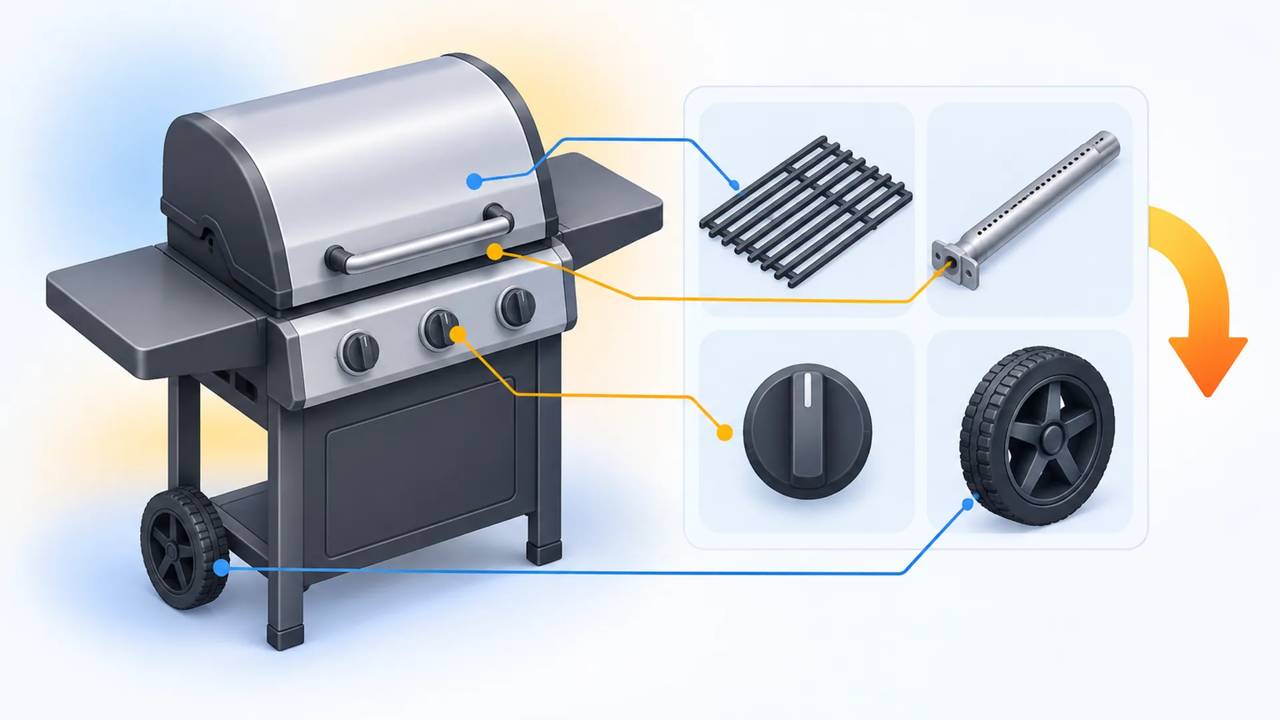
At a glance
- Category
- Grills & Outdoor Cooking
- Marketplaces
- US, CA
- Revenue at start
- $166k / month
- Catalog
- 64 accessory and replacement-part SKUs
- Engagement
- Listing SEO + PPC
- Timeframe
- 13 months
Results
The challenge
The single most common sentence in this category is “will this fit my grill?”, and the brand's listings answered it with a dimension in inches. A shopper holding a five-year-old grill does not know its firebox width; they know the model number stamped inside the lid.
So the purchase was a guess, and close to a quarter of those guesses were wrong. Wrong-fit returns cost the shipping twice, produced reviews about a product that worked perfectly on the grill it was designed for, and made the brand look unreliable in a category where reliability is the whole pitch. Meanwhile every competitor's listing had the same weakness, and thousands of monthly searches containing model numbers were going almost entirely unanswered.
Our approach
We built the data the category was missing and put it in the listing.
- A fitment database mapping every SKU to the specific grill models it fits, assembled from measurements, manufacturer specs and the brand's own returns history.
- Model numbers where the catalog takes them — the compatibility attributes and a fits / does-not-fit table in the copy, plus a generic “fits most 2015–2022 kettle grills” phrasing in the title, since another manufacturer's brand name does not belong there.
- A compatibility module in A+, listing supported models as plain factual fitment — the way a parts catalog does — and, just as importantly, naming the close models it does not fit.
- Campaigns built on model-number search terms, which are cheap, extremely specific and convert like a part number should.
How we worked
- 1
Returns forensics
Two years of returns matched to the grill models customers named, exposing which SKUs were being bought for what.
- 2
Measurement program
Every SKU physically fitted against the fifty most common grill models in the returns data; anything beyond that list is stated as unverified rather than implied to fit.
- 3
Database build
A SKU-to-model table maintained as a source file, with the listings generated from it rather than edited by hand.
- 4
Listing rollout
Model numbers pushed into titles, bullets and backend terms across sixty-four SKUs in three waves.
- 5
Campaign layer
Model-number campaigns launched per SKU group, with the non-fitting near-models added as negatives.
Inside the ad account
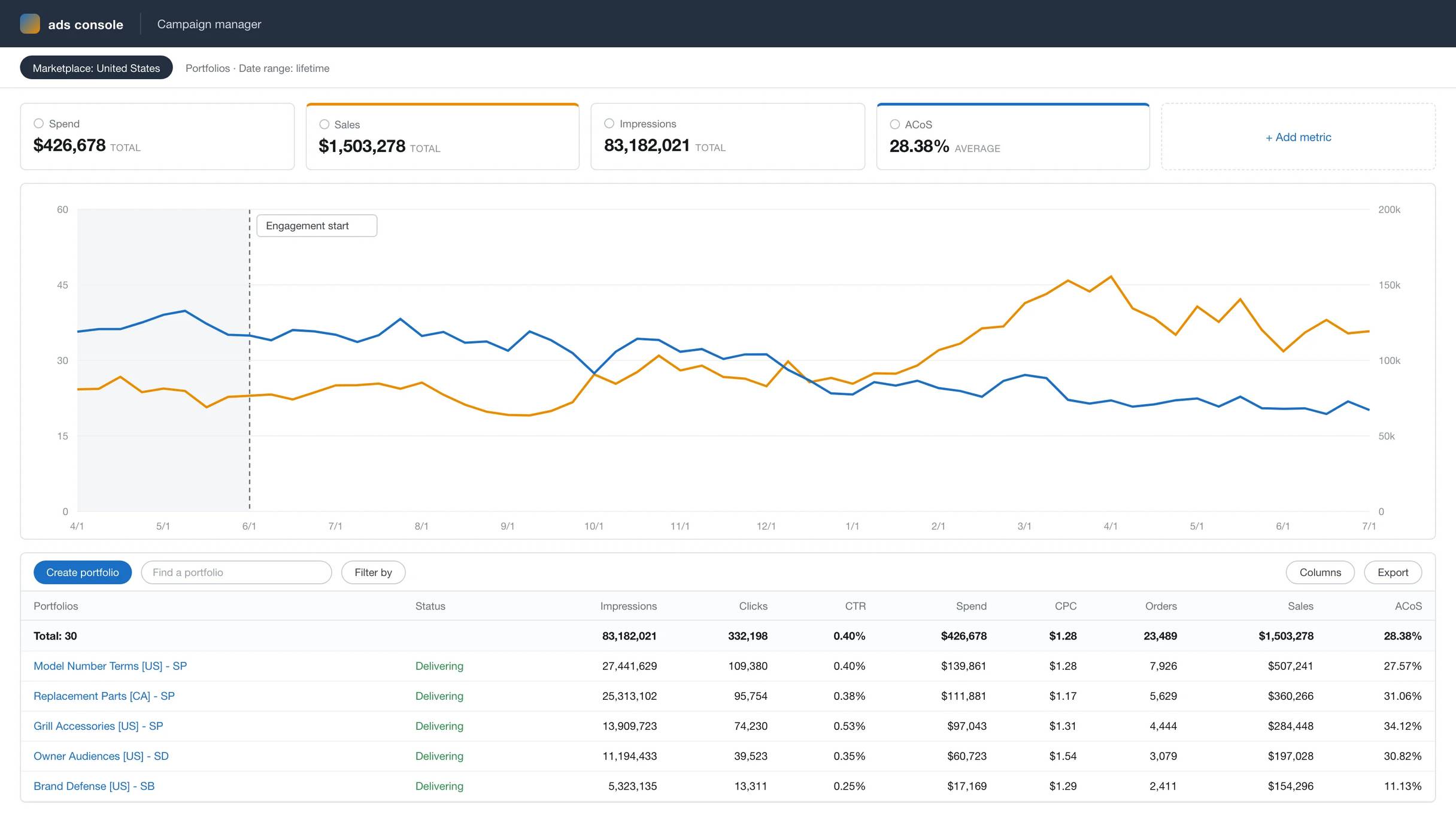
Anonymized account view, rebuilt from the figures reported above: ad sales growing from $75k to $137k a month while ACoS falls from 34% to 21% across the 13-month engagement.
The results
Wrong-fit returns fell from 24% to 5%, and revenue grew 84% over thirteen months.
The growth came from a kind of traffic the brand had never had: 1,900 ranking keywords containing a model number — all of them verified fitments, not a list copied from a manufacturer's catalog — each one a shopper who has already decided what they need and only wants confirmation it fits. Conversion rose 68% because that confirmation is now on the page. Naming the models the part does not fit turned out to matter as much as naming the ones it does — those were the returns.
“The whole category answers the most important question with a number in inches. We answered it with the number printed on the customer's grill.”
Services we delivered
Related case studies




Ready to scale your Amazon brand?
Talk to a senior strategist and leave with a growth plan for your store — no obligation.