
Bidding on the forecast, not on the calendar
In-season ACoS 38% → 17%
Snow removal demand does not arrive in December — it arrives seventy-two hours before a storm, in the specific places the storm is going to hit. Tying bids to forecasts rather than months rewrote the account's economics.

At a glance
- Category
- Snow Removal
- Marketplaces
- US
- Revenue at start
- $96k / month in season
- Pattern
- Flat bids from November to March
- Engagement
- PPC + DSP + account management
- Timeframe
- 6 months
Results
The challenge
The brand advertised evenly across the winter, which assumes demand is evenly distributed across the winter. It is not: a shovel is bought in the two or three days before a forecast storm, by someone who has just seen a weather segment, and it is barely bought at all on the clear weeks in between.
Flat bidding therefore did two bad things at once. On quiet weeks it paid full price for clicks from people browsing with no urgency, converting under 6%. And in the seventy-two hours when the category goes vertical, its bids were identical to the quiet-week bids, so it lost the auction to competitors precisely when a click was worth five times more. Twenty-two percent of the budget was landing in the windows that produced most of the demand.
Our approach
We connected the media plan to the weather.
- Storm windows defined from forecast data — the seventy-two hours before a system lands, which is when this category's searches begin.
- Scheduled budget rules and bid pushes per window — budgets raised and bids taken to the top-of-search cap inside the window, cut to a holding level outside it, rather than one setting for the whole winter.
- The regional layer bought in DSP, the only place a snow line can actually be targeted — display against the states in the forecast path while the Sponsored calendar runs nationally.
- Replenishment timed to the forecast, so the listing is never out of stock in the seventy-two hours that matter.
- Creative swapped for the window — urgency, delivery speed and in-stock messaging while it is snowing; preparation and storage messaging when it is not.
Inside the ad account
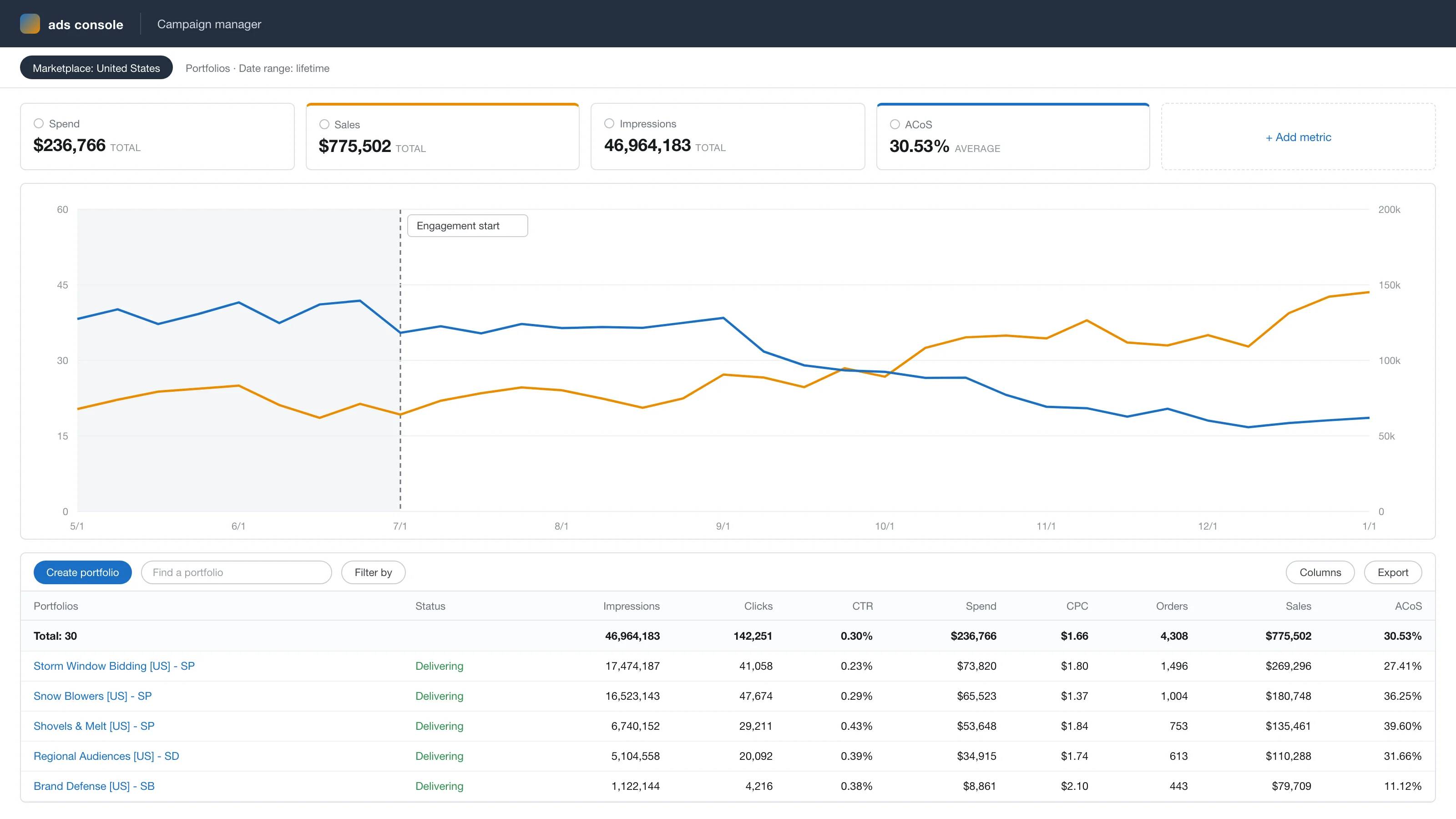
Anonymized account view, rebuilt from the figures reported above: ad sales growing from $72k to $131k a month while ACoS falls from 38% to 17% across the 6-month engagement.
The results
In-season ACoS fell from 38% to 17% and season revenue grew 82%.
The mechanism is visible in one number: the share of spend landing inside storm windows went from 22% to 71%, and conversion inside those windows is 17.4% against 5.9% outside them. The brand is not advertising more — it is advertising in the days when the category exists, and standing back on the weeks when a click is a browse. Timing replenishment to the same forecast meant the listing stayed in stock and in two-day range through the window, which is the only promise that matters to somebody watching a storm approach.
“We used to describe our season as November to March. Our season is about nine days long and we never knew which nine.”
Services we delivered
Related case studies




Ready to scale your Amazon brand?
Talk to a senior strategist and leave with a growth plan for your store — no obligation.