
Half the one-star reviews were about the instructions, not the product
Rating 3.7 → 4.1
A brand selling gazebos and large furniture sets was being punished for a forty-page manual and a bag of unlabeled bolts. Fixing the assembly experience moved the rating faster than any product change could have.
At a glance
- Category
- Patio, Lawn & Garden
- Marketplaces
- US, CA
- Revenue at start
- $226k / month
- Problem
- 3.7 rating, 52% of 1-star reviews mention assembly
- Engagement
- Creative & content + account management
- Timeframe
- 7 months
Results
The challenge
The products were well made and badly delivered. A customer opening a gazebo carton found eleven anonymous bags of hardware, a manual printed at a size that is unreadable outdoors, and step diagrams drawn from an angle the product is never assembled from. Two people would spend a Saturday on it, and a meaningful share of them would give up.
Coding a year of reviews made the pattern undeniable: 52% of one-star reviews mentioned assembly, hardware or missing parts, and almost none of them mentioned the product's actual quality. Most of the “missing part” claims were parts the customer could not identify. The brand had been trying to fix this with product decisions — thicker steel, better powder coating — none of which touch the reason people were angry.
Our approach
We treated the first two hours of ownership as part of the product.
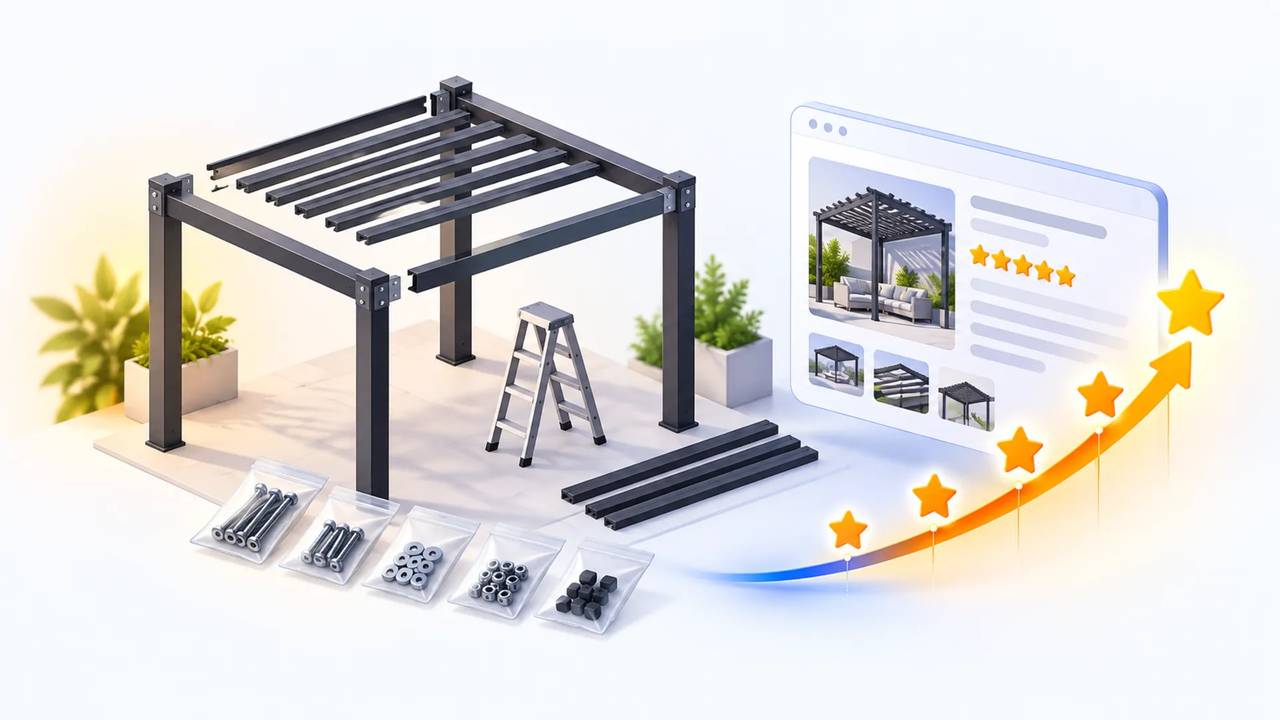
- Hardware labeled by step, each bag numbered to the step that consumes it rather than sorted by bolt size.
- The manual rebuilt around photographs of the real assembly sequence, large enough to read on a lawn, with a parts map on the first page.
- A short assembly video per product, reachable by a code on the carton and embedded in the listing, which also answers the question shoppers ask before buying.
- The listing told the truth up front — assembly time, number of people required and tools needed, stated in the image stack rather than discovered on delivery.
How we worked
- 1
Review coding
Twelve months of reviews and returns classified by root cause; assembly and hardware identification separated from genuine defects.
- 2
Hardware repack
Bagging changed from bolt-size sorting to step sorting, with printed step numbers on every pouch.
- 3
Manual rebuild
Each product photographed through a full assembly, with the resulting sequence replacing the drawn diagrams.
- 4
Video and listing
One assembly video per product, plus assembly time, crew size and tool list added to the image stack.
- 5
Follow-through
New reviews monitored by root-cause tag for sixteen weeks; two products with remaining hardware confusion got a second repack.
Inside the ad account
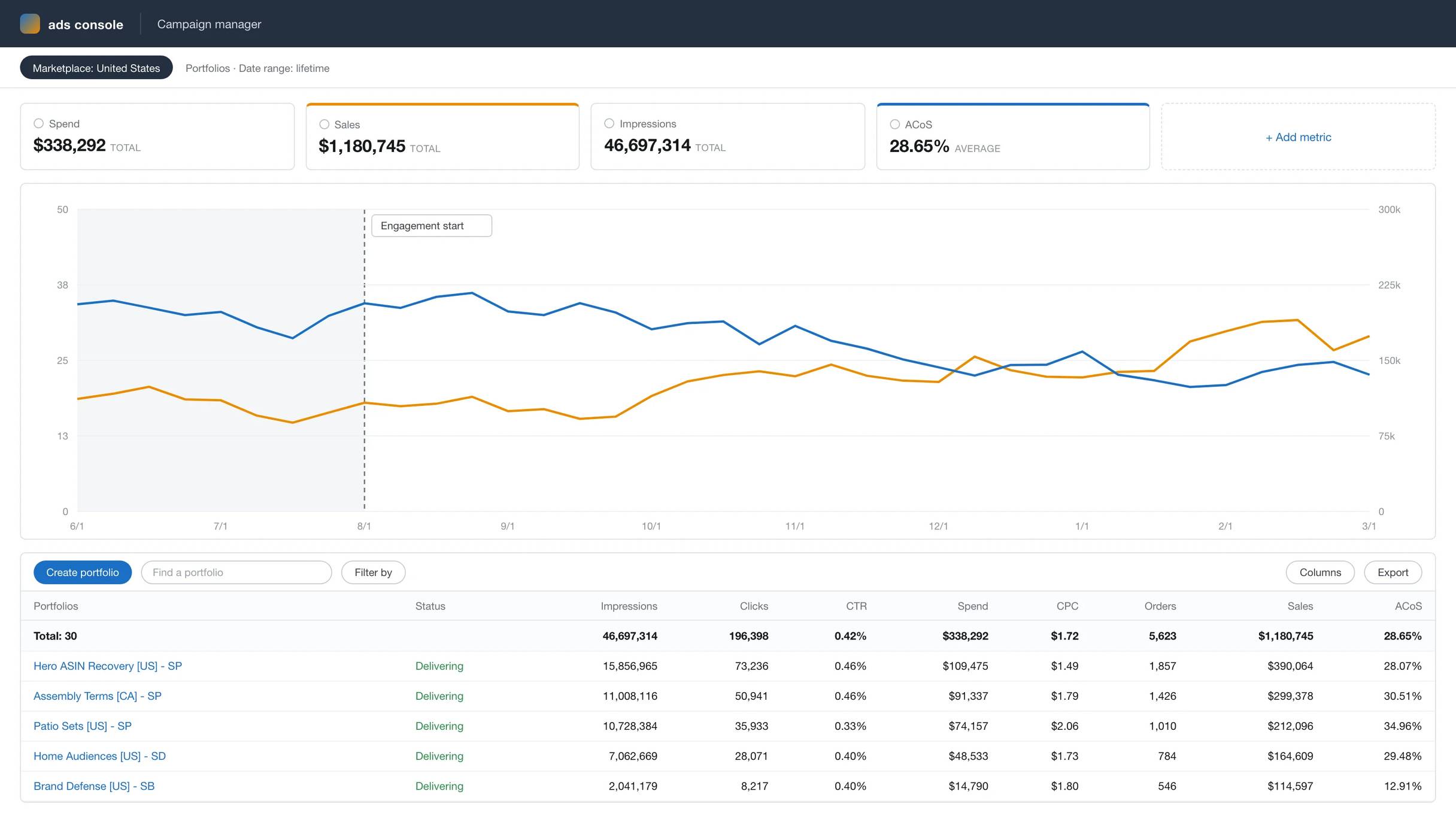
Anonymized account view, rebuilt from the figures reported above: ad sales growing from $102k to $166k a month while ACoS falls from 33% to 23% across the 7-month engagement.
The results
The hero listing went from 3.7 to 4.1 and returns fell from 18% to 7%.
Revenue grew 63% mostly as a consequence of the rating: in a category where a $600 purchase is researched carefully, the difference between 3.7 and 4.1 stars decides whether a listing gets considered at all. Support contacts dropped by three quarters, which was the clearest sign the change had landed — people were no longer calling to ask which bag the long bolts were in. The products themselves were left exactly as they were.$
“Two years of improving the steel, none of it spent on the bolt bags. The bolt bags are what the reviews are about.”
Services we delivered
Related case studies




Ready to scale your Amazon brand?
Talk to a senior strategist and leave with a growth plan for your store — no obligation.