
Shoppers didn't need a chemical, they needed to know which one
Repeat rate 19% → 52%
A pool chemical brand sold eleven products to people who could not tell which of them solved their problem. A diagnostic path from symptom to product changed the catalog from a shelf into a system.

At a glance
- Category
- Pools, Hot Tubs & Supplies
- Marketplaces
- US
- Revenue at start
- $147k / month
- Catalog
- 11 chemicals, sold as eleven unrelated listings
- Engagement
- Creative & content + account management
- Timeframe
- 10 months
Results
The challenge
A pool owner arrives at Amazon with a symptom — the water is cloudy, the water is green, the test strip is showing something alarming — and a shelf of white bottles with chemical names on them. Choosing correctly requires knowing the difference between a clarifier and a flocculant, what happens to chlorine when the stabiliser level is wrong, and in what order to dose. Most owners do not.
So they bought whichever bottle ranked highest, used it on the wrong problem, and the water did not clear. The reviews recorded that as a product failure. The brand had eleven competent products and a 4.0 rating, single-item orders, and almost no repeat business, because a customer whose water is still green does not come back for the second bottle.
Our approach
We built the path from symptom to product and put the catalog on it.
- A symptom-led diagnostic — cloudy, green, irritating, foaming — each leading to a reading to take and the product that addresses it.
- Dosing by pool volume stated plainly in the image stack, since half the failures were the right product used at the wrong dose.
- Sequence content — what to do first, second and a week later, which is what turns one purchase into a maintenance routine.
- Cross-references between listings, so the clarifier page explains when a flocculant is the correct answer instead and sends the shopper there.
Inside the ad account
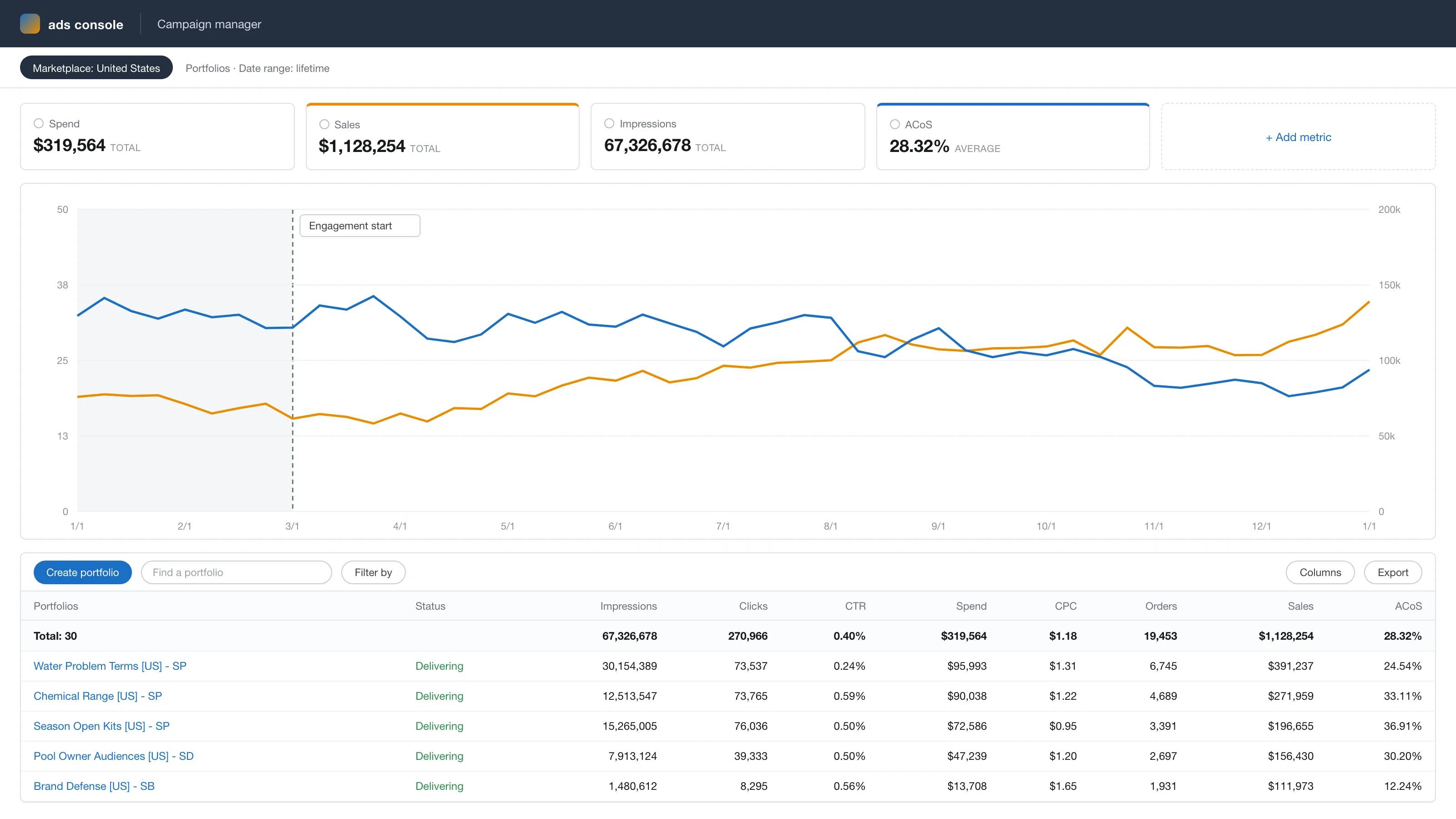
Anonymized account view, rebuilt from the figures reported above: ad sales growing from $66k to $125k a month while ACoS falls from 34% to 22% across the 10-month engagement.
The results
The ninety-day repeat rate went from 19% to 52% and items per order rose two thirds.
Revenue grew 71% almost entirely from existing demand — the same shoppers, buying the product that actually solves their problem and then the next one in the sequence. The rating followed at 4.4, because the products now get used the way they were formulated to be used. Sending a shopper to a different listing when it is the right answer cost a few sales and bought the repeat business the category runs on.
“Our customers were not choosing between our products and a competitor's. They were choosing between eleven bottles of ours and getting it wrong.”
Services we delivered
Related case studies



Ready to scale your Amazon brand?
Talk to a senior strategist and leave with a growth plan for your store — no obligation.