
From one bottle to a feeding system the household keeps buying
Revenue per customer $27 → $94
Parents bought a single starter bottle to test it and never discovered the brand made everything around it. Restructuring the catalog as a system changed the lifetime of a customer.
At a glance
- Category
- Feeding
- Marketplaces
- US, CA
- Revenue at start
- $154k / month
- Catalog
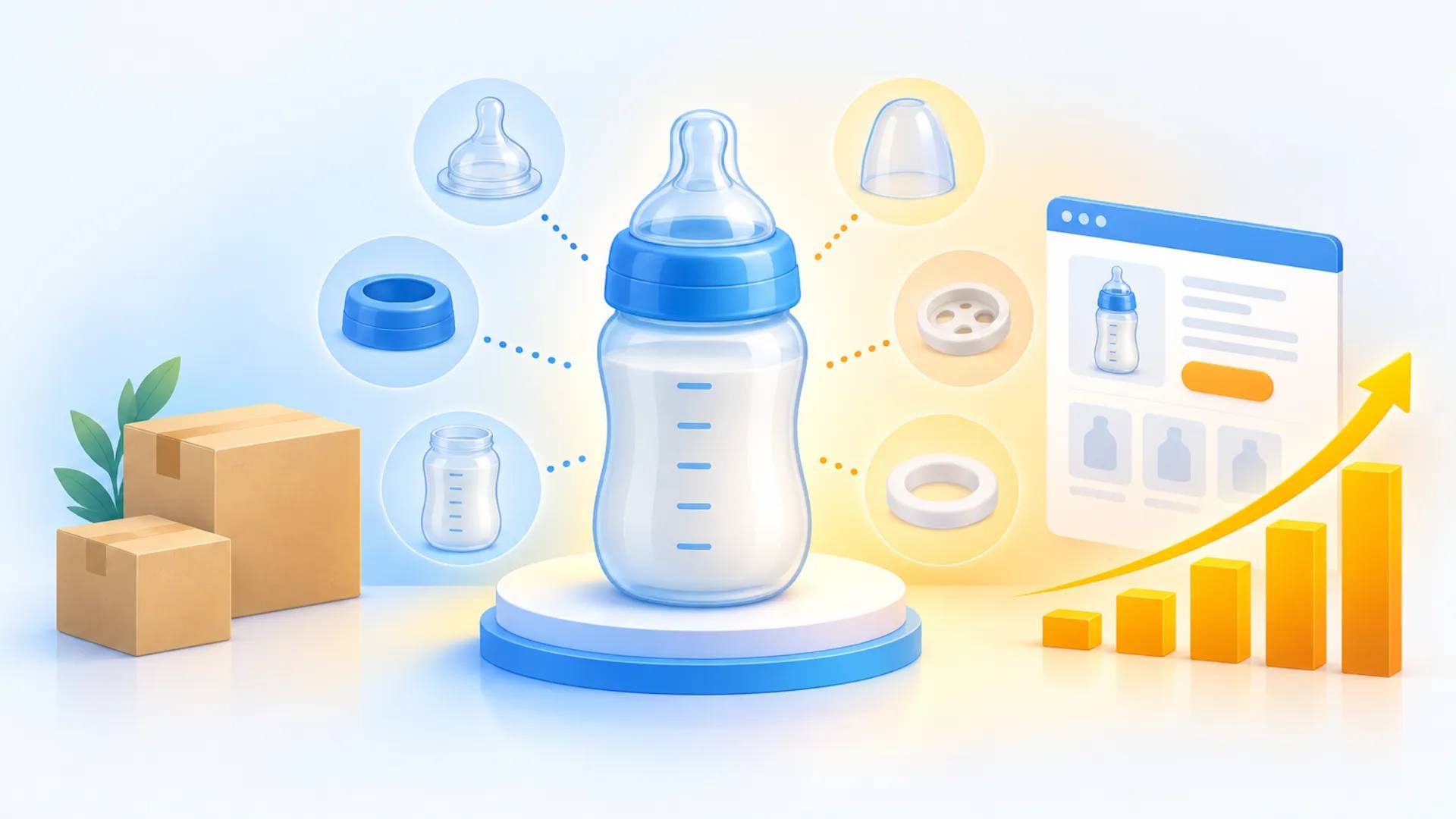
- Bottle plus 11 parts and accessories, all isolated
- Engagement
- Full account management + creative
- Timeframe
- 9 months
Results
The challenge
Feeding is not a single purchase, it is a two-year sequence. A parent buys one bottle to find out whether the baby will accept it; if it works, they buy three more, then faster nipple flow rates as the baby grows, then replacement valves, then the sippy transition cup, then the parts that wear out.
The brand made every one of those products and sold them as twelve unrelated detail pages. Nothing on the starter bottle indicated that the rest existed, and the nipple flow stages were buried in a variation dropdown labeled in numbers that meant nothing to a first-time parent. So the sequence happened, but mostly with other brands: the customer's second purchase went to whoever's listing explained what they needed next.
Our approach
We made the system visible from the first purchase.
- The starter bottle as an entry point, with A+ content laying out the full sequence and where the parent currently stands in it.
- Flow stages relabeled in human terms — age, and what the baby is doing — instead of numbered part codes.
- Multi-packs and stage kits for the points where parents predictably buy several at once.
- Replacement parts made findable, with the wear parts explicitly named in search terms because a parent hunting a lost valve is the easiest sale in the category.
How we worked
- 1
Map the two-year sequence
Order histories reconstructed to see what parents buy, in what order, and at what interval after the first bottle.
- 2
Find the drop-off
The sequence broke at the first nipple upgrade — the moment parents needed guidance and the listing gave them a number.
- 3
Rebuild the entry listing
The starter bottle's A+ turned into a map of the whole system with the next step named.
- 4
Rename the stages
Flow rates described by age and feeding behavior, with the part code kept as a secondary reference.
- 5
Package the predictable moments
Stage kits and multipacks built for the three points where parents buy in bulk anyway.
Inside the ad account
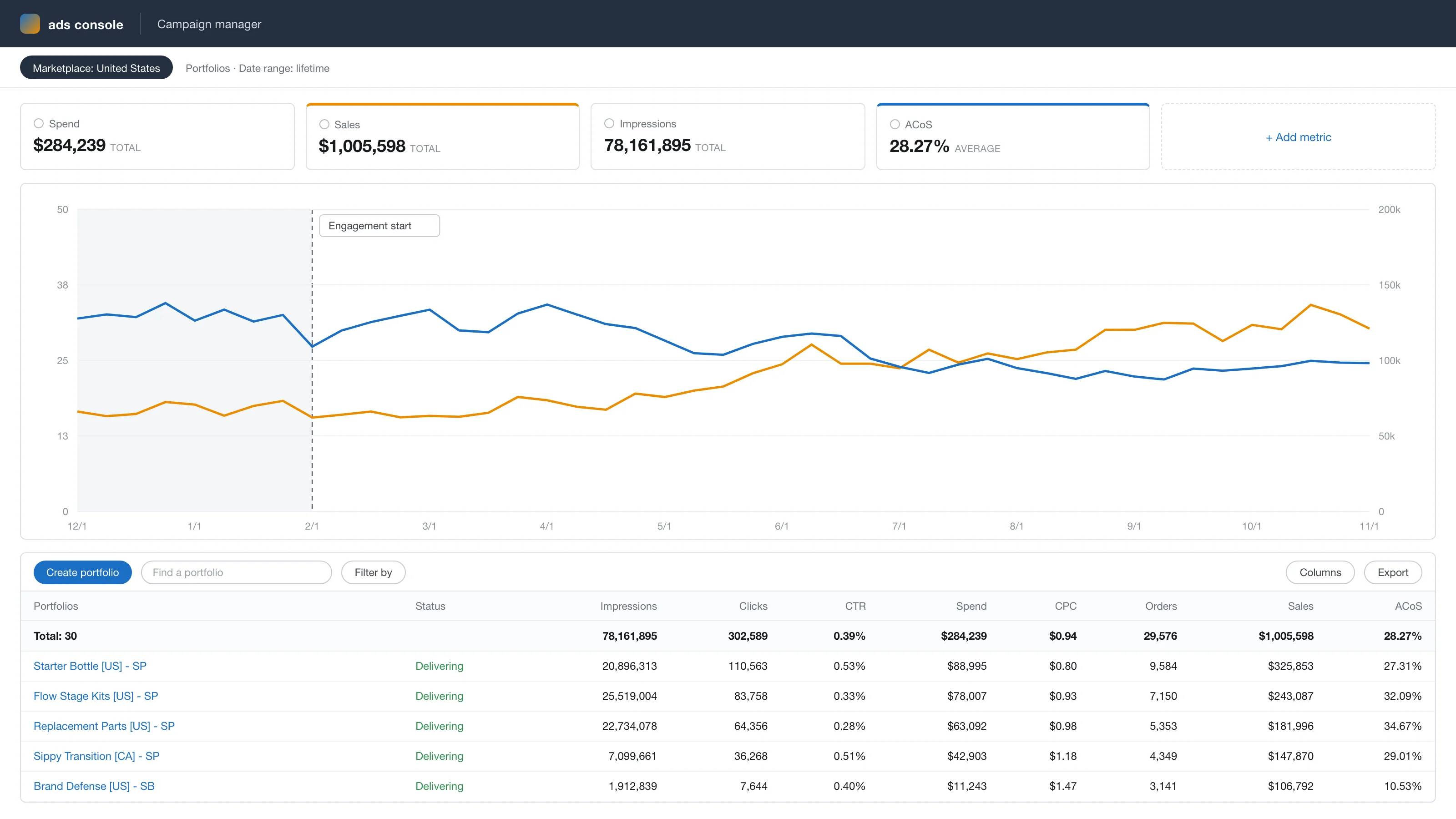
Anonymized account view, rebuilt from the figures reported above: the system catalog compounding ad sales over nine months.
The results
Twelve-month revenue per customer rose from $27 to $94, and monthly revenue nearly doubled.
Acquisition did not change — roughly the same number of parents try the starter bottle each month. What changed is that they now know what the brand makes for the next six months, and the moment they need it is the moment they are told about it. The repeat rate more than doubled to 51%, which also makes the advertising work differently: a first order can be bought at close to break-even when the account knows what follows it.
“Parents weren't leaving us. They just had no way of knowing we made the next thing they needed.”
Services we delivered
Related case studies


Ready to scale your Amazon brand?
Talk to a senior strategist and leave with a growth plan for your store — no obligation.