
Publishing the numbers that stop a first batch from failing
Repeat purchase 22% → 49%
Candle making fails on ratios, not on ingredients. The brand sold fragrance oil and wax to beginners and left them to guess how much of one goes into the other.

At a glance
- Category
- Candle & Soap Making
- Marketplaces
- US
- Revenue at start
- $58k / month
- Audience
- 68% first-time makers
- Engagement
- Listing SEO + creative
- Timeframe
- 8 months
Results
The challenge
Two thirds of the brand's customers were making their first candle. A first candle fails for one of three reasons — too much fragrance for the wax, the wrong pour temperature, or a wick that doesn't match the vessel diameter — and all three are ratios the supplier knows and the beginner does not.
The failure was being recorded as a product defect. Reviews said the fragrance was weak or the wax was faulty, when the actual event was a 12% fragrance load in a wax rated for 8%. Worse, a customer whose first batch fails does not buy a second bag of wax from anyone.
Our approach
We published the knowledge the category treats as insider information.
- Usage rates on every product page — maximum fragrance load per wax type, pour temperature range, cure time, stated as numbers.
- A wick-to-vessel table covering the diameters the brand's own containers come in.
- Ratio content in the image stack, because a beginner reads pictures and skips the description.
- Cross-references between products — the wax page names the wicks that work with it, so the first order is a set that can actually succeed.
How we worked
- 1
Failure taxonomy from reviews
Fourteen months of negative reviews coded: 71% described an outcome caused by a ratio, not by the material.
- 2
Ratio testing
Every wax and fragrance pairing in the catalog tested at three loads so the published numbers are the brand's own, not the supplier's.
- 3
Page rebuild
Numbers moved into the image stack and A+; the description keeps the long form for people who want it.
- 4
Cross-linking the set
Wax, wick and fragrance pages now name their compatible partners, which also raised items per order.
- 5
Beginner search coverage
Indexed for the questions beginners type — load percentages, cure times, wick sizing — which the category's listings ignore.
Inside the ad account
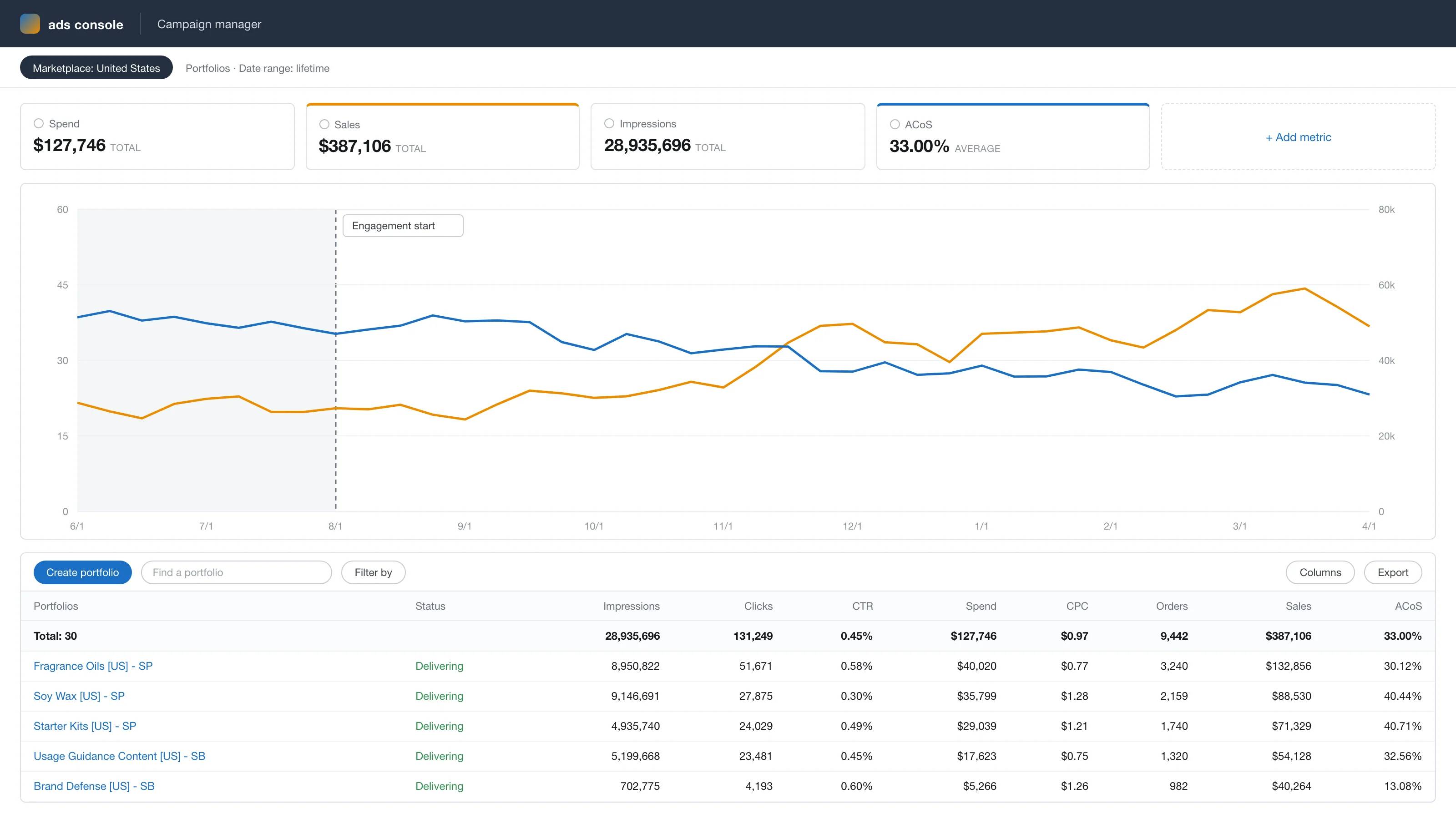
Anonymized account view, rebuilt from the figures reported above: ad sales growing from $26k to $57k a month while ACoS falls from 36% to 24% across the 8-month engagement.
The results
Repeat purchases went from 22% to 49%, and revenue more than doubled to $126k a month.
The mechanism is simply that more first batches work. The fragrance rating recovered four tenths without any change to the oils, and items per order rose 80% because the page now assembles a workable set instead of selling one ingredient. In a hobby category the second order is the whole business — the first one is just the entry fee.
“Everybody in this business knows the ratios. Our customers were learning them from our one-star reviews.”
Services we delivered
Related case studies




Ready to scale your Amazon brand?
Talk to a senior strategist and leave with a growth plan for your store — no obligation.