
Competing with a 40% coupon that only ever applies to one item
Gross margin 28% → 41%
Craft shoppers price-anchor on the weekly coupon at the big hobby chains, and a craft brand had spent two years discounting against a number that almost nobody actually pays.

At a glance
- Category
- Arts, Crafts & Sewing
- Marketplaces
- US
- Revenue at start
- $132k / month
- Context
- Category dominated by chains running a weekly 40%-off coupon
- Engagement
- Full account management + creative
- Timeframe
- 13 months
Results
The challenge
Craft shoppers have been trained by decades of big-box hobby retail to never pay list price. The weekly coupon is the category's defining habit, and it sets the number in a shopper's head before they ever open Amazon — so the brand's honest price reads as an insult rather than an offer.
The brand had responded the obvious way: standing discounts, stacked coupons, a permanent promotional posture that ate fourteen percent of revenue and still lost the comparison. Nobody had examined the coupon itself. It applies to a single regular-priced item, excludes most of what a project needs, and requires a trip — so the price it advertises is not the price of the cart the shopper is actually assembling, and matching it meant discounting against a number that barely exists.
Our approach
We changed what was being compared instead of what was being charged.
- Basket-level comparison, made everywhere except the listing — the brand's own store content, ads off Amazon and its email: what a whole project costs here versus one couponed item and the rest at full price. A named competitor never appears on the detail page, which is not allowed and is not needed.
- Promotions withdrawn in stages, one product family at a time, with conversion watched for four weeks before the next.
- The things a coupon cannot supply, made explicit — the exact colorway in stock now, the full quantity from one place, arriving before the weekend the project is planned for.
- Creative shifted from price to certainty, since the shopper's real risk is a wasted trip and a substituted material, not a few dollars.
Inside the ad account
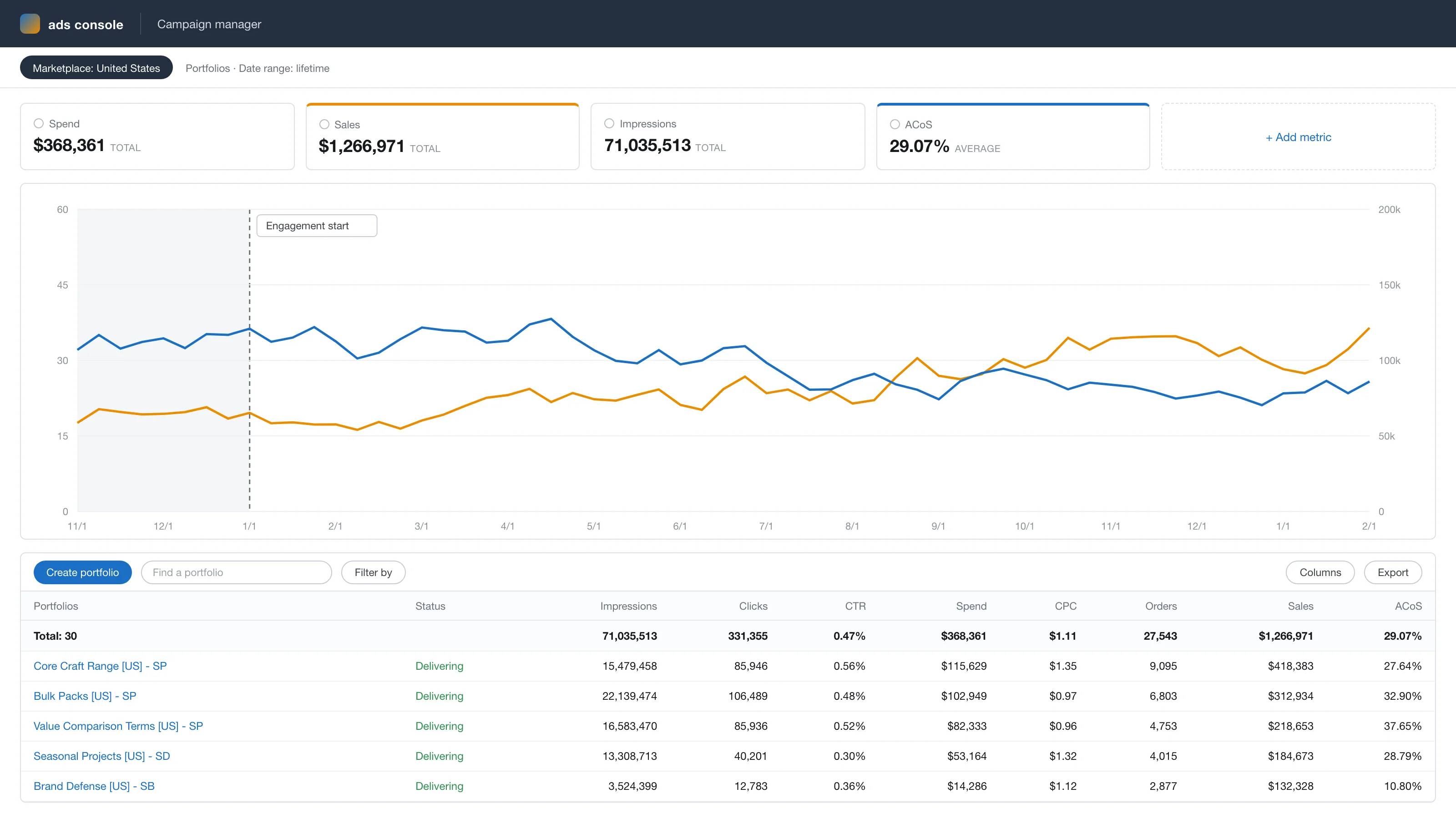
Anonymized account view, rebuilt from the figures reported above: ad sales growing from $59k to $108k a month while ACoS falls from 34% to 24% across the 13-month engagement.
The results
Gross margin went from 28% to 41% while revenue grew 83%, which is the combination the discounting had made look impossible.
Promotional spend fell from fourteen percent of revenue to three, and conversion still rose 42% — the price was never the objection. What the brand had been buying with all that discount was the shopper's attention to price, and every coupon it ran reinforced the comparison it could not win. Once the comparison moved to the basket, the arithmetic favored the brand without any help.
“That coupon covers one item. Our customers were buying nine, and we were discounting the whole basket against it.”
Services we delivered
Related case studies




Ready to scale your Amazon brand?
Talk to a senior strategist and leave with a growth plan for your store — no obligation.