
Selling a scent you can't smell: the discovery set as a funnel
34% of sampler buyers bought full size
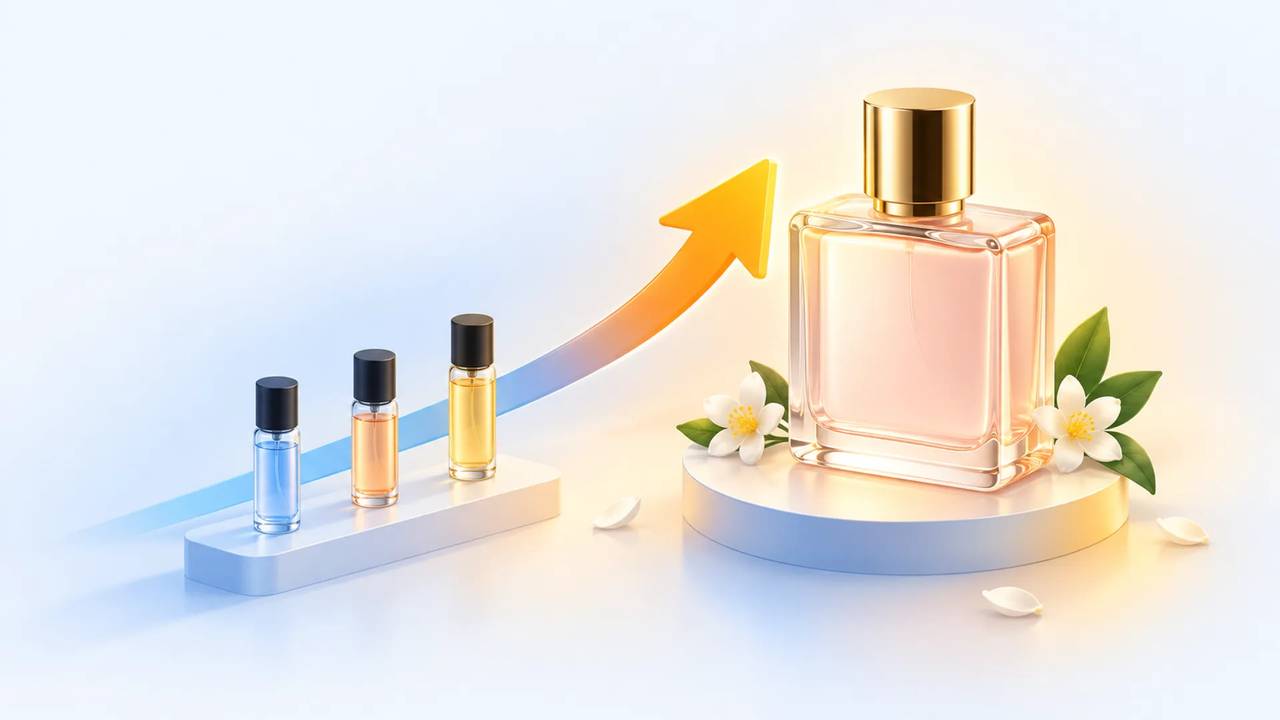
Fragrance is the hardest category to sell online for an obvious reason. We stopped trying to convince shoppers to gamble $88 and sold them a $14 way to decide.
At a glance
- Category
- Fragrance
- Marketplaces
- US
- Revenue at start
- $112k / month
- Hero price point
- $88 — high risk for an unsmelled purchase
- Engagement
- Full account management + DSP
- Timeframe
- 10 months
Results
The challenge
Nobody buys an $88 fragrance from a stranger on the internet. The category's conversion rate reflects that, and the brand had been trying to overcome it with the usual tools — more ad spend, richer A+ copy describing notes, a discount that mostly attracted people who would have bought anyway.
The actual obstacle is structural: the product cannot be evaluated before purchase, and no amount of copy about bergamot changes that. Every dollar of advertising was pushing shoppers toward a decision they had no basis to make.
Our approach
We built a cheaper decision instead of a better argument.
- A discovery set as the acquisition product — three 2ml vials at $14, priced to be an easy yes rather than to make money.
- Advertising aimed at the sampler, not the full bottle, which halved the cost of acquiring a customer because the conversion barrier is far lower.
- The trial's price given back as a coupon on the bottle — run through Amazon's own promotion and retargeting tools rather than a card in the box, which is not allowed, so the credit reaches the buyer where the next purchase happens.
- DSP retargeting of sampler buyers two to three weeks later, when they have actually worn the scent and can decide.
Inside the ad account
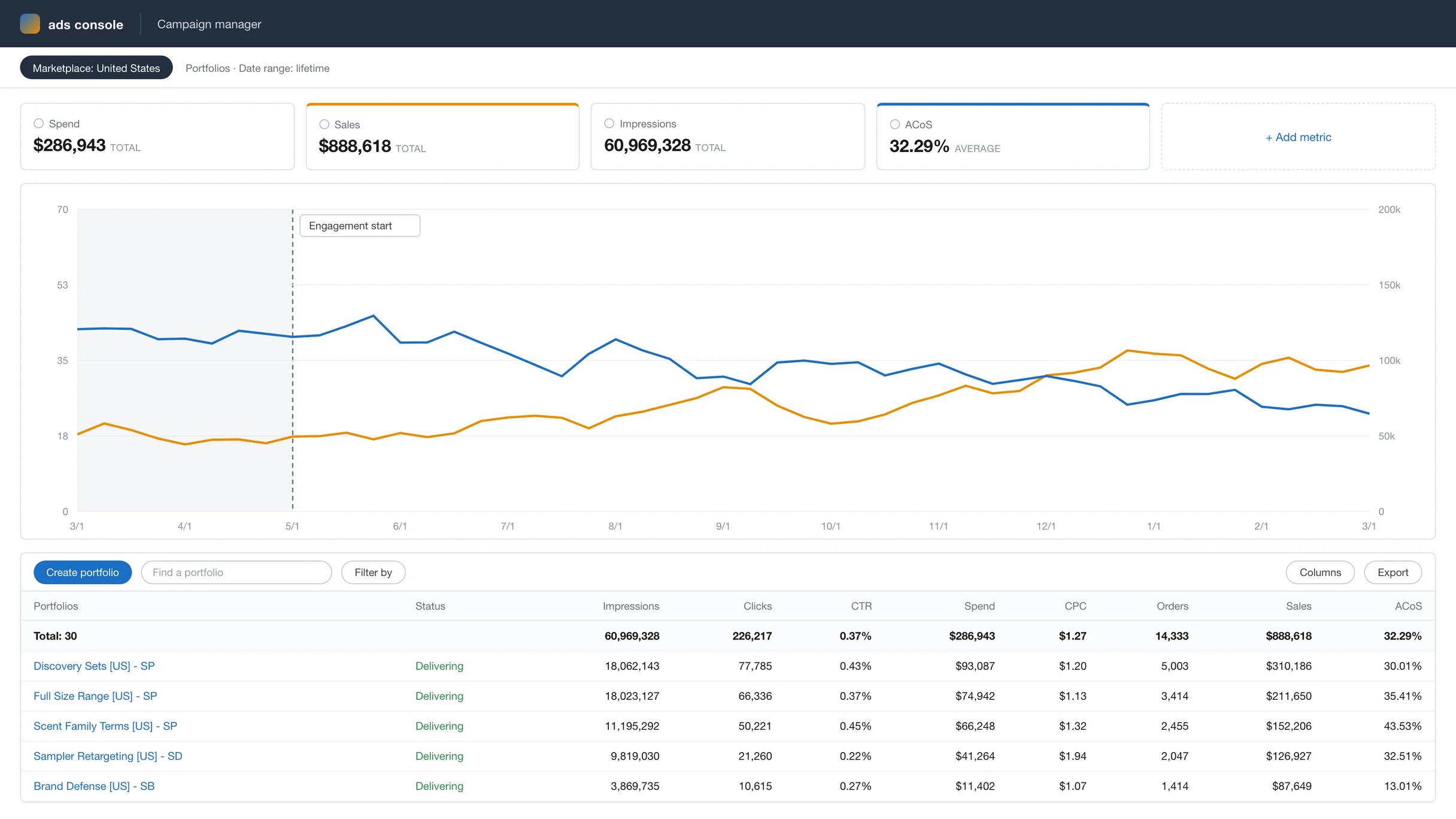
Anonymized account view, rebuilt from the figures reported above: ad sales growing from $50k to $99k a month while ACoS falls from 40% to 24% across the 10-month engagement.
The results
A third of discovery-set buyers — 34% — went on to buy a full-size bottle, and revenue nearly doubled to $219k a month.
Acquisition cost per full-size customer fell from $41 to $23, because it is far cheaper to sell a $14 trial than an $88 commitment, and the retargeting that follows converts at rates paid search cannot match. New-to-brand orders quadrupled, which in a category built on repeat purchase is the number that compounds.
“Three years of writing better descriptions of a smell. Letting people smell it was cheaper than any of them.”
Services we delivered
Related case studies

Ready to scale your Amazon brand?
Talk to a senior strategist and leave with a growth plan for your store — no obligation.