
Twelve presets on the box, three that anyone ever pressed
Conversion 4.9% → 7.6%
The listing led with a feature count because the factory sheet did. Usage data and two thousand reviews agreed that buyers use three functions — so we sold those three and stopped selling the other nine.

At a glance
- Category
- Cooking Appliances
- Marketplaces
- US
- Revenue at start
- $158k / month
- Product
- One countertop unit sold on a list of 12 presets
- Engagement
- Listing SEO + PPC
- Timeframe
- 7 months
Results
The challenge
The title, the bullets and the first three images all counted functions: twelve presets, eight accessories, four cooking modes. That list came off the manufacturer's spec sheet, where a longer number is a better product, and every competitor was playing the same game with a bigger one.
The brand's own evidence said something else. Reading two thousand reviews and the questions buyers asked, three functions accounted for almost everything people described actually doing with the machine. The other nine were doing real damage: they made the page a specification list instead of an argument, they made the unit look complicated to someone choosing a first appliance, and they set an expectation of versatility that the one-star reviews then punished — “the dehydrate mode is useless” from a customer who bought it to roast.
Our approach
We sold the machine people were buying rather than the machine the spec sheet described.
- Three functions promoted to the whole argument — title, first bullets and the first two images built around the jobs reviews said people do, with the remaining presets moved to a single line further down.
- Customer vocabulary adopted, never customer quotes — the dishes and phrasing buyers use, fed into copy and backend terms; reviews are research material, not listing content.
- Campaigns rebuilt around the three jobs instead of the category's feature vocabulary, with the preset-count terms cut entirely.
- The nine remaining modes framed honestly as extras rather than as reasons to buy, which is what stops them generating disappointed reviews.
Inside the ad account
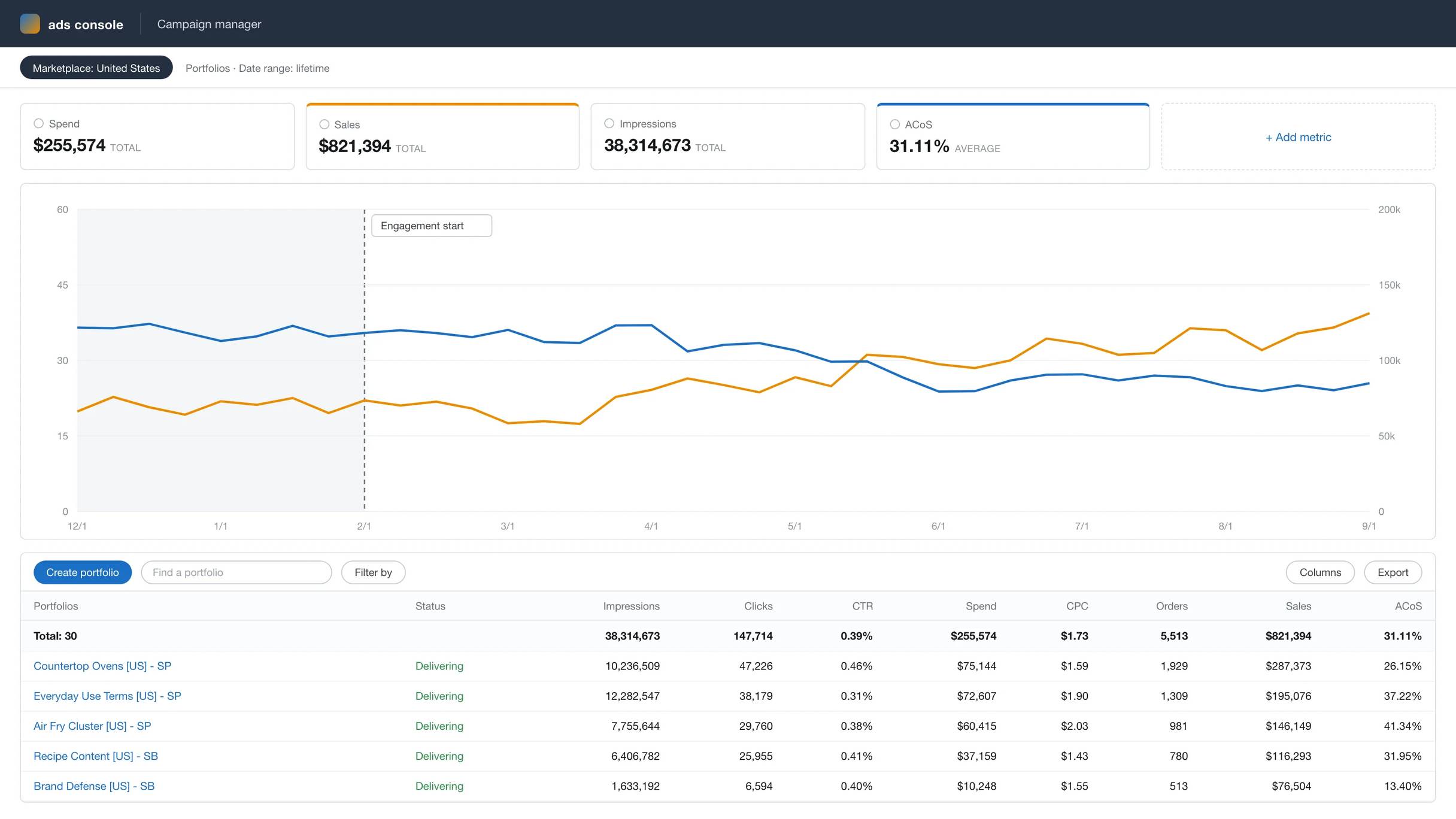
Anonymized account view, rebuilt from the figures reported above: ad sales growing from $71k to $126k a month while ACoS falls from 35% to 23% across the 7-month engagement.
The results
Conversion rose from 4.9% to 7.6% and revenue grew 78%, with the same hardware and the same twelve presets still in the box.
Returns fell seven points and the rating gained three tenths, both for the same reason: the page now promises what the machine is good at, so fewer people buy it for the ninth function and then review it for failing at that. The feature list did not have to shrink — it only had to stop being the pitch.
“Every meeting about this product ended in someone adding a mode. Nobody had checked which ones customers ever press.”
Services we delivered
Related case studies
Ready to scale your Amazon brand?
Talk to a senior strategist and leave with a growth plan for your store — no obligation.