
Selling to the kitchen project, not to the single appliance
Orders with 2+ appliances 9% → 31%
A large share of appliance demand is not a replacement — it is a renovation with a completion date. The account had been built for someone buying one thing today, and was invisible to someone buying four things for a date six weeks out.
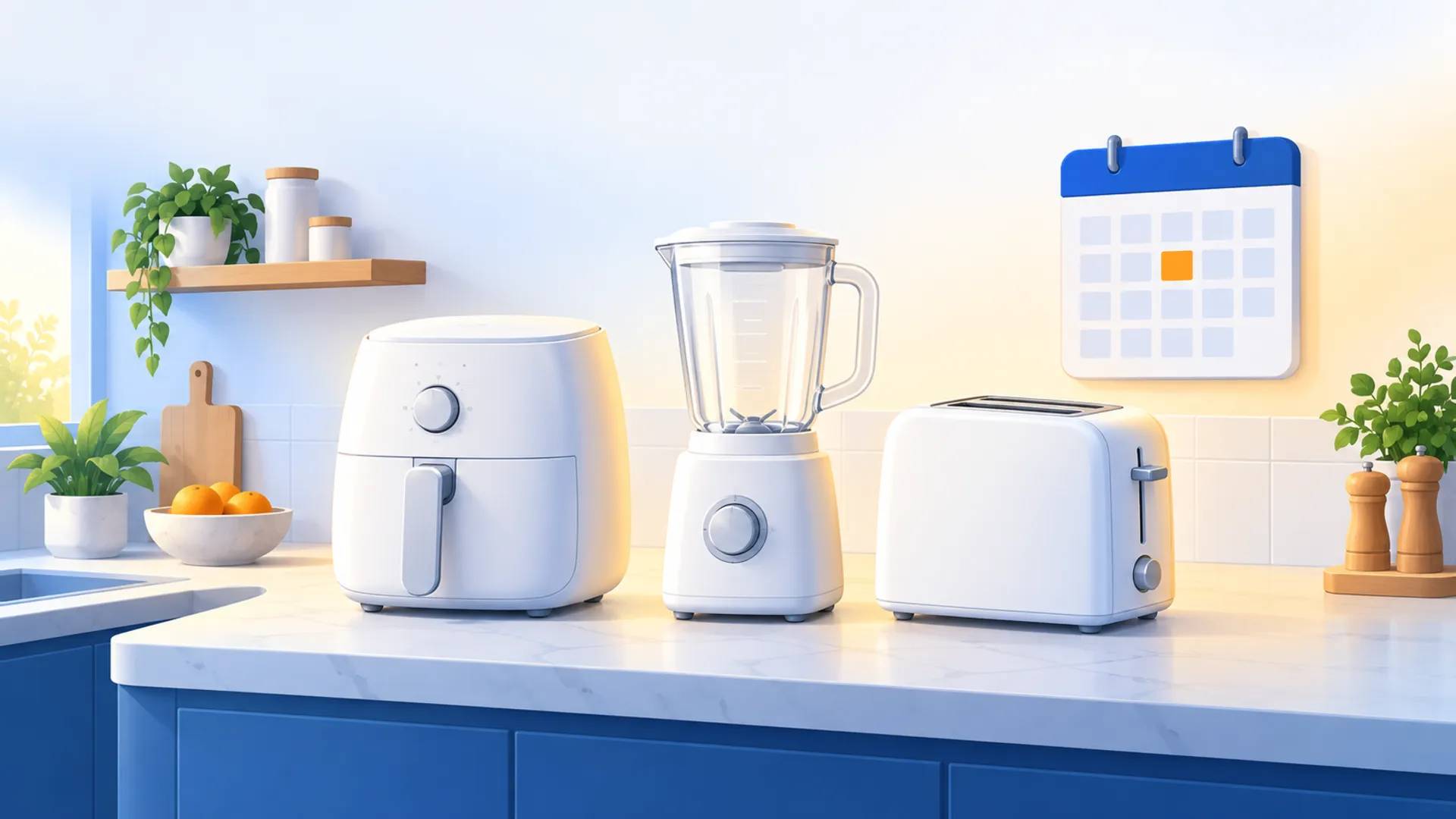
At a glance
- Category
- Appliances
- Marketplaces
- US, CA
- Revenue at start
- $640k / month
- Catalog
- Four appliance lines in three matching finishes
- Engagement
- Full account management + PPC
- Timeframe
- 11 months
Results
The challenge
Two buyers search the same words. One is replacing a dead unit this week and wants the cheapest thing that fits. The other is six weeks into a kitchen renovation, is buying three or four appliances that have to match, and will not accept delivery before the cabinets are in. The second buyer is worth five times as much and behaves nothing like the first.
The account served only the first. Every campaign ran to a single ASIN, the finish family was scattered across unrelated listings with inconsistent naming, and delivery messaging promised speed — which to a renovation buyer is a problem, not a benefit, because there is nowhere to put an oven that arrives a month early.
Our approach
We rebuilt the account around the buyer with the longer horizon.
- A finish family that reads as one line — consistent naming, matching imagery and cross-references, so a shopper can see that the range, hood and dishwasher belong together.
- Campaigns split by intent — project-language terms (matching sets, finish names, renovation phrasing) separated from replacement terms, with their own bids and their own copy.
- Order-timing guidance instead of a delivery promise — the page tells the renovation buyer how far ahead of the cabinet date to order, because checkout cannot hold an oven for six weeks and pretending otherwise produces a refused delivery.
- A project page in the store grouping units by finish rather than by product type, with the ad traffic from set-level searches pointed at it.
Inside the ad account
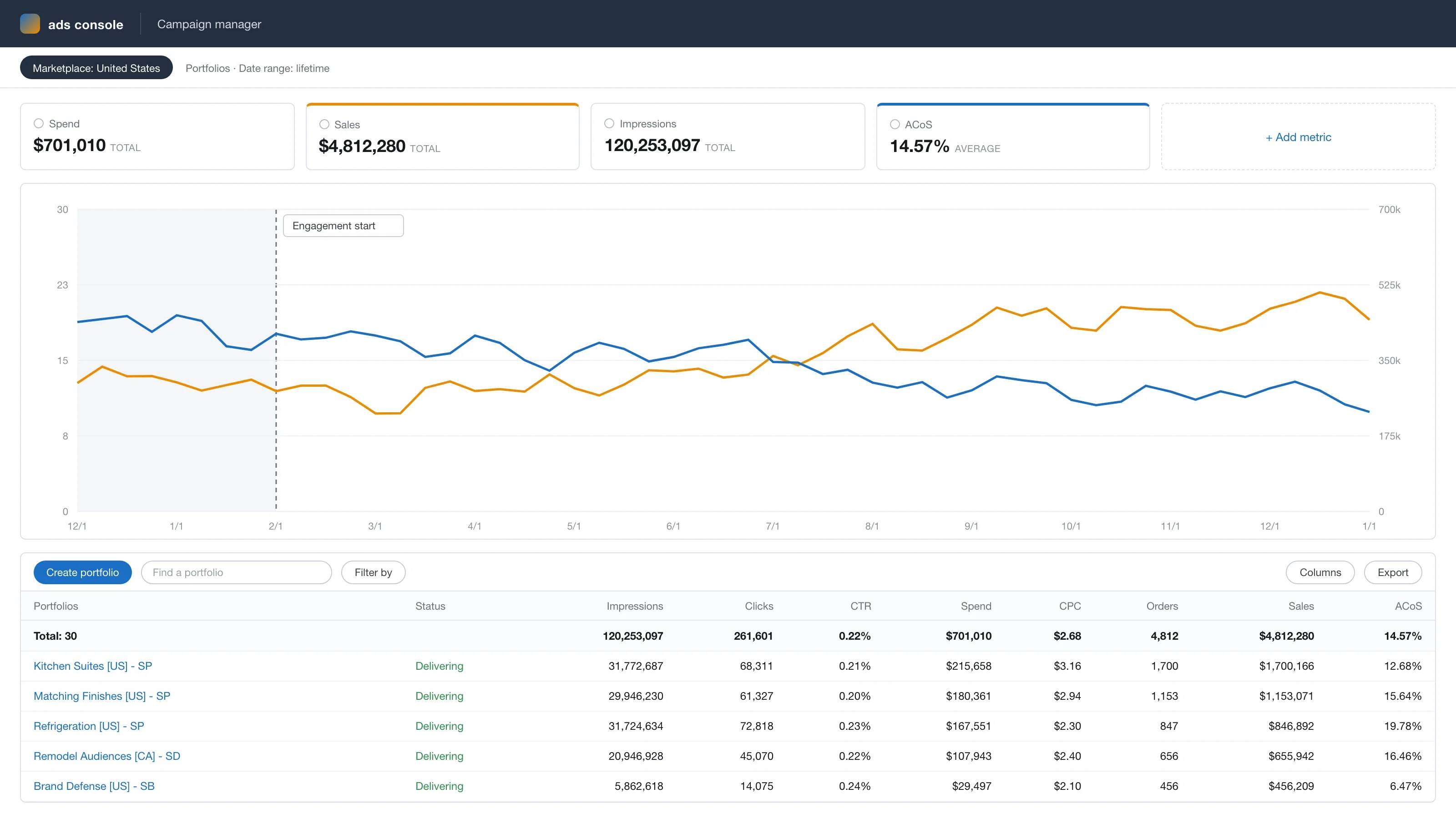
Anonymized account view, rebuilt from the figures reported above: ad sales growing from $288k to $459k a month while ACoS falls from 17% to 11% across the 11-month engagement.
The results
Orders containing two or more appliances went from 9% to 31%, and average order value rose 38% to $980.
Revenue grew 59% while blended ACoS fell six points — the arithmetic of a buyer who spends $980 on the click that used to produce $712. The replacement buyer was never abandoned; they simply stopped being the only person the account was built for.
“Half our real customers were standing in a gutted kitchen with a spreadsheet. We were advertising like everyone's fridge had just died.”
Services we delivered
Related case studies
Ready to scale your Amazon brand?
Talk to a senior strategist and leave with a growth plan for your store — no obligation.