
Winning the argument with the repair technician
+120% revenue, no new SKUs
A parts seller was competing with a $180 service call, not with other listings. Most of its potential customers never searched for a part at all, because they assumed the repair required someone qualified.
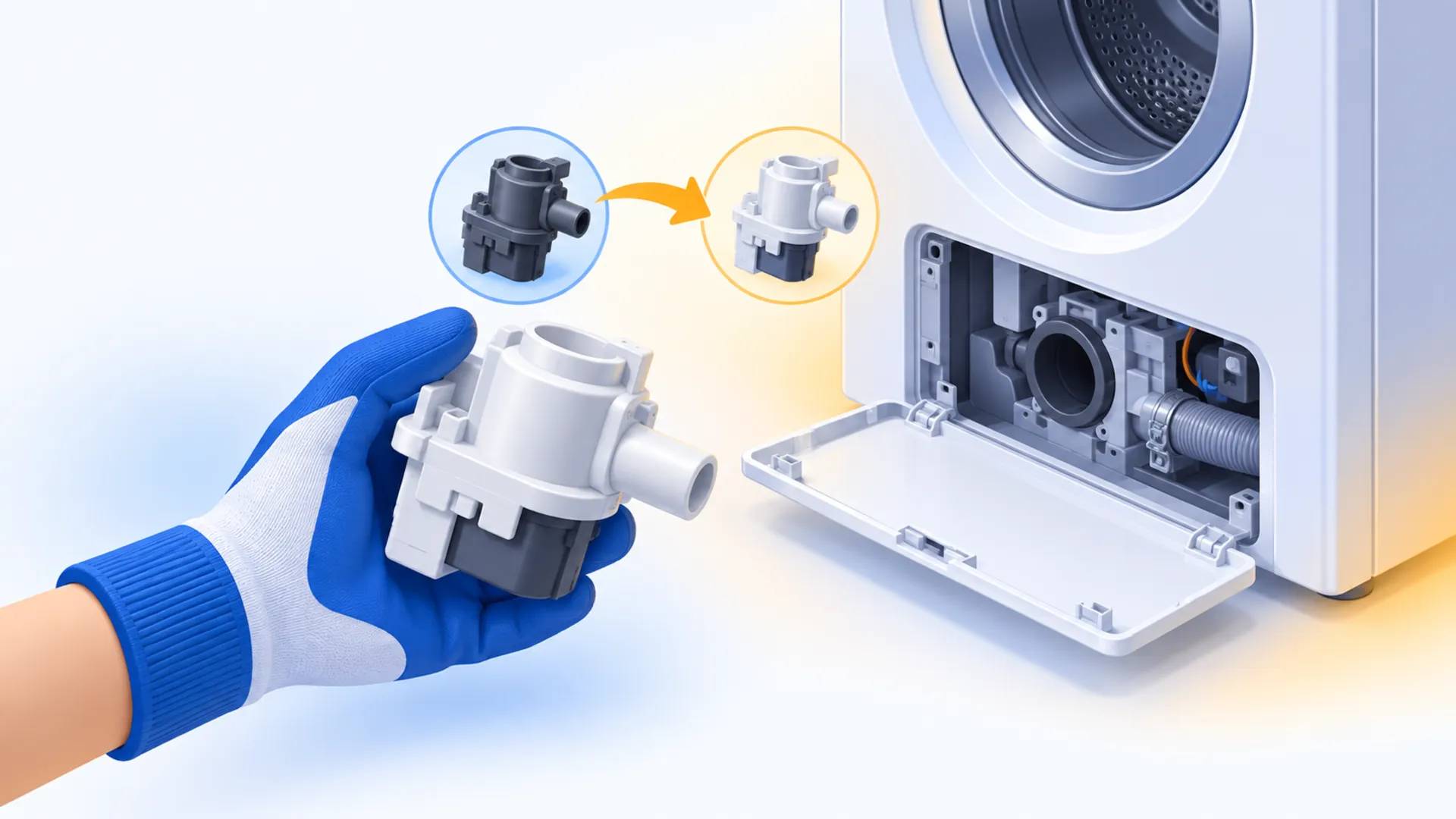
At a glance
- Category
- Appliance Parts & Accessories
- Marketplaces
- US
- Revenue at start
- $74k / month
- Competitor
- A $180 service call, not another listing
- Engagement
- Listing SEO + creative
- Timeframe
- 5 months
Results
The challenge
When an appliance stops working, almost nobody's first move is to search for a part. They call a technician, get a quote of $150 to $200 including labor, and either accept it or decide the machine is not worth fixing. The part costs $34 and the swap takes twenty minutes, but the owner has no way to know either of those things at the moment the decision is made.
The seller's listings were written for the small minority who had already decided: a part number, a compatibility note, a photograph of a component on a white background. They performed respectably within that minority and were entirely absent from the much larger decision happening one step earlier — whether this is a repair a normal person can do at all.
Our approach
We wrote for the owner standing in front of a broken machine, not for the person who has already identified the part.
- Symptom-to-part guidance on the page — a short diagnostic that tells the reader whether this component is the likely cause and how to confirm it before buying.
- Difficulty stated honestly — tools required, minutes taken, and a clear note on the repairs that genuinely do need a technician, which is what makes the rest of the advice credible.
- The replacement shown end to end in the image stack, from the panel screw to the finished test cycle, so the job looks like the twenty minutes it is.
- The comparison made explicit — part cost against a typical call-out quote, because that is the decision the customer is actually taking.
Inside the ad account
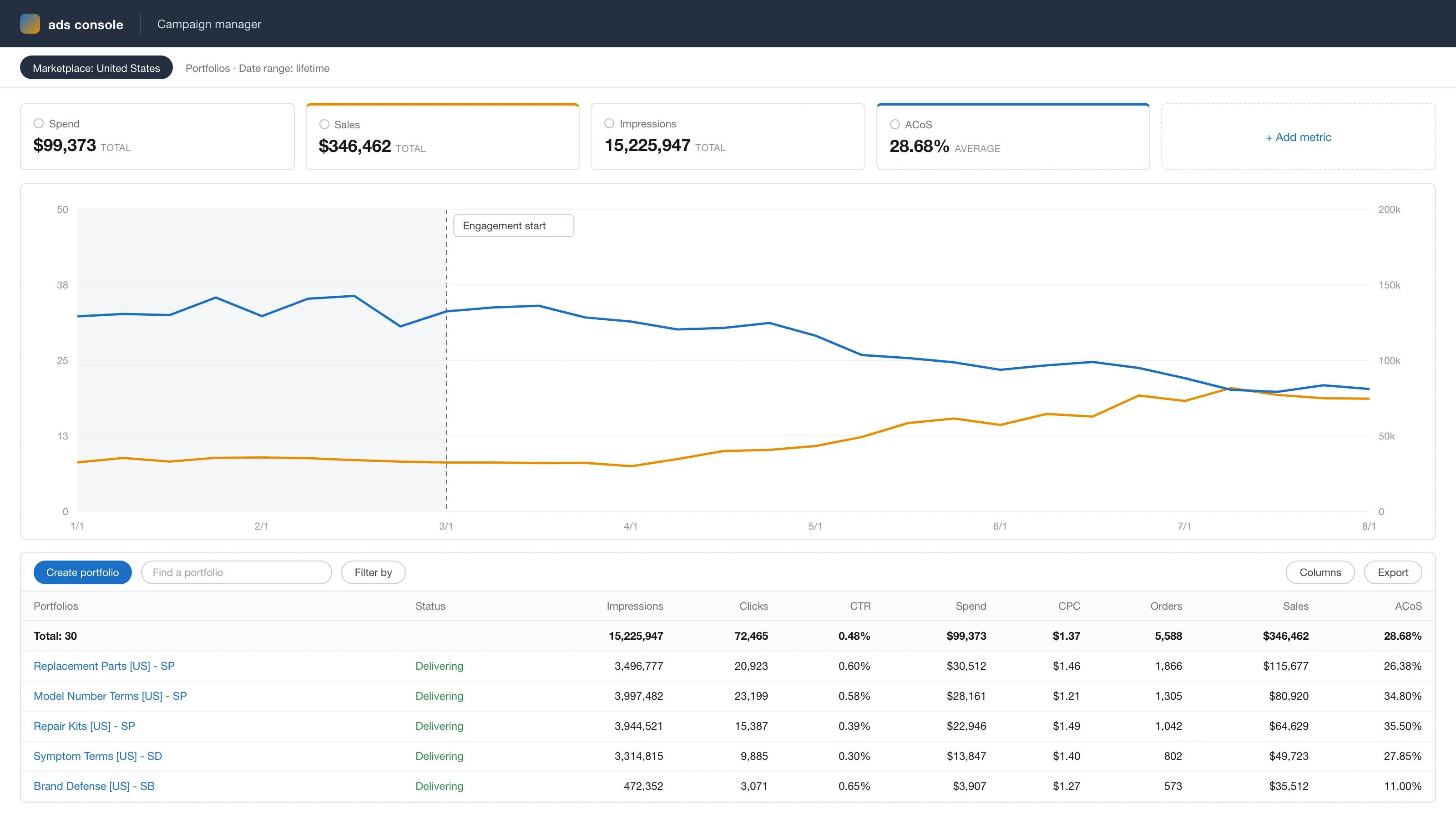
Anonymized account view, rebuilt from the figures reported above: ad sales growing from $33k to $73k a month while ACoS falls from 33% to 22% across the 5-month engagement.
The results
Revenue grew 120% to $163k a month from the same catalog, the same part numbers and the same prices.
Sessions grew 44% as the symptom searches and the “is this worth fixing” questions started landing on the page, and conversion rose 53% on top of that. Returns dropped by more than half — the diagnostic content stops people buying the wrong component, which had been the largest single return reason. The rating gained four tenths because a customer who was warned about the two repairs that need a professional does not blame the part when the machine turns out to have a different fault.
“Our real competitor was never another seller. It was a guy with a van quoting a hundred and eighty dollars for twenty minutes of work.”
Services we delivered
Related case studies
Ready to scale your Amazon brand?
Talk to a senior strategist and leave with a growth plan for your store — no obligation.