
Putting the test certificates on the page, not in the drawer
Conversion 5.8% → 8.6%
A baby toy brand tested every product to standards its competitors did not meet, and mentioned none of it on Amazon. The buyer is a first-time parent deciding what goes in a baby's mouth.

At a glance
- Category
- Baby & Toddler Toys
- Marketplaces
- US
- Revenue at start
- $141k / month
- Advantage
- third-party tested beyond the required standard; never stated
- Engagement
- Creative & content + listing SEO
- Timeframe
- 8 months
Results
The challenge
Every question on the listing's Q&A section was a version of the same one: what is it made of, what is in the paint, has it been tested, does it have small parts, is it safe if she chews it. Thirty-one such questions per thousand sessions is not curiosity — it is the purchase decision being made in the wrong place, days after the shopper left.
The brand had excellent answers and had never published them. Its toys were third-party tested past the legally required standard, the finishes were food-grade, the age grading was conservative. On the page, the copy talked about bright colors and motor skills — the same thing every competitor said, including the ones importing untested product. A cautious parent cannot tell the difference between a brand that tests and a brand that says nothing, so they treat both as unknown.
Our approach
We made the evidence part of the buying flow rather than something available on request.
- Materials named specifically — what the toy is made of, what the finish is, where it is produced — in the bullets rather than in a PDF.
- A testing frame in the image stack showing which standards the product is tested against and by whom, since the safety-conscious buyer scans images before text.
- Small-parts and age guidance stated honestly, including which items are not for under-threes.
- Safety vocabulary in the keyword set — non-toxic, BPA-free, food-grade finish, age-graded small-parts guidance — the terms this shopper searches with, minus the absolute safety claims nobody in the category is allowed to make.
Inside the ad account
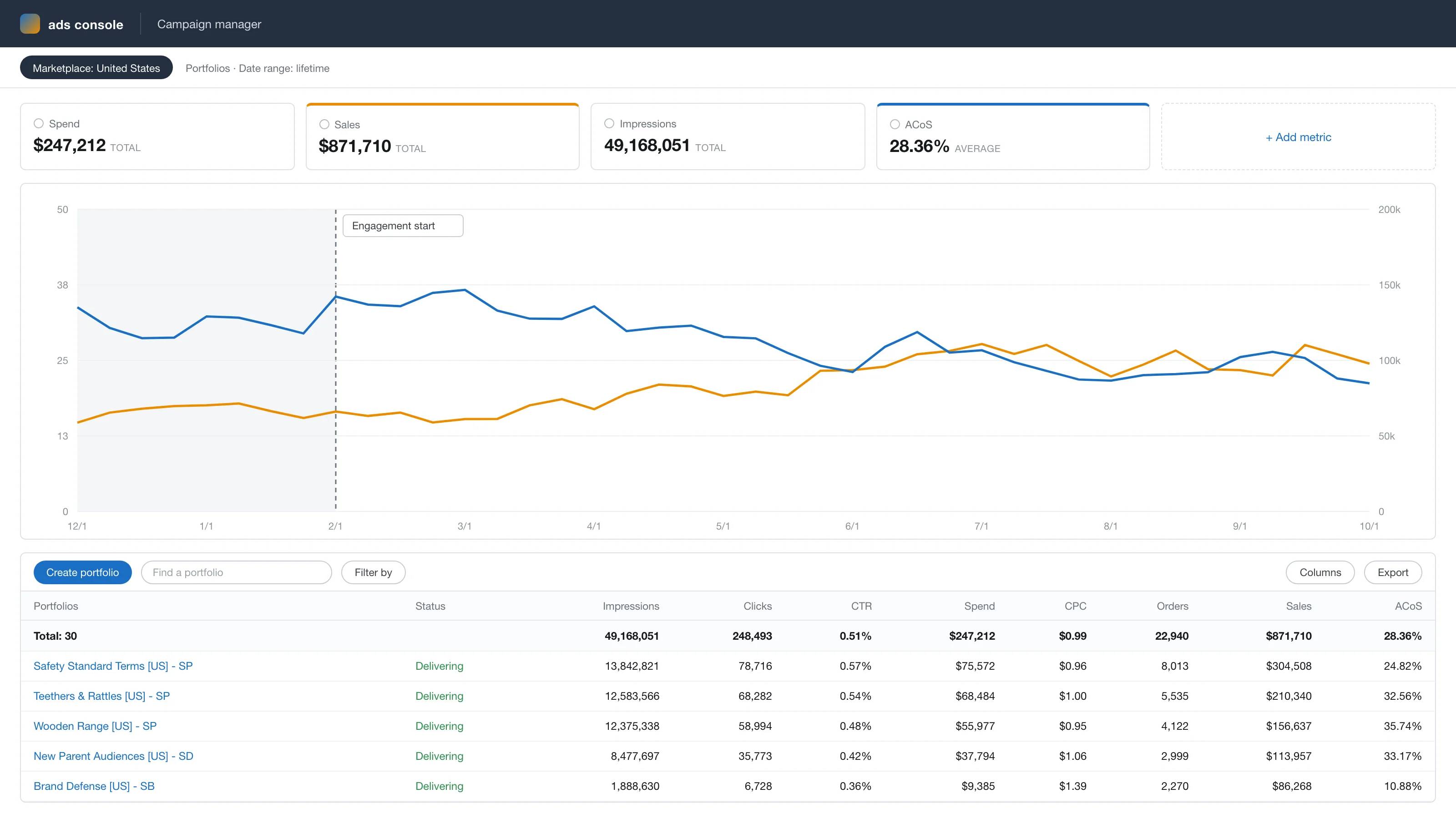
Anonymized account view, rebuilt from the figures reported above: ad sales growing from $63k to $107k a month while ACoS falls from 34% to 23% across the 8-month engagement.
The results
The same catalog at the same prices now converts at 8.6% against 5.8%, and revenue is up 69%.
Pre-purchase questions fell by two thirds, which is what the change looks like from the shopper's side: the page now answers the question before the shopper has to ask it and wait two days for a reply they will never come back to read. Returns fell three points as well, because the honest age guidance stopped people buying a toy for a child too young for it.
“We'd been paying for testing for six years and describing our products as 'colorful and fun'. The certificates were in a folder nobody outside the office had ever seen.”
Services we delivered
Related case studies

Ready to scale your Amazon brand?
Talk to a senior strategist and leave with a growth plan for your store — no obligation.