
Spring happens in eleven different weeks across one country
TACoS 19% → 11%
An outdoor play brand switched its whole budget on in April and off in September, as if the country warmed up all at once. Following the season region by region added two months of selling to the year.

At a glance
- Category
- Outdoor Play
- Marketplaces
- US
- Revenue at start
- $305k / month in season
- Pattern
- one national budget, switched on in April and off in September
- Engagement
- PPC + DSP
- Timeframe
- 12 months
Results
The challenge
Outdoor toys sell when it is warm enough to use them, and “warm enough” arrives in the south in late February and in the north in mid-May. The brand's budget did not know that: it turned on nationally in April and off in September.
Both ends of that schedule cost money. In February and March, southern shoppers were searching and the brand was not bidding, so competitors took the early season unopposed and the rank they gained held into the peak. In April the same national budget ran at full weight while half the country was still frozen, so the month converted at a fraction of the peak rate and dragged blended TACoS to 19%. In September the reverse happened: the south was still buying when the account went quiet.
Our approach
We replaced one national season with a rolling one.
- Regional demand curves built from the account's shipped-order data by state, so the start and end of the season is a date per region rather than a date per country.
- The Sponsored calendar rebuilt as a ramp — live in late February and tapering into October, following the warm line north instead of switching on in April and off in September.
- A shoulder-season play — bidding from late February, when the south is buying and the whole category's cost per click is a fraction of the peak.
- DSP used ahead of the curve, warming up audiences in each region two to six weeks before their search volume turns.
Inside the ad account
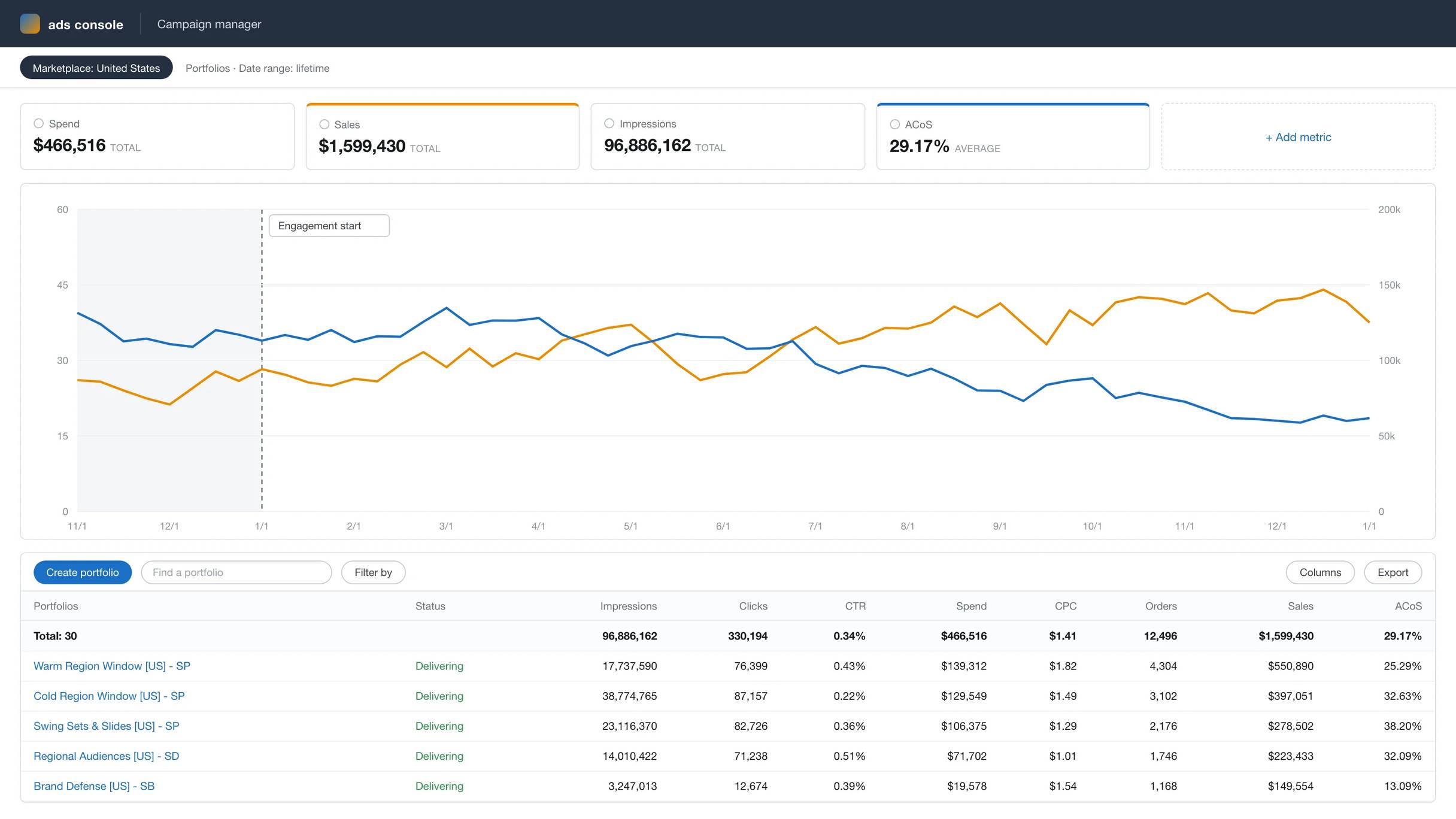
Anonymized account view, rebuilt from the figures reported above: ad sales growing from $90k to $135k a month while ACoS falls from 36% to 21% across the 12-month engagement.
The results
TACoS fell from 19% to 11% and annual revenue grew 50%, on an advertising budget that ended the year 13% smaller than it started.
Two effects compound. Roughly $82k a year of spend that had been landing in weeks converting under 3% now lands in weeks already converting, and the early bidding bought rank cheaply that then carried into the national peak. The brand gained two months of effective selling without extending the season by a single day of actual weather.$
“We'd been treating a country three thousand miles wide as if it had one spring.”
Services we delivered
Related case studies




Ready to scale your Amazon brand?
Talk to a senior strategist and leave with a growth plan for your store — no obligation.